Nurs 425 Exam #1 Questions And Answers Rated A+
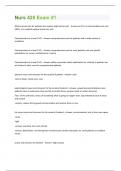
Where do we care for patients that require high acuity care? - Answer-an ICU, an intermediate-care unit (IMC), or a medical-surgical acute care unit Characteristics of a level 1 ICU - Answer-comprehensive care for patients with a wide variety of conditions Characteristics of a level 2 ICU - Answer-comprehensive care for most patients, but not specific populations ex. neuro, cardiothoracic, trauma Characteristics of a level 3 ICU - Answer-ability to provide initial stabilization for critically ill patients but are limited in their care for comprehensive patients physical issues and stressors for the acutely ill patient - Answer--pain -lack of sleep: cluster your care psychological issues and stressors for the acutely ill patient - Answer--powerlessness & helpless ness: patients have no autonomy, they are fed at certain times, we give meds at certain times etc. -fear: of the unknown, stress of wondering what is going to happen next. Exacerbated by lack of sleep and control -anxiety: reduce this by good communication and involve them in care list some issues and stressors for the acutely ill patient - Answer--environmental: not in their own space -noise -light -sensory overload: too much stimuli -sensory deprivation: not having their normal touch, family interaction ex. covid patients in isolation rooms issues and stressors for families - Answer--high anxiety-denial -anger -remorse -grief illness can heighten/reignite family drama or issues issues and stressors for the nurse - Answer--stressful environment: long hours, short staffed, the trauma of watching pill ill/ be terminally ill. Technology -ethical issues: moral distress, being aware of your own morals and separating that from the patient's wishes -implementing evidence based practice: nurse are required to keep up with the latest science How do we help the high acuity patient and family cope? - Answer-asses: ask them what they usally do when things arent going well, how do they usually cope with stress, suggest healthy coping mechanisms maintain hope: be careful not to give false reassurance, acknowledge the situation and explain that you are there for them true or false: restricted visiting in progressive and intensive care areas are based on science - Answerfalse: it is based on tradition and convenience explain palliative care - Answer-managing symptoms and keeping patients comfortable. not synonymous with end of life care explain end of life care - Answer-•Many critical care patient deaths are preceded by withholding or withdrawing life sustaining treatments
Written for
- Institution
- Nurs 425
- Course
- Nurs 425
Document information
- Uploaded on
- May 31, 2024
- Number of pages
- 22
- Written in
- 2023/2024
- Type
- Exam (elaborations)
- Contains
- Questions & answers
Subjects

Also available in package deal