Depression (Psychopathology)
Depression is a mental disorder that is characterised from a low mood and low
energy.
- Introverted → isolate from others
- Irrational thoughts → negative, low self esteem, self
- Sadness, pessimistic
- Give up on themselves easily
- Won’t talk much to others.
DSM = Book used to diagnose people with mental disorders.
Different categories of depression
1. Major Depressive disorder- Severe but often short term depression
2. Persistent depressive disorder- Long term or reoccuring depression, including
sustained major depression and what used to be called dysthymia
3. Disruptive mood disorder- Childhood temper tantrums
4. Premenstrual dysphoric disorder- Disruption to mood and or during menstruation
Manic- feeling erratic, extremely happy (see bipolar disorder)
Opposite of manic- sadness.
Bipolar disorder is when a person experiences manic moods and severe low moods.
Depression typically experiences low moods.
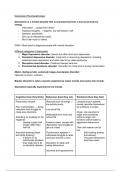
Cognitive (how they think) Behaviour (how they act) Emotional (how they feel)
Pessimistic mindset Reduced level of energy → Lowered mood- patients
low activity levels usually describe themselves
Poor concentration → being as worthless or empty
indecisive and struggle to Low social life
make easy decisions Anger- can experience
Withdrawal from work and anger and sometimes
Attending to/ dwelling on the school life extreme anger and
negatives emotions which leads to
- Seeing a glass half Extreme cases, people with aggressive behaviours
empty rather than depression may struggle to
half full get out of bed Their self esteem can be
low.
Absolutist thinking (black Psychomotor agitation = - Self loathing (hating
and white thinking) individuals struggle to relax themselves)
- If they’re in an and pace around a room - They like themselves
unfortunate situation, less than usual.
they might see it as Disruption to sleep and
an absolute disaster. eating behaviours
Insomnia and hypersomnia
Depression is a mental disorder that is characterised from a low mood and low
energy.
- Introverted → isolate from others
- Irrational thoughts → negative, low self esteem, self
- Sadness, pessimistic
- Give up on themselves easily
- Won’t talk much to others.
DSM = Book used to diagnose people with mental disorders.
Different categories of depression
1. Major Depressive disorder- Severe but often short term depression
2. Persistent depressive disorder- Long term or reoccuring depression, including
sustained major depression and what used to be called dysthymia
3. Disruptive mood disorder- Childhood temper tantrums
4. Premenstrual dysphoric disorder- Disruption to mood and or during menstruation
Manic- feeling erratic, extremely happy (see bipolar disorder)
Opposite of manic- sadness.
Bipolar disorder is when a person experiences manic moods and severe low moods.
Depression typically experiences low moods.
Cognitive (how they think) Behaviour (how they act) Emotional (how they feel)
Pessimistic mindset Reduced level of energy → Lowered mood- patients
low activity levels usually describe themselves
Poor concentration → being as worthless or empty
indecisive and struggle to Low social life
make easy decisions Anger- can experience
Withdrawal from work and anger and sometimes
Attending to/ dwelling on the school life extreme anger and
negatives emotions which leads to
- Seeing a glass half Extreme cases, people with aggressive behaviours
empty rather than depression may struggle to
half full get out of bed Their self esteem can be
low.
Absolutist thinking (black Psychomotor agitation = - Self loathing (hating
and white thinking) individuals struggle to relax themselves)
- If they’re in an and pace around a room - They like themselves
unfortunate situation, less than usual.
they might see it as Disruption to sleep and
an absolute disaster. eating behaviours
Insomnia and hypersomnia