C4 Chemical Changes
pH
Ph scale measures how acidic/ alkaline a solution is
The pH scale measures the concentration of H+ ions in a solution
Can be shown through universal indicator or a ph probe connected to a ph meter
Acids and bases
Neutralise each other
Neutralisation reaction
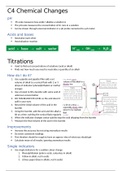
Titrations
Used to find out concentrations of solutions (acid or alkali)
Finds out how much you need to neutralise a quantity of an alkali
How do I do it?
1. Use a pipette and pipette filler add a set
volume of alkali to a conical flask with 2 or 3
drops of indicator (phenolphthalein or methyl
orange)
2. Use a funnel to fill a burette with some acid of
unknown concentration
3. DO THIS BELOW EYE LEVEL so the acid doesn’t
spill in your eyes
4. Record the initial volume of the acid in the
burette
5. Using the burette, add the acid and the alkali a
bit at a time, swirling the conical flask regularly
6. When the indicator changes colour quickly stop the acid dripping from the burette
7. Measure the final volume of the acid in the burette
Improvements
Increase the accuracy by not using anomalous results
Do seven consistent readings
First titration should be rough to have an approx. idea of what you should get
Calculate mean of all results, ignoring anomalous results
Single indicators
Use single indicators for a sudden colour change
1. Phenolphthalein (pink in acids, colourless in alkali)
2. Yellow in alkali, red in acids
3. Litmus paper (blue in alkalis, red in acids)
pH
Ph scale measures how acidic/ alkaline a solution is
The pH scale measures the concentration of H+ ions in a solution
Can be shown through universal indicator or a ph probe connected to a ph meter
Acids and bases
Neutralise each other
Neutralisation reaction
Titrations
Used to find out concentrations of solutions (acid or alkali)
Finds out how much you need to neutralise a quantity of an alkali
How do I do it?
1. Use a pipette and pipette filler add a set
volume of alkali to a conical flask with 2 or 3
drops of indicator (phenolphthalein or methyl
orange)
2. Use a funnel to fill a burette with some acid of
unknown concentration
3. DO THIS BELOW EYE LEVEL so the acid doesn’t
spill in your eyes
4. Record the initial volume of the acid in the
burette
5. Using the burette, add the acid and the alkali a
bit at a time, swirling the conical flask regularly
6. When the indicator changes colour quickly stop the acid dripping from the burette
7. Measure the final volume of the acid in the burette
Improvements
Increase the accuracy by not using anomalous results
Do seven consistent readings
First titration should be rough to have an approx. idea of what you should get
Calculate mean of all results, ignoring anomalous results
Single indicators
Use single indicators for a sudden colour change
1. Phenolphthalein (pink in acids, colourless in alkali)
2. Yellow in alkali, red in acids
3. Litmus paper (blue in alkalis, red in acids)