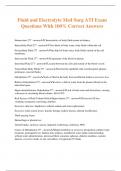
Fluid and Electrolyte Med Surg ATI Exam Questions With 100% Correct Answers
Fluid and Electrolyte Med Surg ATI Exam Questions With 100% Correct Answers Homeostasis 277 - answerCharacteristics of body fluid remain in balance Intracellular Fluid 277 - answerTwo-thirds of body water, body fluids within the cell Extracellular Fluid 277 - answerOne-third of body water, body fluids outside of the cell membrane Intravascular Fluid 277 - answerLiquid part of the blood or plasma Interstitial Fluid 277 - answerLocated between the cells and outside of the blood vessels Transcellular Body Fluids 277 - answerSecreted by epithelial cells (cerebrospinal, pleural, peritoneal, synovial fluids) Dehydration 277 - answerLack of fluid in the body from insufficient intake or excessive loss Relative Dehydration 277 - answerInvolves a shift of water from the plasma (blood) to the interstitial space Hypovolemia/Isotonic Dehydration 277 - answerLack of both water and electrolytes, causing a decrease in circulating blood volume, AKA FVD Risk Factors of Fluid Volume Deficit/Hypovolemia 277 - answerExcessive GI loss: vomiting, nasogastric suctioning, diarrhea Excessive skin loss: diaphoresis without sodium and water replacement Excessive renal system losses: diuretic therapy, kidney disease, adrenal insufficiency Third spacing: burns Hemorrhage or plasma loss Altered intake: anorexia, nausea, impaired swallowing, confusion, NPO Causes of Dehydration 277 - answerHyperventilation or excessive perspiration without water treatment, prolonged fever, diabetic keto acidosis, insufficient water intake (enteral feeding without water administration, decreased thirst sensation, aphasia), diabetes insidious, osmotic diuresis, excessive intake of salt, salt tablets, or hypertonic IV fluids Hypovolemia Expected Findings 277 - answerVital Signs: hyperthermia, tachycardia (in attempt to maintain normal bp), thready pulse, hypotension, orthostatic hypotension, decreased central venous pressure, tachypnea (increased respirations to compensate for lack of fluid volume within the body), hypoxia Neuromusculoskeletal: dizziness, syncope, confusion, weakness, fatigue GI: thirst, dry furrowed tongue, nausea, vomiting, anorexia, acute weight loss Renal: Oliguria (decreased production and concentration of urine) Diminished capillary refill, cool clammy skin, diaphoresis, sunken eyeballs, flattened neck veins, poor skin turgor and tenting, weight loss, low central venous pressure *In older adults the effects are greater due to the loss of skin elasticity, glomerular filtration and concentrating ability of the kidneys, loss of muscle mass, and diminished thirst reflex* Dehydration client can have an elevated temp, and relative dehydration induce seizure Lab Test for Hypovolemia 278 - answerHematocrit: increased in hypovolemia BUN: Increased due to hemoconcentration Urine Specific Gravity: greater than 1.030 Blood Sodium: Greater than 145 mEq/L with dehydration Blood osmolality: greater than 295 most/kg with dehydration/hypernatremia Client Education for Hypovolemia 278 - answerDrink plenty of liquids to promote hydration, causes of dehydration include vomiting, large, draining wounds, and diarrhea or excessive ostomy losses Hypovolemic Shock 278 - answerOccurs with significant loss of body fluid, client's mean arterial pressure decreases (which slows blood flow and perfusion to tissues of the body), and the cells are no longer able to carry oxygen to the blood adequately (due to loss of red blood cells) Nursing Actions for Hypovolemic Shock 278 - answerAdminister oxygen, monitor oxygen saturation (O2 less than 70% is a medical emergency), stay with an unstable client, monitor vital signs *every 15 min*, provide fluid replacement with colloids (whole blood, packed RBCs, plasma, synthetic, plasma expanders), crystalloids (lactated Ringer's, normal saline), administer vasoconstriction, perform hemodynamic monitoring Overhydration 278 - answerToo much fluid in the body from excessive intake or ineffective removal from the body, fluid overload is an excess of fluid of water, such as with water intoxications: this includes hemodilution which makes the amount of blood components seem lower, hypervolemia of fluid volume excess involves an excess of water and electrolytes so that the two are still in the right proportions (ex. excessive sodium intake makes the body so that there is too much of both), clients who have fluid overload are at risk for developing pulmonary
Written for
- Institution
- Fluid and Electrolytes
- Course
- Fluid and Electrolytes
Document information
- Uploaded on
- May 28, 2024
- Number of pages
- 14
- Written in
- 2023/2024
- Type
- Exam (elaborations)
- Contains
- Questions & answers
Subjects
-
fluid and electrolyte med surg ati exam questions

Also available in package deal