Succession tutorial 2
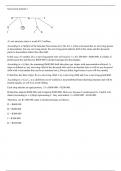
D E F
B A C G
I J K
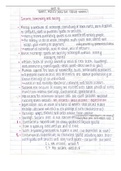
A’s net intestate estate is worth R1.2 million.
According to s(1)(d)(ii) of the Intestate Succession Act (‘the Act’), when a deceased has no surviving spouse
or descendants, but one surviving parent, the surviving parent inherits half of the estate and the deceased
parent’s descendants inherit the other half.
In this case, A’s mother, D is a surviving parent who will receive ½ x R1 200 000 = R600 000. A’s father, E
predeceased her and thus his R600 000 is divided amongst his descendants.
According to s 1(4)(a), the remaining R600 000 shall take place per stirpes with representation allowed. A
stirps is defined as; any surviving child of the deceased who can be an intestate heir as well as any deceased
child with a descendant that can be an intestate heir. [Always define legal terms or you will lose marks]
E therefore has three stirps: B, as a surviving child, C as a surviving child and G as a surviving grandchild.
According to s 1(2), C, as a child born out of wedlock is not prohibited from inheriting intestate and will be
treated equally, as will G as a half sibling.
Each stirp inherits an equal portion, 1/3 x R600 000 = R200 000.
B therefore inherits R200 000, and G inherits R200 000. However, because C predeceased A, J and K will
inherit (according to s 1(4)(a)) representing C. they each inherit ½ x R200 000 = R100 000.
Therefore, A’s R1 200 000 estate is divided intestate as follows:
D = R600 000
B = R200 000
G = R200 000
J = R100 000
K = R100 000
D E F
B A C G
I J K
A’s net intestate estate is worth R1.2 million.
According to s(1)(d)(ii) of the Intestate Succession Act (‘the Act’), when a deceased has no surviving spouse
or descendants, but one surviving parent, the surviving parent inherits half of the estate and the deceased
parent’s descendants inherit the other half.
In this case, A’s mother, D is a surviving parent who will receive ½ x R1 200 000 = R600 000. A’s father, E
predeceased her and thus his R600 000 is divided amongst his descendants.
According to s 1(4)(a), the remaining R600 000 shall take place per stirpes with representation allowed. A
stirps is defined as; any surviving child of the deceased who can be an intestate heir as well as any deceased
child with a descendant that can be an intestate heir. [Always define legal terms or you will lose marks]
E therefore has three stirps: B, as a surviving child, C as a surviving child and G as a surviving grandchild.
According to s 1(2), C, as a child born out of wedlock is not prohibited from inheriting intestate and will be
treated equally, as will G as a half sibling.
Each stirp inherits an equal portion, 1/3 x R600 000 = R200 000.
B therefore inherits R200 000, and G inherits R200 000. However, because C predeceased A, J and K will
inherit (according to s 1(4)(a)) representing C. they each inherit ½ x R200 000 = R100 000.
Therefore, A’s R1 200 000 estate is divided intestate as follows:
D = R600 000
B = R200 000
G = R200 000
J = R100 000
K = R100 000