State policies and Education
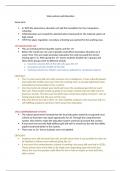
Some facts
In 1870 the elementary education act laid the foundation for free compulsory
schooling
1902 Education act created the administrative framework for the national system of
high school
1907 free place regulation: secondary schooling was opened for the working class
1944 EDUCATION ACT
This act introduced the tripartite system and the 11+
Before the world war not a lot of people could afford secondary education as it
wasn’t free. This act made secondary education free and increased the school-
leaving age to 15. After giving the 11+ exams students divided into 3 groups and
these three groups went to different schools
o Grammer schools 20% of the kids who pass the 11+
o Secondary schools 70-80% of the kids
o Technical schools for children who had an aptitude for vocational subjects
CRITICISM
The 11+ plus exams did not really measure one’s intelligence. It was culturally biased
and suited the middle class more than the working class. It actually legitimized class
inequality by incorporating it into a system
Very few technical schools were built and hence the vocational part did not work
that well. Most people ended up going to secondary schools and very little went to
grammar schools. The idea was that both types would have parity of esteem- seen as
having equal value but this was not the case.
Kids who did not do well in their 11+ were labelled as failures who may have led to a
self-fulfilling prophecy and drove them away from education.
1965 COMPREHENSIVE SYSTEM:
The Labour government insisted that the local education authority recognized most
schools so that there was equal opportunity for all. Through the comprehensive
system, they tried to make the education system universal all around the country.
It was seen that not only high-ability pupils did well in school but also the low-ability
pupils functioned better in this system.
There was no 11+ hence students were not labelled.
CRITICISM
Students were still streamed into sets and this meant that it was possible for them to
be labelled as failures even without giving the 11+
It was seen that comprehensive schools in working-class areas did very bad in GCSEs.
These schools were more likely to be single-class depending upon the local area.
Hence the area that people could afford to live in had an impact on how well they
did in school.
Some facts
In 1870 the elementary education act laid the foundation for free compulsory
schooling
1902 Education act created the administrative framework for the national system of
high school
1907 free place regulation: secondary schooling was opened for the working class
1944 EDUCATION ACT
This act introduced the tripartite system and the 11+
Before the world war not a lot of people could afford secondary education as it
wasn’t free. This act made secondary education free and increased the school-
leaving age to 15. After giving the 11+ exams students divided into 3 groups and
these three groups went to different schools
o Grammer schools 20% of the kids who pass the 11+
o Secondary schools 70-80% of the kids
o Technical schools for children who had an aptitude for vocational subjects
CRITICISM
The 11+ plus exams did not really measure one’s intelligence. It was culturally biased
and suited the middle class more than the working class. It actually legitimized class
inequality by incorporating it into a system
Very few technical schools were built and hence the vocational part did not work
that well. Most people ended up going to secondary schools and very little went to
grammar schools. The idea was that both types would have parity of esteem- seen as
having equal value but this was not the case.
Kids who did not do well in their 11+ were labelled as failures who may have led to a
self-fulfilling prophecy and drove them away from education.
1965 COMPREHENSIVE SYSTEM:
The Labour government insisted that the local education authority recognized most
schools so that there was equal opportunity for all. Through the comprehensive
system, they tried to make the education system universal all around the country.
It was seen that not only high-ability pupils did well in school but also the low-ability
pupils functioned better in this system.
There was no 11+ hence students were not labelled.
CRITICISM
Students were still streamed into sets and this meant that it was possible for them to
be labelled as failures even without giving the 11+
It was seen that comprehensive schools in working-class areas did very bad in GCSEs.
These schools were more likely to be single-class depending upon the local area.
Hence the area that people could afford to live in had an impact on how well they
did in school.