Cassius
Bold= key quotation
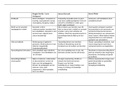
1. Cassius has many strengths: He is persuasive, Shrewd, and a strong
military leader.
He is able to form and organise the conspirators in spite of the
difficult political climate of Rome.
Caesar himself says of Cassius in 1:2 that ‘he is a great
observer, and he looks quite through the deeds of men’
His views about Antonys threat to the conspirators and weather the
conspirators should march to Phillippi are marching to Phillippi, while
ignored by Brutus, both turn about to be shrewd judgements.
2. However, Cassius can be seen as jealous of Caesar at several points
in the play.
Brutus points out that Cassius is competitive, and we get this sense
when Cassius complains to Brutus of Caesar ‘why should that name
be sounded more than yours?’
This bitter rivalry is also evident in 1:2 where Cassius
bemoans the fact that ‘this man has now become a God, and
Cassius is a wretched creature that must bend his body is
Caesar carelessly but nod on him’.
3. Ultimately, Cassius is punished for his betrayal highlighting the
consequences of betrayal.
In 5:3, Cassius , in contrast to Caesar’s description of him as
a ‘great observer’ is unable to see clearly and inaccurately
believing he is losing the battle kills himself, declaring ‘
Caesar, thou art revenged even with the sword that killed
three’n .
Bold= key quotation
1. Cassius has many strengths: He is persuasive, Shrewd, and a strong
military leader.
He is able to form and organise the conspirators in spite of the
difficult political climate of Rome.
Caesar himself says of Cassius in 1:2 that ‘he is a great
observer, and he looks quite through the deeds of men’
His views about Antonys threat to the conspirators and weather the
conspirators should march to Phillippi are marching to Phillippi, while
ignored by Brutus, both turn about to be shrewd judgements.
2. However, Cassius can be seen as jealous of Caesar at several points
in the play.
Brutus points out that Cassius is competitive, and we get this sense
when Cassius complains to Brutus of Caesar ‘why should that name
be sounded more than yours?’
This bitter rivalry is also evident in 1:2 where Cassius
bemoans the fact that ‘this man has now become a God, and
Cassius is a wretched creature that must bend his body is
Caesar carelessly but nod on him’.
3. Ultimately, Cassius is punished for his betrayal highlighting the
consequences of betrayal.
In 5:3, Cassius , in contrast to Caesar’s description of him as
a ‘great observer’ is unable to see clearly and inaccurately
believing he is losing the battle kills himself, declaring ‘
Caesar, thou art revenged even with the sword that killed
three’n .