OB nursing, obstetrics, RN course (Prepare perfect)
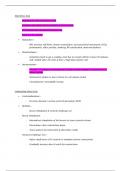
Non-Stress Test: • Push button when movement is felt • Evaluates fetal heart rate in response to fetal activity • Give orange juice to speed the process up • Want it to be reactive • Indications – • PIH, previous still birth, chronic renal failure, decreased fetal movements, IUGR, postmaturity, older gravida, smoking, Rh sensitization, maternal diabetes • Disadvantages – • Sometimes hard to get a reading, mom has to remain still for at least 20 minutes, only reliable after 28 weeks & have a high false positive rate • Interpretation – • Reactive: 2 or more accelerations of 15 bpm or more, lasting 15 seconds in a 20 minute period • Nonreactive: failure to meet criteria in a 40 minute period • Unsatisfactory: unreadable tracing Contraction Stress Test: • Contraindications – • Previous classical c-section, preterm/premature ROM • Methods – • Breast stimulation & oxytocin challenge test • Breast Stimulation - • Intermittent stimulation of the breasts to cause oxytocin release • Discontinue when contractions begin • Assess pattern of contractions & determine results • Oxytocin Challenge Test – • Infuse small doses of IV oxytocin to stimulate uterine contractions • Gradually increase dose & watch for contractions • Interpret results • Interpretation – • Negative: no late decelerations with 3 adequate contractions in a 10 minute window, normal FHR, & accelerations with fetal movement (desired result) • Positive: persistent late decelerations with more than half of the uterine contractions during a 10 minute window. Signals that fetus is in distress (bad) • Equivocal/Suspicious: nonpersistent late decelerations. Decelerations with less than half of the uterine contractions Cardiac Disease: • Class 1 – • No limitation of physical activity • No symptoms of cardiac insufficiency or anginal pain • Recommendation - • Limit stress, not activity. • Additional rest periods at night • Early treatment of infections • Decrease second stage of labor - forceps/vacuum • Class 2 – • Slight limitation of physical activity • Comfortable at rest • Excessive fatigue, palpitations, dyspnea, or angina pain with than ordinary activity • Recommendation – • Limit stress, not activity • Early treatment of infections • Prophylactic antibiotic prior to delivery • Class 3 – • Marked limitation of physical activity • Comfortable at rest • Excessive fatigue, palpitations, dyspnea, or angina pain with less than ordinary activity • Recommendation – • Bed rest for much of the day • Hospitalization usually necessary • Therapeutic abortion may be necessary • Tubal ligation suggested • Class 4 – • Inability to perform any physical activity without discomfort • Symptoms if cardiac insufficienty or angina syndrome possible at rest • Recommendation – • May need therapeutic abortion • Maternal morbidity & mortality high • Tubal ligation strongly suggested
Document information
- Uploaded on
- May 23, 2024
- Number of pages
- 78
- Written in
- 2023/2024
- Type
- Exam (elaborations)
- Contains
- Questions & answers