Sherpath: HEENT Conditions Questions and Answers
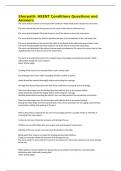
Sherpath: HEENT Conditions Questions and Answers The nurse notices edema on the head of the newborn. What initial action should the nurse take? The nurse should educate the parents on the cause of the issue to eliminate fear. The nurse should palpate the head closely to see if the edema crosses the suture lines. The nurse should assess the child for jaundice because of the breakdown of the red blood cells. The nurse should discuss the need of the infant to be placed on the abdomen several times a day. The nurse should palpate the head closely to see if the edema crosses the suture lines. The nurse can determine if the edema is from caput succedaneum if it crosses the suture line or from cephalhematoma if it does not cross the suture lines. The nurse is teaching the parents of a newborn about massaging a blocked lacrimal duct. What information should the nurse include? Select all that apply. Crusting of the eye can be removed with a warm, damp cloth. Any drainage that is seen when massaging should be yellow or green. Hands should be washed thoroughly before performing the massage. Massage the lacrimal duct down the side of the nasal bone to properly ensure drainage. Place the index finger over the lacrimal duct and milk the duct in an upward motion. Hands should be washed thoroughly before performing the massage. Washing hands before touching the infant's eyes can help prevent the introduction of infection. Place the index finger over the lacrimal duct and milk the duct in an upward motion. Placing the index finger over the lacrimal duct is the correct procedure for massaging a lacrimal duct and provides milking and opening of the duct. What is the primary rationale for the nurse encouraging parents to quickly soothe a child who is recovering from eye surgery? Crying can increase intraocular pressure and damage the eye. Children are uncomfortable after eye surgery and need frequent reassurance. Patching of the eye can be scary and cause frustration in the child. Being upset after surgery can delay the healing and promote infection. Crying can increase intraocular pressure and damage the eye. The nurse needs to assess and try to prevent any increase in intraocular pressure to prevent damage to the eye. Which patient scenario reflects the appropriate nurse-patient interaction for communicating effectively with a child with hearing loss? Select all that apply. ELIMINATE background NOISE. LOOK DIRECTLY into the child's face. Speak CLEARLY and slightly SLOWER than usual. Speak louder to the child to enhance hearing. Have the child's COMPLETE ATTENTION before beginning to speak. Eliminate background noise. Background noise can make it difficult for the child to filter what is being said and what is going on in the background. Elimination of this noise enhances communication. Look directly into the child's face. This can enhance lip reading because the child can see the nurse's face more directly. Speak clearly and slightly slower than usual. This can enhance lip reading and allow easier understanding of what is said. Have the child's complete attention before beginning to speak. Having the child's attention can enhance lip reading. The parents of an 8-year-old with conjunctivitis want to know how to keep their other four children from contracting the infection. What should the nurse emphasize when providing education? Handwashing and not sharing of anything that comes into contact with the infected eye. The child should be isolated for 24 hours following administration of antibiotics. Have the other children use a few doses of the antibiotics to prevent contracting the infection. No special precautions are needed because the child has started antibiotics and conjunctivitis is not often contagious. Handwashing and not sharing of anything that comes into contact with the infected eye. These actions are the primary ways that the spread of infection can be eliminated in the home. The parents of a 1-year-old bring their child into the primary care clinic for evaluation. The child has not been sleeping, is irritable, and has a fever. The nurse notes that the child is pulling at the left ear and sees purulent drainage from the left ear. The symptoms have been present for four days. The nurse anticipates what treatment? Administration of numbing ear drops Initiation of oral amoxicillin to treat the ear infection Treatment of the fever with a watch and wait for antibiotics The placement of a tympanostomy tube to remove the purulent drainage Initiation of oral amoxicillin to treat the ear infection The child has all the symptoms of acute otitis media and would require antibiotics because of the severity and amount of time the symptoms have been present. The nurse is preparing a 7-year-old for a tonsillectomy. Just before going to surgery, the child states, "I was hoping my tooth would fall out before I went to sleep so the tooth fairy would come while I am in the hospital." What is the nurse's priority action? Assess the child for any loose teeth prior to surgery. Inform the surgeon that the surgery will need to be postponed. Assure the child that the tooth fairy can still come after surgery if the tooth comes out. Educate the parents on the need to not pull the tooth for at least a week following surgery to decrease bleeding. Assess the child for any loose teeth prior to surgery. A loose tooth can come out and be aspirated during surgery. This is something that the nurse will need to address before the surgery. The parents of a young child with sinusitis want to know what they can do to help their child be more comfortable. What should the nurse recommend? Select all that apply. "Bring the child into the mist of a hot shower." "Use acetaminophen to help control any fever or pain." "Use a bedside humidifier in the child's room to help promote drainage." "Apply a warm moist compress to the child's sinuses two or three times a day." "Decrease the amount of fluids being given to the infant because the throat may be sore." "Bring the child into the mist of a hot shower." The mist of a hot shower can help to liquefy secretions. The water does not need to touch the child and should not be hot enough to burn the child if touched. "Use acetaminophen to help control any fever or pain." Fever and pain often accompany a sinus infection and can be very uncomfortable. Acetaminophen can minimize these discomforts. "Use a bedside humidifier in the child's room to help promote drainage." A humidifier helps to promote drainage and increase the comfort of an infant or child with sinusitis. "Apply a warm moist compress to the child's sinuses two or three times a day." A warm moist compress can decrease swelling and pain from a sinusitis. A child's glow stick cracked and the contents sprayed into the child's eye. What is the appropriate action the nurse should take? Irrigate the eye with water or saline. Cover the eye to prevent further damage. Check the pH of the eye with litmus paper. Referral to an ophthalmologist for medical treatment. Irrigate the eye with water or saline. Rapid irrigation to minimize exposure to the eye is the most important step that the nurse can take. The nurse is caring for a 2-year-old with hyphema. The parents want to know how someone could have hurt the child. How should the nurse respond? "A 2-year-old must be watched at all times." "The child was hit with a direct blow to the eye." "A hyphema does not necessarily mean that the child was purposefully injured." "What is most important is that the child will not have any lasting damage from this type of injury." "A hyphema does not necessarily mean that the child was purposefully injured." Although hyphema can occur from a nonaccidental injury, an accident could cause it as well. Match the category of dental injury with its appropriate scenario: Subluxation Intrusion Extrusion Luxation Avulsion Concussion The client describes a loose tooth, and no damage to the socket is noted. The client has an upper tooth that is dislodged downward from the socket. The client's tooth is still in place but palpation elicits pain. The client's tooth moves from side to side and seems to be tearing from the socket. The client has the tooth in hand. The client presents with a tooth pushed down into the socket with edema around the socket and pain. Subluxation The client describes a LOOSE tooth, and NO DAMAGE to the socket is noted. Intrusion The client presents with a tooth pushed DOWN into the SOCKET with EDEMA around the socket and pain. Extrusion The client has an UPPER tooth that is DISLODGED DOWNWARD from the socket. Luxation The client's tooth MOVES from SIDE TO SIDE and seems to be TEARING from the socket. Avulsion The client has the tooth in HAND. Concussion The client's tooth is still IN PLACE but palpation elicits PAIN. What are the best initial actions and assessments for a child who presents with a head injury? Select all that apply. Immobilize the neck.
Written for
- Institution
- Sherpath
- Course
- Sherpath
Document information
- Uploaded on
- May 22, 2024
- Number of pages
- 12
- Written in
- 2023/2024
- Type
- Exam (elaborations)
- Contains
- Questions & answers
Subjects
-
sherpath heent conditions questions and answers t

Also available in package deal