Part 1 – Introduction to assurance and financial statements auditing
Chapter 1 – An introduction to assurance and financial statement auditing
The figure below presents a simplified overview of the process for a financial statement audit. The
auditor gathers evidence about the business transactions that have occurrence (economic activity
and events) and about management (preparation of financial statements). The auditor uses this
evidence to compare the assertions contained in the financial statements to the criteria used by
management in preparing them (i.e. the applicable financial reporting framework such as IFRSs). The
auditor’s report communicates to the users the degree of correspondence between the assertions
and the criteria.
The conceptual and procedural details of a financial statement audit build on three fundamental
concepts: audit risk, materiality and evidence that relates to management’s financial statements
assertion. The auditor’s assessment of audit risk and materiality influence the nature, timing, and
extent of the audit work to be performed (referred to as the scope of the audit).
Audit risk is the risk that the auditor expresses an inappropriate audit opinion when the financial
statements are materially misstated. Misstatements, including omissions, are considered to be
material if they, individually or in the aggregate, could reasonably be expect to influence the
economic decisions of users taken on the basis of the financial statements.
Judgments about materiality are made in light of surrounding circumstances, and are affected by the
size or nature of a misstatement, or a combination of both.
Evidence that assists the auditor in evaluating management’s financial statement assertions consists
of the underlying accounting data and any additional information available to the auditor, whether
originating from the client or externally. Evidence should be relevant and reliable.
Audit process
1
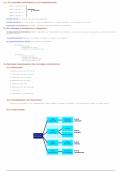
,The audit process can be broken down into a number of audit phases (see the figure below).
Although the figure suggest that these phases are sequential, they are actually quite iterative and
interrelated in nature.
Client acceptance/continuance and establishing an
understanding with the client (chapter 5)
Preliminary engagement activity (chapter 5)
Plan the audit (chapter 3 and 5)
Consider internal control (chapter 6)
Audit business processes and related accounts (e.g. revenue
generation) (chapters 10-16)
Complete the audit (chapter 17)
Evaluate results and issue audit report (chapters 1 and 18)
Client acceptance/continuance and establishing and understanding with the client
Professional standards require that audit firms establish policies and procedures for deciding
whether to accept new clients and to retain current clients. The purpose of such policies is to
minimize the likelihood that an auditor will be associated with clients that lack integrity. If an auditor
is associated with a client that lacks integrity, the risk increases that material misstatements may
exist and not be detected by the auditor. This can lead to lawsuits brought by users of the financial
statements.
For a prospective new client, auditors would ordinarily confer with the predecessor auditor and
frequently conduct background checks on top managements. The knowledge that the auditor
gathers during the acceptance/continuance process provides valuable understanding of the entity
and its environment, thus helping the auditor asses risk and plan the audit.
Once the acceptance/continuance decision has been made, the auditor establishes an understanding
with the client regarding the services to be performed and the terms of the engagements.
Preliminary engagement activity
There are generally two preliminary engagement activities: determining the audit engagement team
requirements and ensuring that the audit firm and engagement team are in compliance with ethical
requirements (including independency of the entity subject to the audit).
The auditor starts by updating his or her understanding of the entity and its environment. The
auditor’s understanding of the entity and its environment should include information about the
following categories: industry, regulatory and other external factors, nature of the entity, accounting
policies, objectives, strategies and related business risk, financial performance measures and internal
control.
2
, The entity and its environments is used to assess the risk of material misstatement and to set the
scope of the audit. The auditor should perform risk assessment procedures to support that
understanding.
The engagement partner or manager ensures that the audit team is composed of team members
who have the appropriate audit and industry experience for the engagement. The partner or
manager also determines whether the audit will require experts.
Plan the audit
Proper planning is important to ensure that the audit is conducted in an effective and efficient
manner. In order to plan the audit properly, the audit team must make a preliminary assessment of
the client’s business risks and determine materiality. The auditor team relies on these judgements to
then assess risk relating to the likelihood of material misstatements in the financial statements.
In planning the audit, the auditor should be guided by the procedures performed to gain and
document an understanding of the entity and the results of the risk assessment process.
The outcome of the auditor’s planning process is a written plan that sets forth the overall audit
strategy and the nature, extent and timing of the audit work.
Consider internal control
Internal control is designed and affected by an entity’s board of directors or other body charged with
governance, management and other personnel to provide reasonable assurance regarding the
achievement of objectives in the following categories: reliability of financial reporting, effectiveness
and efficiency of operations and compliance with applicable laws and regulations.
Audit business processes and related accounts
The auditor typically assess the risk of material misstatement by examining the entity’s business
process or accounting cycles (e.g. purchasing process or revenue process). The auditor then
determines the audit procedures that are necessary to reduce the risk of material misstatement to a
low level for the financial statement accounts affected by a particular business process.
Complete the audit
After the auditor has finished gathering evidence relating to financial statement assertions, the
sufficiency of the evidence gather is evaluated. The auditor must obtain sufficient appropriate
evidence in order to reach ad justify a conclusion on the fairness of the financial statements.
In this phase, the auditor also assesses the possibility of contingent liabilities, such as lawsuits, and
searchers for any events subsequent to the balance sheet date that may impact the financial
statements.
Evaluate results and issue audit report
The final phase in the audit process is to evaluate results and choose the appropriate audit report to
issue. The audit report, also referred to as the audit opinion, is the main product or output of the
audit. The audit report communicates the auditor’s findings to the users of the financial statements.
During and at the completion of the audit, the auditor request the client to correct the identified
misstatements. If at the end of the audit any remaining uncorrected misstatements are judged to be
material, the auditor issues and audit report that expresses and explains that the financial
statements are material misstated. If the uncorrected misstatements do not cause the financial
statements to be materially misstated, the auditor may issue an audit report with an unmodified
opinion.
If the financial statements are materially misstated, the auditor issues an audit report with a
modified opinion. The auditor will likely modify the opinion expressing that the financial statements
are fairly presented except for the misstatement identified by the auditor. If the significance of the
effect of the financial statements of the material misstatement, however, is pervasive, the auditor
3
Chapter 1 – An introduction to assurance and financial statement auditing
The figure below presents a simplified overview of the process for a financial statement audit. The
auditor gathers evidence about the business transactions that have occurrence (economic activity
and events) and about management (preparation of financial statements). The auditor uses this
evidence to compare the assertions contained in the financial statements to the criteria used by
management in preparing them (i.e. the applicable financial reporting framework such as IFRSs). The
auditor’s report communicates to the users the degree of correspondence between the assertions
and the criteria.
The conceptual and procedural details of a financial statement audit build on three fundamental
concepts: audit risk, materiality and evidence that relates to management’s financial statements
assertion. The auditor’s assessment of audit risk and materiality influence the nature, timing, and
extent of the audit work to be performed (referred to as the scope of the audit).
Audit risk is the risk that the auditor expresses an inappropriate audit opinion when the financial
statements are materially misstated. Misstatements, including omissions, are considered to be
material if they, individually or in the aggregate, could reasonably be expect to influence the
economic decisions of users taken on the basis of the financial statements.
Judgments about materiality are made in light of surrounding circumstances, and are affected by the
size or nature of a misstatement, or a combination of both.
Evidence that assists the auditor in evaluating management’s financial statement assertions consists
of the underlying accounting data and any additional information available to the auditor, whether
originating from the client or externally. Evidence should be relevant and reliable.
Audit process
1
,The audit process can be broken down into a number of audit phases (see the figure below).
Although the figure suggest that these phases are sequential, they are actually quite iterative and
interrelated in nature.
Client acceptance/continuance and establishing an
understanding with the client (chapter 5)
Preliminary engagement activity (chapter 5)
Plan the audit (chapter 3 and 5)
Consider internal control (chapter 6)
Audit business processes and related accounts (e.g. revenue
generation) (chapters 10-16)
Complete the audit (chapter 17)
Evaluate results and issue audit report (chapters 1 and 18)
Client acceptance/continuance and establishing and understanding with the client
Professional standards require that audit firms establish policies and procedures for deciding
whether to accept new clients and to retain current clients. The purpose of such policies is to
minimize the likelihood that an auditor will be associated with clients that lack integrity. If an auditor
is associated with a client that lacks integrity, the risk increases that material misstatements may
exist and not be detected by the auditor. This can lead to lawsuits brought by users of the financial
statements.
For a prospective new client, auditors would ordinarily confer with the predecessor auditor and
frequently conduct background checks on top managements. The knowledge that the auditor
gathers during the acceptance/continuance process provides valuable understanding of the entity
and its environment, thus helping the auditor asses risk and plan the audit.
Once the acceptance/continuance decision has been made, the auditor establishes an understanding
with the client regarding the services to be performed and the terms of the engagements.
Preliminary engagement activity
There are generally two preliminary engagement activities: determining the audit engagement team
requirements and ensuring that the audit firm and engagement team are in compliance with ethical
requirements (including independency of the entity subject to the audit).
The auditor starts by updating his or her understanding of the entity and its environment. The
auditor’s understanding of the entity and its environment should include information about the
following categories: industry, regulatory and other external factors, nature of the entity, accounting
policies, objectives, strategies and related business risk, financial performance measures and internal
control.
2
, The entity and its environments is used to assess the risk of material misstatement and to set the
scope of the audit. The auditor should perform risk assessment procedures to support that
understanding.
The engagement partner or manager ensures that the audit team is composed of team members
who have the appropriate audit and industry experience for the engagement. The partner or
manager also determines whether the audit will require experts.
Plan the audit
Proper planning is important to ensure that the audit is conducted in an effective and efficient
manner. In order to plan the audit properly, the audit team must make a preliminary assessment of
the client’s business risks and determine materiality. The auditor team relies on these judgements to
then assess risk relating to the likelihood of material misstatements in the financial statements.
In planning the audit, the auditor should be guided by the procedures performed to gain and
document an understanding of the entity and the results of the risk assessment process.
The outcome of the auditor’s planning process is a written plan that sets forth the overall audit
strategy and the nature, extent and timing of the audit work.
Consider internal control
Internal control is designed and affected by an entity’s board of directors or other body charged with
governance, management and other personnel to provide reasonable assurance regarding the
achievement of objectives in the following categories: reliability of financial reporting, effectiveness
and efficiency of operations and compliance with applicable laws and regulations.
Audit business processes and related accounts
The auditor typically assess the risk of material misstatement by examining the entity’s business
process or accounting cycles (e.g. purchasing process or revenue process). The auditor then
determines the audit procedures that are necessary to reduce the risk of material misstatement to a
low level for the financial statement accounts affected by a particular business process.
Complete the audit
After the auditor has finished gathering evidence relating to financial statement assertions, the
sufficiency of the evidence gather is evaluated. The auditor must obtain sufficient appropriate
evidence in order to reach ad justify a conclusion on the fairness of the financial statements.
In this phase, the auditor also assesses the possibility of contingent liabilities, such as lawsuits, and
searchers for any events subsequent to the balance sheet date that may impact the financial
statements.
Evaluate results and issue audit report
The final phase in the audit process is to evaluate results and choose the appropriate audit report to
issue. The audit report, also referred to as the audit opinion, is the main product or output of the
audit. The audit report communicates the auditor’s findings to the users of the financial statements.
During and at the completion of the audit, the auditor request the client to correct the identified
misstatements. If at the end of the audit any remaining uncorrected misstatements are judged to be
material, the auditor issues and audit report that expresses and explains that the financial
statements are material misstated. If the uncorrected misstatements do not cause the financial
statements to be materially misstated, the auditor may issue an audit report with an unmodified
opinion.
If the financial statements are materially misstated, the auditor issues an audit report with a
modified opinion. The auditor will likely modify the opinion expressing that the financial statements
are fairly presented except for the misstatement identified by the auditor. If the significance of the
effect of the financial statements of the material misstatement, however, is pervasive, the auditor
3