GGZ3025 Verslaving
TASK 6 -VERSLAVING EN COMORBIDITEIT
DUAL DIAGNOSIS: A REVIEW OF ETIOLOGICAL THEORIES
Bron: Mueser, Drake & Wallach (1998)
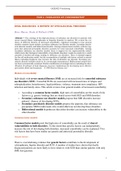
Models of comorbidity
Individuals with severe mental illnesses (SMI) are at increased risk for comorbid substance
use disorders (SUD). Comorbid SUDs are associated with increased rates of relapse and
rehospitalization, homelessness, legal problems, violence, treatment non-compliance, HIV
infection and family stress. This article reviews four general models of increased comorbidity;
o According to common factor models, high rates of comorbidity are the result of risk
factors (e.g. genetic loading) that are shared across both SUD and SMI disorders.
o Secondary substance use disorder models propose that SMI disorders increase
patients’ chances of developing SUDs.
o Secondary psychiatric disorder models propose the opposite, that substance use
precipitates SMI in indivisuals who would otherwise not develop these disorders.
o Bidirectional models hypothesize that either disorder can increase vulnerability to the
other disorder.
Common factor models
Common factor models posit that high rates of comorbidity are the result of shared
vulnerabilities to both disorders. To the extent that specific factors can independently
increase the risk of developing both disorders, increased comorbidity can be explained. Two
risk factors that have been studies are genetis and antisocial personality disorder.
Genetic factors
There is overwhelming evidence that genetic factors contribute to the development of
schizophrenia, bipolar disorder and SUD. A number of studies have shown that dually
diagnosed patients are more likely to have relatives with SUD than similar patients with only
SMI. this question.
1
, GGZ3025 Verslaving
If shared genetic vulnerability to both SMI and SUD accounts for increased comorbidity,
higher rates of the other disorder would be expected in the relatives of patients with one of the
disorders. For example, higher than expected rates of SUD in the relatives of patients with
SMI would suggest that shared genetic vulnerability in families is a common factor that
accounts for some increased comorbidity between the two disorders. There are at least two
possible sources of such shared genetic vulnerability in families;
o Within individual family members, genetic vulnerability to one disorder (e.g. SMI)
could also be associated with increased vulnerability to another disorder (e.g.
SUD), with offspring at increased risk to developing either or both disorders from the
genetic contribution of that individual parent.
o If family members with one disorder (e.g. SMI) were more likely to mate individuals
with the other disorder (e.g. SUD), then would be expected by chance alone that the
offspring would be at risk to developing either or both disorders due to the individual
genetic contributions from each parent.
Thus, increased rates of SUD in relatives of patients with SMI would support the role of
genetic factors in accounting for increased rates of comorbidity, either due to shared genetic
factors within individual family members or genetic factors shared between different
relatives due to assortative mating.
Antisocial personality disorder (ASPD)
Research has shown that ASPD and its childhood precursor conduct disorder (CD) are
strongly related to SUD. Furthermore, ASPD in persons with primary SUD has been
consistently linked with a more severe course of illness, including an earlier age of SUD
onset, more severe physical dependence, and more adverse physical, social, and legal
consequences of SUD. In addition to evidence documenting a link among CD, ASPD, and
SUD, similar associations have been reported between ASPD and SMI. Specifically,
symptoms of CD in childhood, such as repeated fighting, truancy, and lying, have been found
to be predictive of the later development of schizophrenia.
Although there is evidence supporting an association between ASPD and increased
comorbidity between SUD and SMI, the significance of ASPD as a risk factor is unclear. One
possible complication is that substance abuse may contribute to ASPD-like symptoms, so that
rather than ASPD being a risk factor for the development of SUD, it is simply a by-product
of SUD.
Other possible common factors
Two factors that may independently increase vulnerability to both SMI and SUD are
socioeconomic status and cognitive functioning. There is a general association between lower
SES, including education, income, and occupation, and higher rates of SUD. Similarly,
increased rates of schizophrenia are related to lower SES and poverty in general.
Impairment in cognitive functioning may also increase risk for both SUD and SMI, mainly
schizophrenia. Such impairment could reflect genetic factors, early environmental factors, or
a combination of both.
2
TASK 6 -VERSLAVING EN COMORBIDITEIT
DUAL DIAGNOSIS: A REVIEW OF ETIOLOGICAL THEORIES
Bron: Mueser, Drake & Wallach (1998)
Models of comorbidity
Individuals with severe mental illnesses (SMI) are at increased risk for comorbid substance
use disorders (SUD). Comorbid SUDs are associated with increased rates of relapse and
rehospitalization, homelessness, legal problems, violence, treatment non-compliance, HIV
infection and family stress. This article reviews four general models of increased comorbidity;
o According to common factor models, high rates of comorbidity are the result of risk
factors (e.g. genetic loading) that are shared across both SUD and SMI disorders.
o Secondary substance use disorder models propose that SMI disorders increase
patients’ chances of developing SUDs.
o Secondary psychiatric disorder models propose the opposite, that substance use
precipitates SMI in indivisuals who would otherwise not develop these disorders.
o Bidirectional models hypothesize that either disorder can increase vulnerability to the
other disorder.
Common factor models
Common factor models posit that high rates of comorbidity are the result of shared
vulnerabilities to both disorders. To the extent that specific factors can independently
increase the risk of developing both disorders, increased comorbidity can be explained. Two
risk factors that have been studies are genetis and antisocial personality disorder.
Genetic factors
There is overwhelming evidence that genetic factors contribute to the development of
schizophrenia, bipolar disorder and SUD. A number of studies have shown that dually
diagnosed patients are more likely to have relatives with SUD than similar patients with only
SMI. this question.
1
, GGZ3025 Verslaving
If shared genetic vulnerability to both SMI and SUD accounts for increased comorbidity,
higher rates of the other disorder would be expected in the relatives of patients with one of the
disorders. For example, higher than expected rates of SUD in the relatives of patients with
SMI would suggest that shared genetic vulnerability in families is a common factor that
accounts for some increased comorbidity between the two disorders. There are at least two
possible sources of such shared genetic vulnerability in families;
o Within individual family members, genetic vulnerability to one disorder (e.g. SMI)
could also be associated with increased vulnerability to another disorder (e.g.
SUD), with offspring at increased risk to developing either or both disorders from the
genetic contribution of that individual parent.
o If family members with one disorder (e.g. SMI) were more likely to mate individuals
with the other disorder (e.g. SUD), then would be expected by chance alone that the
offspring would be at risk to developing either or both disorders due to the individual
genetic contributions from each parent.
Thus, increased rates of SUD in relatives of patients with SMI would support the role of
genetic factors in accounting for increased rates of comorbidity, either due to shared genetic
factors within individual family members or genetic factors shared between different
relatives due to assortative mating.
Antisocial personality disorder (ASPD)
Research has shown that ASPD and its childhood precursor conduct disorder (CD) are
strongly related to SUD. Furthermore, ASPD in persons with primary SUD has been
consistently linked with a more severe course of illness, including an earlier age of SUD
onset, more severe physical dependence, and more adverse physical, social, and legal
consequences of SUD. In addition to evidence documenting a link among CD, ASPD, and
SUD, similar associations have been reported between ASPD and SMI. Specifically,
symptoms of CD in childhood, such as repeated fighting, truancy, and lying, have been found
to be predictive of the later development of schizophrenia.
Although there is evidence supporting an association between ASPD and increased
comorbidity between SUD and SMI, the significance of ASPD as a risk factor is unclear. One
possible complication is that substance abuse may contribute to ASPD-like symptoms, so that
rather than ASPD being a risk factor for the development of SUD, it is simply a by-product
of SUD.
Other possible common factors
Two factors that may independently increase vulnerability to both SMI and SUD are
socioeconomic status and cognitive functioning. There is a general association between lower
SES, including education, income, and occupation, and higher rates of SUD. Similarly,
increased rates of schizophrenia are related to lower SES and poverty in general.
Impairment in cognitive functioning may also increase risk for both SUD and SMI, mainly
schizophrenia. Such impairment could reflect genetic factors, early environmental factors, or
a combination of both.
2