

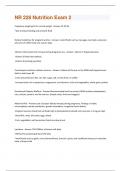
NR 228 Nutrition Exam 2 Questions & Answers Already Graded A+
Pregnancy weight gain for normal weight - Answer-25-35 lbs *due to breast feeding and amniotic fluid Dietary Guidelines for pregnant women - Answer--Avoid foods such as raw eggs, raw meats, excessive amounts of coffee (only one cup per day) Vitamins that should not increase during pregnancy are - Answer--Vitamin C (hypercalcemia) -Vitamin E (fetal heart defect) -Vitamin K (prolong jaundice) Preeclampsia nutrition related concerns - Answer--Patient will be put on the DASH diet (hypertension diet) to help lower BP -Limit and avoid trans fats, sat. fats, sugar, salt, no fast food, no coffee -Increase foods rich in potassium, magnesium, and vitamins, fruits and vegetables, whole grain, protein Gestational Diabetes Mellitus - Answer-Recommended foods to prevent GDM include carbohydrates, iron, calcium, protein, and fat sources. (simple carbs, fruits and veggies) Maternal PKU - Answer-Lack of proper dietary therapy during pregnancy. Findings in infant: microcephaly, mental retardation, growth retardation, congenital heart defects. -Pregnant women should not eat foods high in phenylalanine (should only consume 1-4 mg per day) -Avoid fish, meat, diet soda, eggs, wheat -Fruit, vegetables, and low protein foods are okay to eat Lactation - Answer-750-1000mL of breast milk daily -500 kcal for producing breast milk daily *avoid foods such as garlic, citrus (lemon/limes), broccoli, spices, and cauliflower because it may alter taste of breast milkInfancy birth weight and breast feeding - Answer--first 6 months of life infant should consume breast milk. -second 6 months of life infant should consume a combination of breast milk and baby food Infant Dietary Guidelines - Answer--Solid foods at 4-5 months -if exclusively breastfeeding, baby should be taking in an iron supplement at 4 months old to avoid iron deficiency anemia. Infancy and Fat Consumption - Answer--Fat and cholesterol consumption is important in brain growth and development and nerve tissue -If infant is overweight, do not restrict fats Baby Bottle Tooth Decay - Answer-occurs when baby goes to bed with a bottle -bottle before bed should only contain water Nutrition-Related Concerns: Infancy - Answer--Premature/low-weight = failure to thrive -if child has PKU, phenyl-free formula should be used -If baby has galactosemia (lactose intolerant) baby should consume soy formula Toddlers: 1-3 years old diet - Answer--limit 100% juice: 4-6oz per day -consume snack foods such as graham crackers, apple slices, and cheese cubes -Limit milk intake to 24oz per day due to lack of iron -child should try food product 7-10 times before deciding not to like something Preschoolers: 4-6 years old diet - Answer--environmental influencer eaters -avoid eating sugary foods while watching tv -healthy plate contains: veggies, fruits, whole grain, healthy protein, water, healthy oilsSchool age children: 7-12 years old diet - Answer--Concerns are: 10% skipping breakfast and type of diet they are consuming -Risk for diabetes and obesity Adolescence: 13-19 years old diet - Answer-- iron, fiber, calcium, protein, and vitamins are important nutrients to consume -Calcium intake = 1300 mg daily (3 to 4 servings of dairy products) -Adolescents reach maximum bone density levels during this time -Foods high in CA: milk, sardines, cheese, yogurt
Document information
- Uploaded on
- May 17, 2024
- Number of pages
- 15
- Written in
- 2023/2024
- Type
- Exam (elaborations)
- Contains
- Questions & answers


