TEST 3 - ADVANCED PATHOPHYSIOLOGY SUMMER 2024 UTA 5315 Correctly Answered
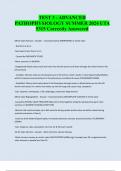
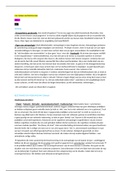
TEST 3 - ADVANCED PATHOPHYSIOLOGY SUMMER 2024 UTA 5315 Correctly Answered Mitral Valve Stenosis - Answer -- Characterized by NARROWING of mitral valve - Normal is 4-6 cm -Narrowed is less than 2.5 cm - Caused by RHEUMATIC FEVER -More common in WOMEN -Oxygenated blood comes back into heart into the left atrium and down through the mitral valve to the left ventricle - Complex: Stenosis leads to volume/pressure in left atrium, which results in atrial hypertrophy/dilation, which increases pressure/volume in the pulmonary circulation & causes PULMONARY EDEMA - Simplified: Skinny mitral valve doesn't let blood pass through easily, so blood backs up into the left atrium and causes it to swell, then backs up into the lung and causes resp. symptoms -S/sx: dyspnea, hemoptysis, a-fib, dysphagia, pulmonary hypertension Mitral Valve Regurgitation - Answer --Characterized by INCOMPLETE CLOSURE of mitral valve -Caused by MITRAL VALVE PROLAPSE (flaps don't close together properly, leaving valve ajar); more common in WOMEN; STICKING CHEST PAIN -Blood in left ventricle backs up to left ventricle during systole (mitral valve should be closed during systole/contraction of heart) -Leads to atrial dilation/hypertrophy, increased pulmonary vascular pressure/volume, PULMONARY EDEMA -S/sx: Dyspnea, rales, pansystolic murmur, S3 & S4 heart sounds Aortic Valve Stenosis - Answer --Most common valvular disease -Most common causes are aortic valve CALCIFICATION (stiffening) in people over 60; congenital aortic valve stenosis in people less than 30-Normal valve 3 cm; symptoms seen when valve less than 1 cm; severe when valve is less than 0.5 cm -Narrowed valve prevents outflow from left ventricle to aorta. This backs up blood to the left atrium and ultimately floods the lung causing PULMONARY EDEMA S/Sx: Pulmonary hypertension/edema, poor outflow of aorta to body (aorta sends out oxygenated blood to body), causing fainting or chest pain Simplified: Aorta is stiff and can't send out oxygenated blood properly to the body, depriving tissues of oxygen. Blood gets backed up into lungs, causing pulmonary edema. Aortic Valve Regurgitation - Answer --Valve is TOO WIDE or TOO NARROW, blood doesn't pass through effectively, causing back flow of blood into the left ventricle
Written for
- Institution
- NURS 5315
- Course
- NURS 5315
Document information
- Uploaded on
- May 17, 2024
- Number of pages
- 35
- Written in
- 2023/2024
- Type
- Exam (elaborations)
- Contains
- Questions & answers
Subjects
-
test 3 advanced pathophysiology summer 2024
-
test 3 advanced pathophysiology summer 2025
-
mitral valve stenosis answer characterized by

Also available in package deal