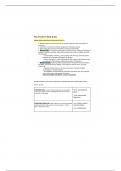
Psych Exam #1 Study Guide
Mental health/mental illness/nursing priority (chp. 2)
● Mental health and mental illness are not specific entities but rather they exist on a
continuum.
● Continuum is dynamic and shifting; ranging from moderate to severe.
● Many biological and environmental factors influence mental health.
● Mental health: a successful performance of mental functions, resulting in the ability to
engage in productive activities, enjoy fulfilling relationships, adapt to change, and cope
with adversity.
○ The foundation of thinking, communication skills, learning, emotional growth,
resilience, and self-esteem throughout the lifespan.
○ State of well-being in which individuals are able to realize their abilities as well
as contribute to their community within the context of life stressors.
● Mental illnesses: medical conditions (dysfunctions of the brain & neurotransmitters)
that affect a person9s thinking, feelings, mood, ability to relate to others, and daily
functioning.
○ Basically, mental illness can be seen as the result of flawed biological,
psychological, or social processes.
○ Are treatable, and individuals can experience symptoms relief, and complete
cure in some cases, with treatment & support.
NEUROTRANSMITTER MENTAL HEALTH DISORDER
Neurotransmitters: which ones are elevated or decreased with each mental health disorder
(chp. 4, pg. 40)
DOPAMINE (DA): controls emotional responses and the brain9s HIGH- Schizophrenia,
reward and pleasure centers, stimulates the heart, and increases Mania
blood flow to vital organs.
LOW- Parkinson9s,
Depression
NOREPINEPHRINE (NE): Mood, attention, and arousal. Stimulates HIGH- MANIA, ANXIETY,
sympathetic branch of the autonomic nervous system or < flight or SCHIZOPHRENIA
fight= in response to stress.
LOW- DEPRESSION
, SEROTONIN (5-HT): The happy one, the one we want. Found HIGH- ANXIETY STATES
in the brain and spinal cord, helps regulate mood, arousal, LOW- DEPRESSION
attention, behavior, and body temp.
GAMMA AMINOBUTYRIC ACID (GABA) Inhibitory HIGH- REDUCTION OF
neurotransmitter: controls neuron excitability and is ANXIETY
associated with the regulation of anxiety.
LOW- MANIA,
SCHIZOPHRENIA,
ANXIETY
ACETYLCHOLINE (ACH): Cholinergic; plays HIGH- DEPRESSION
1
a role in skeletal muscle movement, arousal, memory, and the sleep/wake cycle.
GLUTAMATE: Excitatory neurotransmitter; activates NMDA receptor.
Medications: know classifications
LOW- ALZHEIMER9S, HUNTINGTONS, PARKINSONS
HIGH- neurotoxicity, neurodegeneration LOW- PSYCHOSIS
CLASSES
● Anxiolytics 8PAMS LAMS9 AKA Benzodiazepines for the treatment of anxiety
○ Used for anxiety. Use them short term, they act quick, avoid preg, caffeine,
and alcohol.
○ Buspirone used for GAD general anxiety disorder.
● Antidepressants- SSRIs, SNRIs, TCAs, MOAIs for treatment of depression.
○ SSRI- 1st choice for depression.
■ Anticholinergic effects. Give it in the AM. Takes 6 weeks to work and give
, it 2 weeks between a MOAI. Do EKG cardiac arrhythmias possible. ○ SNRI- 2nd generation
antidepressant.
■ Takes 1-3 weeks and 2-3 months for benefit. Encourage compliance and avoid alcohol.
○ TCA- Not the first line of treatment.
■ Has adverse reactions. Use with caution with elderly and take at PM. Has
many interactions with other drugs.
○ MOAI- Used as a last resort because it has so many adverse effects and strict
diet must follow.
■ No tyramine rich foods, no otc drugs, no caffeine.
● Mood Stabilizers- Lithium and antiepileptic drugs. t reatment of bipolar disorder ○ Lithium-
First line of meds used for long term treatment of Bipolar disorder.
■ 0.5-1.5 range.
○ Antiepileptic drugs- 2nd choice after lithium may not work.
■ Monitor liver function and bone marrow suppression.
○ Anxiolytics & antipsychotics- may also be used for bipolar disorder.
○ CBC, liver, and renal tests should be done
● Antipsychotics- Treatment of schizophrenia ( hallucinations, delusions,
disordered thinking, paranoia.)
○ Can cause EPS, NMS. (report muscle stiffness, severe side effect)
○ 1st gen: exerts muscarinic blockade; resulting in dry mouth, blurred vision,
constipation, and urinary retention.
○ 2nd gen: often associated with movement disorders, orthostatic hypotension,
and
sedation.
● Antiparkinson drugs- Anticholinergics
○ Used for EPS symptoms and parkinson disease. Anticholinergic effects.
Ego defense mechanisms (chp. 11, pg:133)
2
Mental health/mental illness/nursing priority (chp. 2)
● Mental health and mental illness are not specific entities but rather they exist on a
continuum.
● Continuum is dynamic and shifting; ranging from moderate to severe.
● Many biological and environmental factors influence mental health.
● Mental health: a successful performance of mental functions, resulting in the ability to
engage in productive activities, enjoy fulfilling relationships, adapt to change, and cope
with adversity.
○ The foundation of thinking, communication skills, learning, emotional growth,
resilience, and self-esteem throughout the lifespan.
○ State of well-being in which individuals are able to realize their abilities as well
as contribute to their community within the context of life stressors.
● Mental illnesses: medical conditions (dysfunctions of the brain & neurotransmitters)
that affect a person9s thinking, feelings, mood, ability to relate to others, and daily
functioning.
○ Basically, mental illness can be seen as the result of flawed biological,
psychological, or social processes.
○ Are treatable, and individuals can experience symptoms relief, and complete
cure in some cases, with treatment & support.
NEUROTRANSMITTER MENTAL HEALTH DISORDER
Neurotransmitters: which ones are elevated or decreased with each mental health disorder
(chp. 4, pg. 40)
DOPAMINE (DA): controls emotional responses and the brain9s HIGH- Schizophrenia,
reward and pleasure centers, stimulates the heart, and increases Mania
blood flow to vital organs.
LOW- Parkinson9s,
Depression
NOREPINEPHRINE (NE): Mood, attention, and arousal. Stimulates HIGH- MANIA, ANXIETY,
sympathetic branch of the autonomic nervous system or < flight or SCHIZOPHRENIA
fight= in response to stress.
LOW- DEPRESSION
, SEROTONIN (5-HT): The happy one, the one we want. Found HIGH- ANXIETY STATES
in the brain and spinal cord, helps regulate mood, arousal, LOW- DEPRESSION
attention, behavior, and body temp.
GAMMA AMINOBUTYRIC ACID (GABA) Inhibitory HIGH- REDUCTION OF
neurotransmitter: controls neuron excitability and is ANXIETY
associated with the regulation of anxiety.
LOW- MANIA,
SCHIZOPHRENIA,
ANXIETY
ACETYLCHOLINE (ACH): Cholinergic; plays HIGH- DEPRESSION
1
a role in skeletal muscle movement, arousal, memory, and the sleep/wake cycle.
GLUTAMATE: Excitatory neurotransmitter; activates NMDA receptor.
Medications: know classifications
LOW- ALZHEIMER9S, HUNTINGTONS, PARKINSONS
HIGH- neurotoxicity, neurodegeneration LOW- PSYCHOSIS
CLASSES
● Anxiolytics 8PAMS LAMS9 AKA Benzodiazepines for the treatment of anxiety
○ Used for anxiety. Use them short term, they act quick, avoid preg, caffeine,
and alcohol.
○ Buspirone used for GAD general anxiety disorder.
● Antidepressants- SSRIs, SNRIs, TCAs, MOAIs for treatment of depression.
○ SSRI- 1st choice for depression.
■ Anticholinergic effects. Give it in the AM. Takes 6 weeks to work and give
, it 2 weeks between a MOAI. Do EKG cardiac arrhythmias possible. ○ SNRI- 2nd generation
antidepressant.
■ Takes 1-3 weeks and 2-3 months for benefit. Encourage compliance and avoid alcohol.
○ TCA- Not the first line of treatment.
■ Has adverse reactions. Use with caution with elderly and take at PM. Has
many interactions with other drugs.
○ MOAI- Used as a last resort because it has so many adverse effects and strict
diet must follow.
■ No tyramine rich foods, no otc drugs, no caffeine.
● Mood Stabilizers- Lithium and antiepileptic drugs. t reatment of bipolar disorder ○ Lithium-
First line of meds used for long term treatment of Bipolar disorder.
■ 0.5-1.5 range.
○ Antiepileptic drugs- 2nd choice after lithium may not work.
■ Monitor liver function and bone marrow suppression.
○ Anxiolytics & antipsychotics- may also be used for bipolar disorder.
○ CBC, liver, and renal tests should be done
● Antipsychotics- Treatment of schizophrenia ( hallucinations, delusions,
disordered thinking, paranoia.)
○ Can cause EPS, NMS. (report muscle stiffness, severe side effect)
○ 1st gen: exerts muscarinic blockade; resulting in dry mouth, blurred vision,
constipation, and urinary retention.
○ 2nd gen: often associated with movement disorders, orthostatic hypotension,
and
sedation.
● Antiparkinson drugs- Anticholinergics
○ Used for EPS symptoms and parkinson disease. Anticholinergic effects.
Ego defense mechanisms (chp. 11, pg:133)
2