EMD Certification Exam Questions and Answers |100% Correct | Verified and Updated
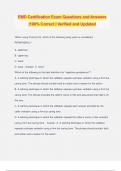
EMD Certification Exam Questions and Answers |100% Correct | Verified and Updated When using Protocol 22, which of the following body parts is considered PERIPHERAL? A. abdomen B. upper leg C. hand D. head - Answer- C. hand Which of the following is the best definition for "repetitive persistence"? A. A calming technique in which the calltaker repeats a phrase verbatim using a firm but caring tone. The phrase should contain both an action and a reason for the action. B. A calming technique in which the calltaker repeats a phrase verbatim using a firm but caring tone. The phrase includes the caller's name or title and assurance that help is on the way. C. A calming technique in which the calltaker repeats each answer provided by the caller verbatim using a firm but caring tone. D. A calming technique in which the calltaker repeats the caller's name or title verbatim using a firm but caring tone. - Answer- A. A calming technique in which the calltaker repeats a phrase verbatim using a firm but caring tone. The phrase should contact both and action and a reason for the action. What is the most appropriate Chief Complaint Protocol to use when the complaint description is a breathing related tracheostomy (trach or stoma) problem in a conscious patient? A. 6: Breathing Problems B. 11: Choking C. 19: Heart Problems/A.I.C.D. D. 26: Sick Person (specific diagnosis) - Answer- A. 6: Breathing Problems What is the most appropriate Chief Complaint Protocol to use when the caller is reporting autonomic dysreflexia/hyperreflexia? A. 1: Abdominal Pain/Problems B. 26: Sick Person (Specific Diagnosis) C. 30: Traumatic Injuries (Specific) D. 32: Unknown Problem (Person Down) - Answer- B. Sick Person (Specific Diagnosis) The Priority Symptoms are: A. abnormal breathing, chest pain/discomfort (any), decreased level of consciousness, and SERIOUS hemorrhage. B. Chief Complaint, patient's age, status of consciousness, and status of breathing. C. choking, heart attack, seizure, and stroke. D. MEDICAL, TRAUMA, scene safety, and mechanism of injury - Answer- A. abnormal breathing, chest pain/discomfort (any), decreased level of consciousness, and SERIOUS hemorrhage. MPDS words or phrases that have a specific dispatch definition ar
Written for
- Institution
- EMD
- Course
- EMD
Document information
- Uploaded on
- May 14, 2024
- Number of pages
- 4
- Written in
- 2023/2024
- Type
- Exam (elaborations)
- Contains
- Questions & answers
Subjects
-
emd certification exam questions and answers 100

Also available in package deal