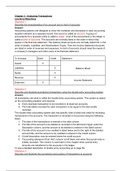
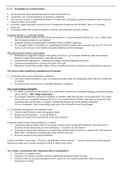
Chapter 2 - Analyzing Transactions
Learning Objectives
Objective 1:
Describe the characteristics of an account and a chart of accounts
Answer:
Accounting systems are designed to show the increases and decreases in each accounting
equation element as a separate record, this record is called an account. A group of
accountants for a business entity is called a ledger. A list of the accountants in the ledger is
called a chart of accounts. The accounts are normally listed in the order in which they
appear in the financial statement. The balance sheet accounts are normally listed first, in the
order of Assets, Liabilities, and Stockholders’ Equity. Then the Income Statement Accounts
are listed in order of revenues and expenses. A chart of accounts should meet the needs of
a company’s managers and other users of its financial statement.
To Increase Debit Credit Statement
Assets X
Liabilities X Balance Sheet
Equity X
Revenue X
Income Statement
Expenses X
Objective 2:
Describe and illustrate journalizing transactions using the double entry accounting system
Answer:
All businesses use what is called the double-entry accounting system. This system is based
on the accounting equation and requires:
● Every business transaction to be recorded in at least two accounts.
● The total debits recorded for each transaction to be equal to the total credits
recorded.
The double entry accounting system also has specific rules of debit and credit for recording
transactions in the accounts. The transaction is recorded in the journal using the following
steps:
1. The date of the transactions is entered in the date column.
2. The title of the account to be debited is recorded in the left-hand margin under the
Description column, and the amount to be debited is entered in the Debit column.
3. The title of the account to be credited is listed below and to the right of the debited
account title, and the amount to be credited is entered in the Credit column.
4. A brief description may be entered below the credit account
5. The posting reference (Post. Ref.) column is left blank and when the journal entry is
initially recorded. This column is used later in this chapter when journal entry
amounts are transferred to the accounts in the ledger.
To see a detailed description of double entry accounting go to page 59.
Objective 3:
Describe and illustrate the journalizing and posting of transactions to accounts
Learning Objectives
Objective 1:
Describe the characteristics of an account and a chart of accounts
Answer:
Accounting systems are designed to show the increases and decreases in each accounting
equation element as a separate record, this record is called an account. A group of
accountants for a business entity is called a ledger. A list of the accountants in the ledger is
called a chart of accounts. The accounts are normally listed in the order in which they
appear in the financial statement. The balance sheet accounts are normally listed first, in the
order of Assets, Liabilities, and Stockholders’ Equity. Then the Income Statement Accounts
are listed in order of revenues and expenses. A chart of accounts should meet the needs of
a company’s managers and other users of its financial statement.
To Increase Debit Credit Statement
Assets X
Liabilities X Balance Sheet
Equity X
Revenue X
Income Statement
Expenses X
Objective 2:
Describe and illustrate journalizing transactions using the double entry accounting system
Answer:
All businesses use what is called the double-entry accounting system. This system is based
on the accounting equation and requires:
● Every business transaction to be recorded in at least two accounts.
● The total debits recorded for each transaction to be equal to the total credits
recorded.
The double entry accounting system also has specific rules of debit and credit for recording
transactions in the accounts. The transaction is recorded in the journal using the following
steps:
1. The date of the transactions is entered in the date column.
2. The title of the account to be debited is recorded in the left-hand margin under the
Description column, and the amount to be debited is entered in the Debit column.
3. The title of the account to be credited is listed below and to the right of the debited
account title, and the amount to be credited is entered in the Credit column.
4. A brief description may be entered below the credit account
5. The posting reference (Post. Ref.) column is left blank and when the journal entry is
initially recorded. This column is used later in this chapter when journal entry
amounts are transferred to the accounts in the ledger.
To see a detailed description of double entry accounting go to page 59.
Objective 3:
Describe and illustrate the journalizing and posting of transactions to accounts