

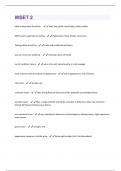
WSET 2 Ideal tasting room should be: - odor free, good natural light, white surface WSET Level 2 approach to tasting - Appearance, Nose, Palate, Conclusion Tasting palate should be - clean and unaffected by flavors you can clean your palate by - chewing a piece of bread out of condition means - wine is too old, stored poorly, or cork seapage most common fault that shows in appearance - dull in appearance, hint of brown ruby color - purpley -red a tolerant taster - likes strong flavored food and drinks; powerful concentrated wines sensitive taster - likes a range of foods and drinks, sensitive to bitterness; likes ripe red wines (shiraz) full flavored whites (sauv blanc) very sensitive taster - very sensitive to bitterness and astringency; delicate wines, slight sweetness lower tannin garnet color - orangey - red appearance sequence in white wine - lemon -gold -amber (Let's Go Atascadero) appearance sequence in red wine - purple -ruby -garnet -tawny (Paso Robles Great Town) color of youthful red - purple age indicator for red wines - orange, amber brown color Lemon - yellow with a hint of green gold - yellow with a hint of orange age indicator for white wines - green = youth; orange/brown = age age indicator for Rose' wines - purple/pink = youth orange/brown = age most common fault discovered on nose - cork taint out of condition wines will smell - dull and stale; oxidative aromas (toffee, caramel) purpose of tasting notes - help describe wine to someone who hasn't tasted it when assessing wine on palate you use - sense of taste and smell sweetness is mostly detected on - tip of tongue acidity is most easily detected on - the sides of your tongue bitterness is most easily detected on - the back of your tongue sweetness is the - indication of how much sugar is in the wine ripe grapes can provide - the illusion of sweetness acidity makes the wine - taste vibrant and refreshing cool climate effects acidity - increases acidity warm climates effects acidity - decreases acidity tannin levels in thick skinned grapes - high (cab sauv. syrah) thin skinned grapes have what tannins - lower (grenache, pinot) warm climate effects tannins - increases (think WIT) tannins provides what on the palate - bitter (back of tongue) astringency (gums) tannins contribute to - viscosity and body body is the combination of - effects of alcohol, tannins, sugars and flavor compounds how do we detect flavor - retronasaly. flavors evaporate off the tongue and rise great wines express - characteristics of their grape variety and their region the purpose of food pairings is to - provide more pleasure than just the wine or food alone pairings should take into account - the preferences of the individual and the basic interactions between food and wine two components in food that tend to make wines harsher (higher astringency, bitter; lower sweetness, fruit) - sweetness and umami (sugar and umamai harden wine) two components in food that make wine taste softer (less astringent, bitter, acidic; more sweet and fruit) - salt and acid (salt and acid soften wine) which has more impact than the other - food has more impact on wine than other way sweetness in food - increases bitterness, acidity and alcohol decreases body, sweetness and fruitiness general rule for pairing with sugar - select a wine with a higher level of sugar umami in food - increases bitterness, acidity and alcohol decreases body, sweetness, and fruitiness pairing tip for umami - find food with high salt acidity in food - increases body, sweetness and fruitiness decreases bitterness and acidity bitterness in food - increases bitterness (bitter adds to bitter) fatty/oily food - decreases acidity chili heat in food - increases bitterness, acidity, and alcohol
Preview 4 out of 34 pages
Exam (elaborations)
WSET 2 QURESTIONS AND ANSWERS
Preview 4 out of 34 pages
Ideal tasting room should be: - odor free, good natural light, white surface WSET Level 2 approach to tasting - Appearance, Nose, Palate, Conclusion Tasting palate should be - clean and unaffected by flavors you can clean your palate by - chewing a piece of bread out of condition means - wine is too old, stored poorly, or cork seapage most common fault that shows in appearance - dull in appearance, hint of brown ruby color - purpley-red a tolerant taster - likes strong flavored food and drinks; powerful concentrated wines sensitive taster - likes a range of foods and drinks, sensitive to bitterness; likes ripe red wines (shiraz) full flavored whites (sauv blanc) very sensitive taster - very sensitive to bitterness and astringency; delicate wines, slight sweetness lower tannin garnet color - orangey- red appearance sequence in white wine - lemon-gold-amber (Let's Go Atascadero)appearance sequence in red wine - purple-ruby-garnet-tawny (Paso Robles Great Town) color of youthful red - purple age indicator for red wines - orange, amber brown color Lemon - yellow with a hint of green gold - yellow with a hint of orange age indicator for white wines - green = youth; orange/brown = age age indicator for Rose' wines - purple/pink = youth orange/brown = age most common fault discovered on nose - cork taint out of condition wines will smell - dull and stale; oxidative aromas (toffee, caramel) purpose of tasting notes - help describe wine to someone who hasn't tasted it when assessing wine on palate you use - sense of taste and smell sweetness is mostly detected on - tip of tongue acidity is most easily detected on - the sides of your tongue bitterness is most easily detected on - the back of your tonguesweetness is the - indication of how much sugar is in the wine ripe grapes can provide - the illusion of sweetness
Content preview
Document information
- Uploaded on
- May 12, 2024
- Number of pages
- 34
- Written in
- 2023/2024
- Type
- Exam (elaborations)
- Contains
- Questions & answers
$8.49
Wrong document? Swap it for free
Within 14 days of purchase and before downloading, you can choose a different document. You can simply spend the amount again.
Written by students who passed
Immediately available after payment
Read online or as PDF

Reputation scores are based on the amount of documents a seller has sold for a fee and the reviews they have received for those documents. There are three levels: Bronze, Silver and Gold. The better the reputation, the more your can rely on the quality of the sellers work.
Available in package deal
Package deal
WSET Level EXAM PACKAGE DEAL 2024,2025

