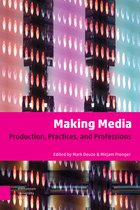
Making Media - Samenvatting
Week 1
Media Production
• Changing process from consumer electronics (tv) to information technology (computer/internet)
• From material media (newspapers, magazines) to non-materiality, remediation (news websites)
• User-generated content —> user engagement: from consumer to prosumer
• Co-existing of disruption and consolidation —> liquifying and solidifying media production
Media Practices
• New media logic —> internet, 24/7, uncertainty
• Lev Manovich: “The language of new media has its own rules”
• Hybrid media system —> mediatization (no separate media anymore —> remediation)
• Transmedia work —> managing liquid media
Media Professions
• Convergence —> professions are becoming part of each other (transmedia, liquid media):
industry and individual
• Combining careers: cross-subsidising (freelance + coffeeshop)
Main trends in making media
• Collapse —> old business models versus new digital developments
• Hybdirity —> multimedia career (e.g. journalist + graphic designer)
• Affordance —> new media changes affordances for the producers and consumers
• Power —> the consumer gains power while changing into a prosumer
• Flexibility —> presentism: a form of limiting concern for one’s work by focusing on the present
to the detriment of historical understanding and rational anticipation of possible futures
• Numerical: creative use of workforce numbers to manage media organisation
• Functional division of the media workforce into multi-skilled core of employers
• Temporal: the overall lack of dependable, well-organised working schedules
• Financial: the uneven, individualised, and performance-based systems of rewards
• Precarity —> the experience of not being able to control what happens in the future (cross-
subsidising as solution)
• Entrepeneurship —> being the building block of a social support system, contributing to a
sustainable community-formation and the design of creative solutions for urgent problems in
everyday life
• Agency —> networking as a key practice to find agency
• Affect —> work that elicits an affective investment from its practitioners exceeding conscious
deliberation
Week 2
Political economy of media
• The problem with new: we latch onto things we already know (remakes, sequels, etc)
• Copy/transform/adjust/combine
Bernard Miège
• Media industries are part of cultural and creative industries (which are liquifying)
• Focus on medium-range position, instead of micro or macro
• 5 main characteristics of cultural industries:
• Diversity of cultural products
• Unpredictable character of values
• Specific working conditions (creative autonomy, artisanal work in industrial context)
• Two fundamental generic models: editorial (big productions) & flow (constant stream)
• Moderate internationalisation
, • Trends/issues in the creative industry
• Towards maintaining significant distinctions between cultural industries and creative
industries
• The domination of informational-communicational capitalism and the platform economy
• Blockbusters vs. Niches vs. Production of amateurs
• Towards creating without recognised legal protections (legislation (WIPO))
• Inability to adapt public policies to the new industrial framework
How are media structured?
• The Big 5
• Hourglass structure —> big publishers on top, smaller companies in the bottom: top hires the
smaller and let them go once the project is over
• New International Division of Cultural Labour (NIDCL) —> one big party who controle the
worldwide media industry
How do media companies make money?
Then
• Advertising
• Subscriptions/membership
• Individual sales
Now
• Merchandising, platform, branding, events, community, distributions, advertising, classifieds,
affiliates
• Social: building respect and reputation
• Shift to multi-media, higher technology-based products
• Reusable products with unclear boundaries of use
• Hit Model —> focussing on big production so the rest can be bad (frontpage/blockbuster)
• Long-tail model —> focusing on creating enough content so together it will earn enough
• Engangement —> value of co-creating
• Passive —> using user data in order to know what to make next
• Active —> letting users interact (clicks, making own content)
How do media make decisions?
• Editorial logic —> where professionals come together and use their professional knowledge
• Market logic —> decision making based on audience data
• Algorithmic logic —> big data drives decision-making processes (chartbeat)
• Convergence —> convergence between production and consumption, customer engagement
(Jenkins: convergence culture)
• Platform logic—> dominance of platforms provide their own logic (changing guidelines for
content): multi-sided markets, platform capitalism, audience commodity
Week 3
Platformization
• Platform logic —> growing dependency of media companies on platforms —> dependency
• Media production not longer about making good content, but dealing with platforms and
consumers
• Multisided markets —> in between media makers and media user
Creativity and innovation
• Shift from monomedia to multimedia
• Innovation:
• Genre innovation
• Position innovation
• Product innovation
• “Snowfalling” —> team of people create one website with news and images that respond to
your interaction (clicks make things appear)
Week 1
Media Production
• Changing process from consumer electronics (tv) to information technology (computer/internet)
• From material media (newspapers, magazines) to non-materiality, remediation (news websites)
• User-generated content —> user engagement: from consumer to prosumer
• Co-existing of disruption and consolidation —> liquifying and solidifying media production
Media Practices
• New media logic —> internet, 24/7, uncertainty
• Lev Manovich: “The language of new media has its own rules”
• Hybrid media system —> mediatization (no separate media anymore —> remediation)
• Transmedia work —> managing liquid media
Media Professions
• Convergence —> professions are becoming part of each other (transmedia, liquid media):
industry and individual
• Combining careers: cross-subsidising (freelance + coffeeshop)
Main trends in making media
• Collapse —> old business models versus new digital developments
• Hybdirity —> multimedia career (e.g. journalist + graphic designer)
• Affordance —> new media changes affordances for the producers and consumers
• Power —> the consumer gains power while changing into a prosumer
• Flexibility —> presentism: a form of limiting concern for one’s work by focusing on the present
to the detriment of historical understanding and rational anticipation of possible futures
• Numerical: creative use of workforce numbers to manage media organisation
• Functional division of the media workforce into multi-skilled core of employers
• Temporal: the overall lack of dependable, well-organised working schedules
• Financial: the uneven, individualised, and performance-based systems of rewards
• Precarity —> the experience of not being able to control what happens in the future (cross-
subsidising as solution)
• Entrepeneurship —> being the building block of a social support system, contributing to a
sustainable community-formation and the design of creative solutions for urgent problems in
everyday life
• Agency —> networking as a key practice to find agency
• Affect —> work that elicits an affective investment from its practitioners exceeding conscious
deliberation
Week 2
Political economy of media
• The problem with new: we latch onto things we already know (remakes, sequels, etc)
• Copy/transform/adjust/combine
Bernard Miège
• Media industries are part of cultural and creative industries (which are liquifying)
• Focus on medium-range position, instead of micro or macro
• 5 main characteristics of cultural industries:
• Diversity of cultural products
• Unpredictable character of values
• Specific working conditions (creative autonomy, artisanal work in industrial context)
• Two fundamental generic models: editorial (big productions) & flow (constant stream)
• Moderate internationalisation
, • Trends/issues in the creative industry
• Towards maintaining significant distinctions between cultural industries and creative
industries
• The domination of informational-communicational capitalism and the platform economy
• Blockbusters vs. Niches vs. Production of amateurs
• Towards creating without recognised legal protections (legislation (WIPO))
• Inability to adapt public policies to the new industrial framework
How are media structured?
• The Big 5
• Hourglass structure —> big publishers on top, smaller companies in the bottom: top hires the
smaller and let them go once the project is over
• New International Division of Cultural Labour (NIDCL) —> one big party who controle the
worldwide media industry
How do media companies make money?
Then
• Advertising
• Subscriptions/membership
• Individual sales
Now
• Merchandising, platform, branding, events, community, distributions, advertising, classifieds,
affiliates
• Social: building respect and reputation
• Shift to multi-media, higher technology-based products
• Reusable products with unclear boundaries of use
• Hit Model —> focussing on big production so the rest can be bad (frontpage/blockbuster)
• Long-tail model —> focusing on creating enough content so together it will earn enough
• Engangement —> value of co-creating
• Passive —> using user data in order to know what to make next
• Active —> letting users interact (clicks, making own content)
How do media make decisions?
• Editorial logic —> where professionals come together and use their professional knowledge
• Market logic —> decision making based on audience data
• Algorithmic logic —> big data drives decision-making processes (chartbeat)
• Convergence —> convergence between production and consumption, customer engagement
(Jenkins: convergence culture)
• Platform logic—> dominance of platforms provide their own logic (changing guidelines for
content): multi-sided markets, platform capitalism, audience commodity
Week 3
Platformization
• Platform logic —> growing dependency of media companies on platforms —> dependency
• Media production not longer about making good content, but dealing with platforms and
consumers
• Multisided markets —> in between media makers and media user
Creativity and innovation
• Shift from monomedia to multimedia
• Innovation:
• Genre innovation
• Position innovation
• Product innovation
• “Snowfalling” —> team of people create one website with news and images that respond to
your interaction (clicks make things appear)