Edward VI
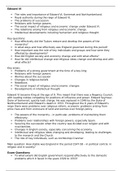
The roles and importance of Edward VI, Somerset and Northumberland.
Royal authority during the reign of Edward VI.
The problems of succession.
Relations with foreign powers.
The social impact of religious and economic change under Edward VI.
The rebellions arising from religious and economic change.
Intellectual developments including humanism and religious thought.
Key questions:
How effectively did the Tudors restore and develop the powers of the
monarchy?
In what ways and how effectively was England governed during this period?
How important was the role of key individuals and groups and how were they
affected by developments?
How did English society and economy change and with what effects?
How far did intellectual change and religious ideas change and develop and with
what effects?
Key areas:
Problems of a strong government at the time of a boy king
Relations with foreign powers
Worries about the succession
Changes in religious beliefs
Rebellions
The social impact of religious and economic changes
Developments in intellectual thought
Edward VI became King at the age of 9. This meant that there was a Regency Council,
with leading nobles competing for positions of influence and power. Edward Seymour,
Duke of Somerset, quickly took charge. He was replaced in 1549 by the Duke of
Northumberland until Edward’s death in 1553. Throughout the 6 years of Edward’s
reign there were problems over religious reform, economic problems arising from
price rises and from enclosure of land and worries over foreign policy.
The powers of the monarchy – in particular, problems of maintaining them
effectively.
Problems over relationships with foreign powers, especially Spain.
Securing the succession when the country was divided over religion and with
rival families.
Changes in English society, especially concerning the economy.
Intellectual and religious ideas changing and developing, leading to challenges
to the monarch and the Church.
The role of key individuals, such as Archbishop Cranmer.
Main question: How stable was England in the period 1547-58 – in political control, in
religion and in society?
Exam Questions:
To what extent did English government respond effectively to the domestic
problems which it faced in the years 1529 to 1553?
, To what extent was the English Church in 1553 different from what it had been
in 1532?
‘England was a Protestant country by 1553’. Assess the validity of this view.
‘The Church in England had become Protestant by 1549’. Assess the validity of
this view.
‘Foreign policy in Edward’s reign was an ignominious failure’. Assess the validity
of this view.
‘Somerset’s foreign policy was a total failure’. To what extent do you either
agree or disagree with this statement?
To what extent was Northumberland more successful in solving the mid-Tudor
political problems than Somerset?
,Introduction to Edward VI
Upbringing:
Until he was 6, Edward was ‘among the women’, being cared for by his sisters
and Henry’s other wives – in particular Catherine Parr.
Henry VIII saw Edward infrequently.
Edward had an army of personal servants including physicians, surgeons, cooks,
painters, tutors, scholars and musicians.
3 gentlemen and 5 grooms were always present, with 1 in the bedchamber at
night. Edward was hardly ever alone.
Great care was taken over the cleanliness and quality of his environment and
food.
Interests:
Fascinated by the sources of revenue for campaigns, different kinds of troops,
how they were paid and the final treaty articles.
Naturally studious, intelligent and devout.
Hunting, rackets, archery, jousting (as an observer) and horse riding.
Personality:
A serious child.
Self-disciplined.
Relations with others:
Had a coldness towards others.
Distrustful and could be vindictive.
The only warmth he displayed was towards his aristocratic friend Barnaby
Fitzpatrick.
Health:
He had good health.
Struck down by a chest infection in February 1553 which developed into a fatal
septicaemia.
Education:
His two principal teachers were Richard Coxe and Sir John Cheke. Both were
prominent humanists and Coxe was a Protestant.
Devoted to his studies, spending several hours a day reading and learning.
Edward was able to develop his interests in logic, natural philosophy and
astronomy.
Discourses were written for him on different topics such as religion and the
economy.
What would his aims be as king?
Reform of government – reforms to the administration and legislative system.
He wrote about the reorganisation of the Privy Council and the limiting of its
functions.
Financial and economic problems – overhaul of England’s economic and
financial structure. He wrote about the problems of the economic system,
particularly inflation.
, Foreign affairs – lead a foreign expedition like Henry VIII. He had a great interest
in the details of wars.
Religion – promotion of Protestant religion. He wrote about the need to promote
good preaching and the disciplining of clergy.
Social problems – increase social justice such as limit the amount people could
earn or own and put an end to enclosure. He wrote about the country being like
a body.
The roles and importance of Edward VI, Somerset and Northumberland.
Royal authority during the reign of Edward VI.
The problems of succession.
Relations with foreign powers.
The social impact of religious and economic change under Edward VI.
The rebellions arising from religious and economic change.
Intellectual developments including humanism and religious thought.
Key questions:
How effectively did the Tudors restore and develop the powers of the
monarchy?
In what ways and how effectively was England governed during this period?
How important was the role of key individuals and groups and how were they
affected by developments?
How did English society and economy change and with what effects?
How far did intellectual change and religious ideas change and develop and with
what effects?
Key areas:
Problems of a strong government at the time of a boy king
Relations with foreign powers
Worries about the succession
Changes in religious beliefs
Rebellions
The social impact of religious and economic changes
Developments in intellectual thought
Edward VI became King at the age of 9. This meant that there was a Regency Council,
with leading nobles competing for positions of influence and power. Edward Seymour,
Duke of Somerset, quickly took charge. He was replaced in 1549 by the Duke of
Northumberland until Edward’s death in 1553. Throughout the 6 years of Edward’s
reign there were problems over religious reform, economic problems arising from
price rises and from enclosure of land and worries over foreign policy.
The powers of the monarchy – in particular, problems of maintaining them
effectively.
Problems over relationships with foreign powers, especially Spain.
Securing the succession when the country was divided over religion and with
rival families.
Changes in English society, especially concerning the economy.
Intellectual and religious ideas changing and developing, leading to challenges
to the monarch and the Church.
The role of key individuals, such as Archbishop Cranmer.
Main question: How stable was England in the period 1547-58 – in political control, in
religion and in society?
Exam Questions:
To what extent did English government respond effectively to the domestic
problems which it faced in the years 1529 to 1553?
, To what extent was the English Church in 1553 different from what it had been
in 1532?
‘England was a Protestant country by 1553’. Assess the validity of this view.
‘The Church in England had become Protestant by 1549’. Assess the validity of
this view.
‘Foreign policy in Edward’s reign was an ignominious failure’. Assess the validity
of this view.
‘Somerset’s foreign policy was a total failure’. To what extent do you either
agree or disagree with this statement?
To what extent was Northumberland more successful in solving the mid-Tudor
political problems than Somerset?
,Introduction to Edward VI
Upbringing:
Until he was 6, Edward was ‘among the women’, being cared for by his sisters
and Henry’s other wives – in particular Catherine Parr.
Henry VIII saw Edward infrequently.
Edward had an army of personal servants including physicians, surgeons, cooks,
painters, tutors, scholars and musicians.
3 gentlemen and 5 grooms were always present, with 1 in the bedchamber at
night. Edward was hardly ever alone.
Great care was taken over the cleanliness and quality of his environment and
food.
Interests:
Fascinated by the sources of revenue for campaigns, different kinds of troops,
how they were paid and the final treaty articles.
Naturally studious, intelligent and devout.
Hunting, rackets, archery, jousting (as an observer) and horse riding.
Personality:
A serious child.
Self-disciplined.
Relations with others:
Had a coldness towards others.
Distrustful and could be vindictive.
The only warmth he displayed was towards his aristocratic friend Barnaby
Fitzpatrick.
Health:
He had good health.
Struck down by a chest infection in February 1553 which developed into a fatal
septicaemia.
Education:
His two principal teachers were Richard Coxe and Sir John Cheke. Both were
prominent humanists and Coxe was a Protestant.
Devoted to his studies, spending several hours a day reading and learning.
Edward was able to develop his interests in logic, natural philosophy and
astronomy.
Discourses were written for him on different topics such as religion and the
economy.
What would his aims be as king?
Reform of government – reforms to the administration and legislative system.
He wrote about the reorganisation of the Privy Council and the limiting of its
functions.
Financial and economic problems – overhaul of England’s economic and
financial structure. He wrote about the problems of the economic system,
particularly inflation.
, Foreign affairs – lead a foreign expedition like Henry VIII. He had a great interest
in the details of wars.
Religion – promotion of Protestant religion. He wrote about the need to promote
good preaching and the disciplining of clergy.
Social problems – increase social justice such as limit the amount people could
earn or own and put an end to enclosure. He wrote about the country being like
a body.