TNCC Pre-course questions and answers
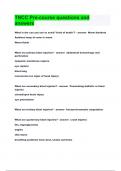
What is the can you use to avoid "triad of death"? Warm blankets Ambient temp of room is warm Warm fluids What are primary blast injuries? abdominal hemorrhage and perforation tympanic membrane rupture eye rupture blast lung concussion (no signs of head injury) What are secondary blast injuries? Penetrating ballistic or blunt injuries closed/open brain injury eye penetration What are teritary blast injuries? fracture/traumatic amputation What are quaternary blast injuries? crush injuries htn, hyperglycemia angina skin burns breathing problems from dust, smoke and fums What is atelectasis? Partial or complete lung collapse, What most commonly causes atelectasis? Hypoventilation or obstructed airway What do you look for when assessing an airway? vomitious, secretions, blood tongue obstruction, teeth, foreign object snoring, stridor, gurgling palpate for maxilofacial bony promineces What do you look for when assessing breathing? work of breathing rate and depth of respirations color of skin symmetrical chest rise Breath sounds What do you palpate when assessing breathing? Subcutaneous emphysema Bruised areas on the chest What do you look for when assessing circulation? skin color and temp look for external hemorrhage central/peripheral pulse rate and quality What are the three trauma triad of death? hypothermia metabolic acidosis coagulopathy If spo2 is 100, should you titrate oxygen down? (pt intubated) Yes! Avoid hyperoxia oxygen should be between 94-98% After a hemothorax what labs would you expect to have drawn? ABGS latic acid base deficit blood typing What does LMNOP stand for in assessing a trauma patient? Labs monitor (HR rhythm) naso/oro gastric tube placement oxygen/ventilation assessment pain assessment What are 4 ways to determine patency & protection of airway using inspection, auscultation and palpation?(must say 4) Is the tongue obstructing? Any loose or missing teeth? Are there any foreign objects? Blood, vomit, secretions? Is there edema? Is there any bony deformity? What are treatments to maintain a patient airway? Suction Remove any loose teeth/foreign objects Insert oral or nasopharyngeal airway Indicate the need for intubation What are techniques for determining breathing effectiveness? (must include 4) Is there spontaneous breathing? Is there symmetrical chest rise? What are the depth, pattern and general rate of respirations? Is there increased work of breathing? What is the color of the skin? Are there any wounds or deformities? Are breath sounds present and equal bilaterally? Is there subcutaneous emphysema? Is there any tracheal deviation or jugular venous distention? What are breathing and ventilation interventions? Apply oxygen Provide ventilation with bag mask Indicate need for intubation Indicate need for needle decompression Indicate need for chest tube If intubated what do you asses for endotracheal tube placement? (must say all 3) observes chest rise & fall Attaches CO2 detector device Auscultate over the epigastric for gurgling and lungs for bilat sounds. If intubated what must you state? The ETT is secured and the number at the level of the teeth or gums is documented. What 3 components must you look for when assessing circulation? inspects for any uncontrolled external hemorrhage palpates central pulses inspects and palpates the skin for color, temp and moisture What do you want state if circulation is inadequate? Needs for warmed/isotonic crystalloid with blood tubing and a controlled bolus rate What are examples of circulation interventions? control hemorrhage initiate chest compression/advanced life support Asses patency of pre-hospital IV/place IV Administer crystalloid bolus warmed consider blood products apply pelvic binder What is part of the disability assessment? GCS Pupils What are components of GSC? What is the best eye opening? What is best verbal response What is best motor response? What is a beta hydroxybutyrate lab draw used to see? s the predominant ketone body in the blood. It is the most sensitive marker for detecting ketosis what is kleihauer betke test? Detects percentage of fetal blood in maternal circulation (dilution test) What must you do for expose and environment? Remove all clothes to inspect for hemmorage/injuries
Written for
- Institution
- TNCC
- Course
- TNCC
Document information
- Uploaded on
- May 7, 2024
- Number of pages
- 8
- Written in
- 2023/2024
- Type
- Exam (elaborations)
- Contains
- Questions & answers
Subjects
-
tncc pre course questions and answers

Also available in package deal