Foreign Service Officer Test - World Affairs Questions and Answers
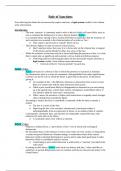
"Let one hundred flowers bloom" - Chairman Mao Zedong's "Let a hundred flowers bloom; let a hundred schools of thought contend". This slogan was used during the period of approximately six weeks in the summer of 1957 when the Chinese intelligentsia were invited to criticize the political system then obtaining in Communist China. It is sometimes suggested that the initiative was a deliberate attempt to flush out dissidents by encouraging them to show themselves as critical of the regime. Whether or not it was a deliberate trap isn't clear but it is the case that many of those who put forward views that were unwelcome to Mao were executed. absolute majority - more than 50% of all votes cast accountability - the concept that government officials are responsible to and serve at the pleasure of constituents or elected officials (and that they may be removed from office by those electors or officials) adjudicate - to resolve a matter in dispute; when backed up by the authority of government the decision can be enforced adjudication - the legal process of deciding an issue through the courts Afghanistan and Bhutan - British buffer states for India agricultural sector - that part of a country's economy that is involved in the production of farm products airspace - The space above a state that is considered its territory, in contrast to outer space, which is considered international territory. alliance cohesion - the ease with which the members hold together an alliance; tends to be high when national interests converge & when cooperation among allies become institutionalizedAmbalat - Indonesia & Malaysia dispute this oil-rich sea area America First - Founded in 1939 after Germany’s invasion of Poland, America First was an isolationist group that opposed U.S. involvement in World War II. Many prominent Americans were members, including aviator Charles Lindbergh. At its peak, America First had 800,000 members. The organization disbanded shortly after the bombing of Pearl Harbor. American Convention on Human Rights - The American Convention on Human Rights, which entered into force in 1978, defines the human rights that the ratifying states of the Western Hemisphere have agreed to foster through the Inter-American Commission on Human Rights (IACHR), an autonomous organ of the Organization of American States (OAS) headquartered in Washington, D.C. The IACHR meets frequently, considers cases brought before it and gives priority to stimulating public awareness in such areas as judicial independence, activities of irregular armed groups and the human rights of minors, women and indigenous peoples. The Convention also established the Inter-American Court of Human Rights, located in San Jose, Costa Rica. Andrei Gromyko - Soviet foreign minister (1957â€"85) and president (1985â€"88) of the Presidium of the Supreme Soviet. Though never strongly identified with any political faction, he served dependably as a skilled emissary and spokesman. He was ambassador to the U.S. (1943â€"46), Soviet representative to the UN Security Council (1946â€"48), and ambassador to Britain (1952â€"53). In 1957 he began his long tenure as foreign minister and became renowned for his negotiating skills. In 1985 he was promoted to the presidency, with great prestige but little power, after Mikhail Gorbachev came to power. Anglo-French Condominium of the New Hebrides - 1906: Joint agreement between England and France for cooperative government in the Pacific Annexation of Baltic States - 1940 - The direct Soviet aggression against the Baltic countries occurred on 14-17 June 1940 when the world’s attention was focused on the military actions in Western Europe where Paris fell to the Germans on 14 June. Accusing Estonia of forming a conspiracy together with Latvia and Lithuania against the Soviet Union, the latter presented an ultimatum, demanding new concessions which included allowing more troops to enter the three countries. In the conditions of international isolation, the governments surrendered without offering any military resistance, and within a few days, the countries were invaded and occupied by several hundred thousand soldiers of the Red Army. A few days later days, led by Stalin’s close associates, the local communist supporters and those brought in from Russia, formally forced the Baltic governments to resign and proclaimed new "people's governments" in the three occupied tive public - the minority of the population that stays informed about international issues Austrian State Treaty - in Vienna at the Schloss Belvedere among the Allied occupying powers: France, the United Kingdom, the United States and the Soviet Union, and the Austrian government and officially came into force on July 27, 1955. authoritarianism - a political system in which a small group of individuals exercises power over the state without being constitutionally responsible to the public. autocracy - a system of governance in which a small group has absolute power autonomy - the degree to which a state can implement policies independent of the populace or the amount of sovereignty a nation-state can exercise in the global environment Azerbaijan & Armenia - Azerbaijan holds Naxcivan in Armenia and Armenia holds NagornoKarabakh region in Azerbaijan Bahrain vs. Qatar - Dispute over the Hawar Islands
Written for
- Institution
- Foreign Service Officer - World Affairs
- Course
- Foreign Service Officer - World Affairs
Document information
- Uploaded on
- May 6, 2024
- Number of pages
- 73
- Written in
- 2023/2024
- Type
- Exam (elaborations)
- Contains
- Questions & answers
Subjects
-
foreign service officer world affairs

Also available in package deal