TMS3728
Assignment 1 Semester 1 2024
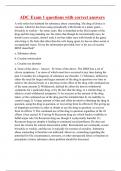
This document contains questions and step by step solutions.
Hook me up on WhatsApp for further elaborations.
QUESTION 1
Give a description of the following terms:
1.1 the nature of science
1.2 indigenous knowledge
1.3 blended learning
1.4 misconception
1.5 instructional scaffolding
[10]
QUESTION 2
2.1 Define inquiry in science. (2)
2.2 Critically discuss how you use science in your everyday life. (10)
2.3 Reflect on how learning in science looks like for you. (10)
2.4 Explain how you can keep learners fascinated during science lessons. (3)
Terms of use:
By making use of this document you agree to:
Use this document as a guide for learning, comparison and reference purpose,
Not to duplicate, reproduce and/or misrepresent the contents of this document as your own work,
Fully accept the consequences should you plagiarise or misuse this document.
Disclaimer:
Extreme care has been used to create this document, however the contents are provided “as is” without any
representations or warranties, express or implied. The author assumes no liability as a result of reliance and use
of the contents of this document. This document is to be used for comparison, research and reference purposes
ONLY. No part of this document may be reproduced, resold or transmitted in any form or by any means.
TeeVee Tutoring
WhatsApp: +27 81 844 1995
Or click the link below:
http://wa.me/27818441995
, QUESTION 1
1.1 The nature of science:
The nature of science refers to the fundamental characteristics and principles that
underlie scientific inquiry and the scientific method. It encompasses the way scientists
conduct research, formulate hypotheses, gather evidence, and draw conclusions. Key
aspects of the nature of science include empiricism (reliance on evidence from
observation and experimentation), objectivity (striving for impartiality and neutrality),
scepticism (questioning and critical evaluation of ideas), and the provisional nature of
scientific knowledge (acknowledgment that scientific understanding is subject to
change based on new evidence). Understanding the nature of science is essential for
promoting scientific literacy and enabling individuals to engage critically with
scientific information and claims.
1.2 Indigenous knowledge:
Indigenous knowledge refers to the accumulated knowledge, wisdom, and practices of
indigenous or local communities that have been developed over generations through
direct interaction with the environment and natural resources. It encompasses
traditional ecological knowledge, cultural practices, oral traditions, and spiritual beliefs
that are specific to particular cultural groups and are often transmitted orally from one
generation to another. Indigenous knowledge systems offer valuable insights into
sustainable resource management, biodiversity conservation, traditional medicine,
agriculture, and resilience to environmental changes. Recognizing and respecting
indigenous knowledge is important for promoting cultural diversity, fostering
collaboration between indigenous and scientific communities, and addressing complex
environmental challenges.
1.3 Blended learning:
Assignment 1 Semester 1 2024
This document contains questions and step by step solutions.
Hook me up on WhatsApp for further elaborations.
QUESTION 1
Give a description of the following terms:
1.1 the nature of science
1.2 indigenous knowledge
1.3 blended learning
1.4 misconception
1.5 instructional scaffolding
[10]
QUESTION 2
2.1 Define inquiry in science. (2)
2.2 Critically discuss how you use science in your everyday life. (10)
2.3 Reflect on how learning in science looks like for you. (10)
2.4 Explain how you can keep learners fascinated during science lessons. (3)
Terms of use:
By making use of this document you agree to:
Use this document as a guide for learning, comparison and reference purpose,
Not to duplicate, reproduce and/or misrepresent the contents of this document as your own work,
Fully accept the consequences should you plagiarise or misuse this document.
Disclaimer:
Extreme care has been used to create this document, however the contents are provided “as is” without any
representations or warranties, express or implied. The author assumes no liability as a result of reliance and use
of the contents of this document. This document is to be used for comparison, research and reference purposes
ONLY. No part of this document may be reproduced, resold or transmitted in any form or by any means.
TeeVee Tutoring
WhatsApp: +27 81 844 1995
Or click the link below:
http://wa.me/27818441995
, QUESTION 1
1.1 The nature of science:
The nature of science refers to the fundamental characteristics and principles that
underlie scientific inquiry and the scientific method. It encompasses the way scientists
conduct research, formulate hypotheses, gather evidence, and draw conclusions. Key
aspects of the nature of science include empiricism (reliance on evidence from
observation and experimentation), objectivity (striving for impartiality and neutrality),
scepticism (questioning and critical evaluation of ideas), and the provisional nature of
scientific knowledge (acknowledgment that scientific understanding is subject to
change based on new evidence). Understanding the nature of science is essential for
promoting scientific literacy and enabling individuals to engage critically with
scientific information and claims.
1.2 Indigenous knowledge:
Indigenous knowledge refers to the accumulated knowledge, wisdom, and practices of
indigenous or local communities that have been developed over generations through
direct interaction with the environment and natural resources. It encompasses
traditional ecological knowledge, cultural practices, oral traditions, and spiritual beliefs
that are specific to particular cultural groups and are often transmitted orally from one
generation to another. Indigenous knowledge systems offer valuable insights into
sustainable resource management, biodiversity conservation, traditional medicine,
agriculture, and resilience to environmental changes. Recognizing and respecting
indigenous knowledge is important for promoting cultural diversity, fostering
collaboration between indigenous and scientific communities, and addressing complex
environmental challenges.
1.3 Blended learning: