PATH 370 week 1 quiz Questions With 100% Correct!!
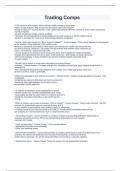
Pathophysiology - the study of how disease processes affect the function of the body Pathophysiology: Includes for interrelated topics: - etiology, pathogenesis, clinical manifestation, and treatment implications etiology - the study of the causes of diseases idiopathic - unknown cause Latrogenic - results from modern medical procedures pathogenesis - development of disease treatment implications - understanding the etiology, pathogenesis, and clinical manifestations may imply treatment tertiary prevention - examples like counseling on medications. or Restoration of effective function is the goal latent - is time between. Exposure of tissue to injurious agent and first appearance of signs and symptoms (is also the time where it may disappear) exposure period. the signs and symptoms may become mild or even disappear for a time. Prodromal period - Signs and symptoms of a disease first occur during the Acute phase - the disease reaches its full intensity, and signs and symptoms attain their greatest severity.Subclinical stage - patient able to function normally although disease processes are well established. Endemic definition - native to a local region Epidemiology - Study of the patterns of disease involving populations Pandemic disease - spread to large geographic areas Chronic clinical course - may last months to years, sometimes following an acute course Clinical Manifestations - signs and symptoms 3 types of clinical manifestation - 1. symptoms 2. signs 3. syndrome symptoms - feeling abnormality in the body such as nausea signs - objective or observed manifestation of disease such as vomiting, or bruising Syndromes - Set of signs and symptoms not yet determined to delineate a disease such as heart attack: chest pain or radiating pain to left arm primary prevention - example like vaccinations. Altering susceptibility; reducing exposure fro susceptible persons; education, training Actions that change overall background conditions to prevent some unwanted event or circumstance, such as injury, disease, or abuse.Secondary - early detection, screening, and management of disease have it then treat it risk factors - Possibly of a disease cause 6 risk factors - 1. Genetic 2. Age 3. Lifestyle 4. Stress 5. Environmental 6. Pre-existing conditions Pathogenesis - development of disease Homeostasis - Remaining stable while staying the same; state in which all systems are in balance; a state of equilibrium; an ideal set point Allostasis definition - Body's ability to maintain stable internal environment by adjusting and chasing to meet internal and external demands. AKA Homeostasis through change Hormones secreted during the stress response - physical, chemical, or emotional factor resulting in tension of body or mind Hypothalamic pituitary adrenal (HPA) axis; General Adaptation Syndrome (GAS) - Selye) where body can no longer return to homeostasis Selye's three phases of stress Selye's concept of the body's adaptive response to stress in three phases—alarm, resistance, exhaustion. Alarm - What stage is defined by "fight or flight"?Resistance - (also called adaptation) supportive of the allostatic return to a state of homeostasis exhaustion - occurs when the body is no longer able to bring about a return to homeostasis following prolonged exposure to noxious agents. resistance (also called adaptation) - To survive, the body must move beyond the alarm stage to a stage of ______________________ supportive of the allostatic return to a state of homeostasis. Reversible cell injury - Hydropic swelling; Cellular swelling becuase of accumuliation of water first manifestation of most forms of a reversible cell injury results from malfunction of sodium- postassium pump with accumulation of sodium ions within the cell Any injury that results in loss of energy (ATP) will also result on swelling Characteristics large pale cytoplasm Know types of intracellular accumulations - Characterized by: accumulation of excessive amounts of normal intracellular substance; accumulation of abnormal substances from faulty metabolism or synthesis; accumulation of pigments of particles that cell is unable to degrade Types of intracellular accumulations - 1. Abnormal metabolism, 2. Defect in protein folding transport, 3. Lack of enzyme, 4 indigestible materials Abnormal metabolism - Nutritional deficiency Enzyme deficiency Abnormal secretion of hormones Actions of drugs and toxins Defect in protein - folding transport lack of enzymes - indigestible materials -Cellular Adaptation - atrophy, hypertrophy, hyperplasia, metaplasia, dysplasia atrophy - when cells shrink and reduce their differentiated functions in response to a variety of normal and injurious factors, such as nutrient starvation
Written for
- Institution
- PATH 370
- Course
- PATH 370
Document information
- Uploaded on
- May 2, 2024
- Number of pages
- 4
- Written in
- 2023/2024
- Type
- Exam (elaborations)
- Contains
- Questions & answers
Subjects

Also available in package deal