Psychopathology
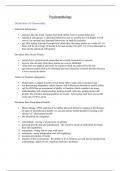
Definitions of Abnormality:
Statistical Infrequency:
statistics like the mean, median and mode define what is normal behaviour
statistical infrequency is abnormal behaviour and we usually see it in graphs or bell
curves, the unusual and abnormal behaviour on both the extremes
eg) after asking a group of people how much they like harry potter on a scale of 1-10,
there will be an average of around 4,5,6 and anyone who puts 1 or 10 are abnormal as
they are the statistical infrequency
Deviation from Social Norms:
society have created social norms that are socially accepted by everyone
anyone who deviates from these norms are seen as abnormal
some rules are implicit and some are explicit which are enforced by the law
eg) homosexuality used to be abnormal and was classed as a mental disorder because
it was a social deviation
Failure to Function Adequately:
abnormality is judged in terms of not being able to cope with everyday living
not functioning adequately causes distress and suffering to themselves and/or others
eg) the DSM has an assessment of ability to function which considers six areas:
understanding and communicating, getting around, self-care, getting along with
people, life activities and participation in society. After rating each item, an overall
score out of 180 is given
Deviation from Ideal Mental Health:
Marie Jahoda (1958) said that if we define physical illness by looking at the absence
of signs of ideal physical health, we can also define mental health by looking at the
absence of ‘ideal mental health’
she identified six categories:
1. self-attitude - having a strong sense of identity
2. personal growth and self-actualisation - the extent to which an individual develops
their full capabilities
3. integration - being able to cope with stress
4. autonomy - being independent and self-regulating
5. accurate perception of reality
6. mastery of the environment - the ability to love, function at work and in interpersonal
relationships, adjust to new situations and solve problems
Definitions of Abnormality:
Statistical Infrequency:
statistics like the mean, median and mode define what is normal behaviour
statistical infrequency is abnormal behaviour and we usually see it in graphs or bell
curves, the unusual and abnormal behaviour on both the extremes
eg) after asking a group of people how much they like harry potter on a scale of 1-10,
there will be an average of around 4,5,6 and anyone who puts 1 or 10 are abnormal as
they are the statistical infrequency
Deviation from Social Norms:
society have created social norms that are socially accepted by everyone
anyone who deviates from these norms are seen as abnormal
some rules are implicit and some are explicit which are enforced by the law
eg) homosexuality used to be abnormal and was classed as a mental disorder because
it was a social deviation
Failure to Function Adequately:
abnormality is judged in terms of not being able to cope with everyday living
not functioning adequately causes distress and suffering to themselves and/or others
eg) the DSM has an assessment of ability to function which considers six areas:
understanding and communicating, getting around, self-care, getting along with
people, life activities and participation in society. After rating each item, an overall
score out of 180 is given
Deviation from Ideal Mental Health:
Marie Jahoda (1958) said that if we define physical illness by looking at the absence
of signs of ideal physical health, we can also define mental health by looking at the
absence of ‘ideal mental health’
she identified six categories:
1. self-attitude - having a strong sense of identity
2. personal growth and self-actualisation - the extent to which an individual develops
their full capabilities
3. integration - being able to cope with stress
4. autonomy - being independent and self-regulating
5. accurate perception of reality
6. mastery of the environment - the ability to love, function at work and in interpersonal
relationships, adjust to new situations and solve problems