AQA A-LEVEL BIOLOGY PAPER MARKING SCHEME LATEST UPDATE
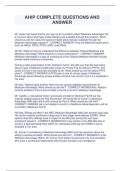
AQA A-LEVEL BIOLOGY PAPER MARKING SCHEME LATEST UPDATE large molecules often contain carbon. why? they can readily form bonds with other carbon atoms. this forms a 'backbone'. other atoms can then attach. describe benedicts test for reducing sugars add equal volumes of the sugar sample and benedicts reagent. heat the mixture in a water bath for 5 minutes. brick red precipitate will form. what is a reducing sugar? a sugar that can reduce (give electrons to) another chemical. describe the benedicts test for non reducing sugars with food sample, add an equal volume of dilute hydrochloric acid in a test tube. place test tube in water bath for 5 mins. add sodium hydrogencarbonate solution. heat resulting solution with an equal volume of benedicts. solution for 5 minutes. turns orange/brown. what does dilute hydrochloric acid do in the benedicts test for non reducing sugars? it hydrolyses any disaccharide into monosaccharides, thus also forming reducing sugars. describe the structure of starch chains of alpha glucose some chains are branched= amylopetcin some chains are coiled= amylose what purpose does the structure of amylose serve? makes the molecule compact so it is stored more easily. what purpose does the structure of amylopectin serve? more surface area for enzymes to work on, thus glucose molecules can be released at a much quicker rate. how is the structure of starch suited to its function? 1. starch is insolube so it doesnt affect water potential 2. it is large enough that it doesnt diffuse out of cells 3. compact enough so that a lot of it can be stored in a small space 4. branched= each end can simultaneously be acted on by enzymes, so glucose is quickly released how is the structure of glycogen suited to its function? 1. insoluble, so no effect on water potential of cell 2. insoluble, so doesnt diffuse out of cells 3. compact, a lot of it can be stored in a small space
Written for
- Institution
- AQA A-LEVEL BIOLOGY PAPER
- Course
- AQA A-LEVEL BIOLOGY PAPER
Document information
- Uploaded on
- May 1, 2024
- Number of pages
- 25
- Written in
- 2023/2024
- Type
- Exam (elaborations)
- Contains
- Questions & answers
Subjects
- aqa a level biology
- aqa a level
- aqa
-
aqa a level biology paper marking scheme latest up