HESI Health Assessment Topics Review
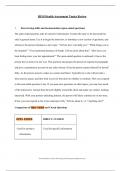
Interviewing skills and documentation (open ended questions) The open-ended question asks for narrative information. It states the topic to be discussed but only in general terms. Use it to begin the interview, to introduce a new section of questions, and whenever the person introduces a new topic. “Tell me how I can help you.” “What brings you to the hospital?” “You mentioned shortness of breath. Tell me more about that.” “How have you been feeling since your last appointment?” The open-ended question is unbiased; it leaves the person free to answer in any way. This question encourages the person to respond in paragraphs and give a spontaneous account in any order chosen. It lets the person express himself or herself fully. As the person answers, make eye contact and listen. Typically he or she will provide a short answer, pause, and then look at you for direction on whether to continue. How you respond to this nonverbal question is key. If you pose new questions on other topics, you may lose much of the initial story. Instead lean forward slightly toward the client and make eye contact, looking interested. With your posture indicating interest, the person will likely continue his or her story. If not, you can respond to his or her statement with, “Tell me about it,” or “Anything else?” Comparison of Open-Ended and Closed Questions
Written for
- Institution
- HESI Health
- Course
- HESI Health
Document information
- Uploaded on
- April 30, 2024
- Number of pages
- 66
- Written in
- 2023/2024
- Type
- Other
- Person
- Unknown
Subjects
- apical pulse
- cardiac sounds s1 and s2
- loud accentuated s1
- carotid bruit
- doppler stethoscope
- korotkoff so
-
interviewing skills and documentation open ended
-
femoral popliteal dorsalis pedis and posterior

Also available in package deal