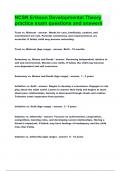
NCSN Erikson Developmental Theory practice exam questions and answers
Trust vs. Mistrust Needs for care, familiarity, comfort, and nourishment are met. Parental consistency and responsiveness are essential. If failed, child may become untrusting. Trust vs. Mistrust (Age range) Birth - 12 months Autonomy vs. Shame and Doubt Becoming independent relative to self and environment. Masters new skills. If failed, the child may become over-dependent and self conscious. Autonomy vs. Shame and Doubt (Age range) 1 - 3 years Initiative vs. Guilt Begins to develop a conscience. Engages in role play about the adult world. Learns to master their body and begins to learn about peer relationships. Anxiety is decreased through rituals and routine. Tolerates some separation from parents. Initiative vs. Guilt (Age range) 3 - 5 years Industry vs. Inferiority Focuses on achievement, cooperation, competition, learning rules, and developing social relationships. Having a friend is important. If failed, may have feelings of inadequacy and the child may stop trying. Industry vs. Inferiority (Age range) 6 - 12 years Identity vs. Role Confusion Develops a positive self concept that integrates one's body changes as well as values, roles in society, and possible future occupations. Concerned with how others perceive them, peer groups and acceptance are important for self worth. Failure may lead to high risk behaviors to fit in with peers. Identity vs. Role Confusion (Age range) 13 - 20 years
Written for
- Institution
- NCSN
- Course
- NCSN
Document information
- Uploaded on
- April 29, 2024
- Number of pages
- 2
- Written in
- 2023/2024
- Type
- Exam (elaborations)
- Contains
- Questions & answers
Subjects
-
ncsn erikson developmental theory

Also available in package deal