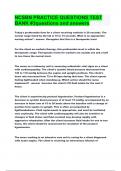
NCSBN PRACTICE QUESTIONS TEST BANK #3questions and answers
Today's prothrombin time for a client receiving warfarin is 20 seconds. The normal range listed by the lab is 10 to 14 seconds. What is an appropriate nursing action? Recognize that this is a therapeutic level. For the client on warfarin therapy, this prothrombin level is within the therapeutic range. Therapeutic levels for warfarin are usually one and a half to two times the normal level. The nurse on a telemetry unit is assessing orthostatic vital signs on a client with cardiomyopathy. The client's systolic blood pressure decreased from 145 to 110 mmHg between the supine and upright positions. The client's heart rate increased from 72 to 96 bpm during that time. The client reports feeling lightheaded when standing up. Which action should the nurse implement? Increase the client's PO fluid intake for the next 2 hours. The client is experiencing postural hypotension. Postural hypotension is a decrease in systolic blood pressure of at least 15 mmHg, accompanied by an increase in heart rate of 15 to 20 beats above the baseline with a change of position from supine to upright. This is often accompanied by lightheadedness. Fluid replacement is appropriate, and must be instituted very cautiously. The client with cardiomyopathy will also be sensitive to changes in fluid status and fluid overload may develop rapidly with aggressive rehydration. After the client increases fluid intake for one to two hours, the client should be reassessed for resolution of the postural hypotension. The nurse working in an intensive care unit is caring for a client diagnosed with acute angina. The client is receiving an intravenous infusion of nitroglycerin. What is the priority assessment for this client? Blood pressure Nitroglycerin (NTG) is a vasodilator used to promote myocardial tissue perfusion and relieve chest pain associated with coronary artery occlusion. The systemic vasodilation that occurs as a result of this medication can cause profound hypotension. The client's blood pressure should be evaluated every 15 minutes until stable, and then every 30 minutes to every hour thereafter. Clients receiving IV nitroglycerin should also be placed on continuous ECG monitoring. NTG is not known to affect neurologic status, urine output or heart rate. The client is scheduled for a coronary artery bypass procedure. When conducting pre-operative teaching with the client, which action should the nurse perform first? Assess the client's learning style. The first step in the teaching process consist of assessing how the client learns best. That way, the nurse increases success of the teaching by delivering the education in a format that the client understands and prefers. Therefore, the nurse should first assess the client's preferred learning style (e.g., reading a handout or watching a video) The nurse is teaching a client with chronic renal failure about their medications. The client questions the purpose of taking aluminum hydroxide. How should the nurse respond? "It decreases your blood's phosphate levels." Aluminum binds to phosphates that tend to accumulate in the client with chronic renal failure due to decreased filtration capacity of the kidneys. Antacids such as aluminum hydroxide are commonly used in clients with chronic renal failure to decrease serum phosphate levels. Aluminum hydroxide will not increase urine production, control gastric acid secretions or lower serum calcium levels. The nurse on an inpatient medical unit is caring for a client who is in the advanced stage of multiple myeloma. Which intervention should the nurse include in the plan of care? Use careful repositioning techniques. Multiple myeloma occurs when abnormal plasma cells (myeloma cells) collect in several bones. This disease may also harm other tissues and organs, especially the kidneys. This type of cancer causes hypercalcemia, renal failure, anemia, and bone damage. Because multiple myeloma can cause erosion of bone mass and fractures, extra care should be taken when moving or positioning a client due to the risk of pathological fractures. A client who has been receiving chemotherapy through a central venous access device (CVAD) at home, is admitted to the intensive care unit with a diagnosis of septicemia. Which nursing intervention is the priority? Prepare the client for insertion of a new CVAD. Many cases of sepsis occur in immunocompromised clients and clients with chronic and debilitating diseases. Since it is likely that the existing CVAD is the source of the blood stream infection, it should be removed and the tip sent for culture and sensitivity testing. The nurse should anticipate this action and the priority is to prepare the client for insertion of a new CVAD. The other interventions are not indicated or appropriate for this client. The nurse is caring for a client in the late stages of amyotrophic lateral sclerosis. Which finding is consistent with this diagnosis? Shallow respirations Amyotrophic lateral sclerosis (ALS) is a progressive neurodegenerative disease that affects nerve cells in the brain and spinal cord. In ALS, upper and lower motor neurons degenerate and stop sending messages to muscles. All muscles eventually weaken and atrophy, including the muscles needed to maintain effective respirations. People eventually lose their ability to speak, eat, move and breathe. The other findings are not typically seen with ALS.
Written for
- Institution
- NCSN
- Course
- NCSN
Document information
- Uploaded on
- April 29, 2024
- Number of pages
- 4
- Written in
- 2023/2024
- Type
- Exam (elaborations)
- Contains
- Questions & answers
Subjects
-
ncsbn practice questions test bank

Also available in package deal