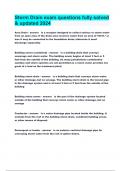
Storm Drain exam questions fully solved & updated 2024
Area Drain is a receptor designed to collect surface or storm water from an open area. If the drain area receives water from an area of 100 ft.² or less it may be connected to the foundation drain; otherwise it must discharge separately Building sewer (combined) is a building drain that conveys sewerage and storm water. The building sewer begins at least 3 feet or 5 feet from the outside of the building. (In many jurisdictions combination sanitary and storm systems are not permitted as a storm water provides too great of a load on the treatment plant) Building storm drain is a building drain that conveys storm water or other drainage, but no sewage. The building storm drain is the lowest pipe in the drainage system and is at least 3 feet or 5 feet from the outside of the building Building storm sewer is the part of the drainage system located outside of the building that conveys storm water or other drainage, but no sewage Conductor is a water drainage pipe located inside the building. It extends from the roof to the building storm drain, combined building sewer, or other means of disposal. Downspout or leader is an exterior vertictal drainage pipe for conveying storm water from the roof or gutter drains. Foundation drain is a drain installed to receive water that may collect near the building foundation. It then conveys that water away from the building to a suitable disposal point. Roof drain A drain installed to receive water collecting on the surface of a roof and to discharge such water into a leader or a conductor. A strainer is required, even on high rise buildings. Scupper drain is a drain or opening for a secondary drainage system and is usually located along any part of the stucture that would cause water to dam and collect on the rooftop. Many flat-top roofs have short verical walls that go along the perimeter of the building. this wall is called a parapte wall. Sewage is any liquid waste containing animal or vegetable matter insuspension or solution, and may include liquids containing chemicals in solution. Sewage pump is a permanently install mechanical device,other than an ejector, for removing sewage or liquid waste from a sump. Storm Sewer is a sewer used for conveying rainwater, surface water, condensate, cooling water, or similar liquid waste subsoil drain A drain that collects subsurface water or seepage water and conveys such water to a place of disposal sump is a tank or pit that receives sewage or liquid waste; is located below normal grade of the gravity system and must be emptied by mechanical means. Sump pump is a pump that is permanently installed mechanical device, other than an ejector, for removing liquid waste from the sump. Rate of Rainfall is a quantitatively measurement in inches per hour Conventional System The water drains away as it falls on the roof with minimum buildup or delay. This type of designed to maintain an open flow of air throughout the entire system; usually the pipe will only be half to two thirds full. The design is commonly left to the plumbing contractor. Controlled flow system Drains that are designed to drain the storm water slowly through orifices or restrictions in a special room and drain. Vitrified Clay Pipe Is a ceramic product which has great strength, high density and water tight jointing. Vitrified Clay Pipe is the most inert of all sanitary sewer pipe materials. It does not have gradual reduction in strength over time as with resin type products. Chemical resistance likewise does not deteriorate. Vitrified Clay Pipe is the only pipe which offers both a design and service life exceeding 100 years. Ductile Iron is a high strength, tough material used in water and wastewater systems
Written for
- Institution
- Stormwater management
- Course
- Stormwater management
Document information
- Uploaded on
- April 28, 2024
- Number of pages
- 3
- Written in
- 2023/2024
- Type
- Exam (elaborations)
- Contains
- Questions & answers
Subjects
-
storm drain exam questions

Also available in package deal