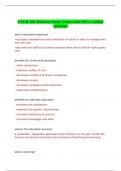
IPMA-HR (Everything you need to KNOW CORRECT 100%
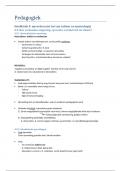
IPMA-HR (Everything you need to KNOW CORRECT 100% Training - ANSWER Process whereby people acquire capabilities to perform jobs Knowledge Management - ANSWER The way an organization identifies and leverages knowledge to be competitive 20% - ANSWER Average percentage that a learner retains one month after training Types of Training - ANSWER -Legally Required -Basic and Remedial Skills -Job and Technical Training -Soft Skills Orientation - ANSWER Planned introduction of new employees to their jobs, coworkers, and the organization Effective Orientation - ANSWER -establishes favorable employee impression of the organization -provides organization and job information -enhances interpersonal acceptance by coworkers and builds new network of resources -accelerates socialization and integration of new employee -ensures that employee performance and productivity begin more quickly Elements of Effective Onboarding - ANSWER -establish clear goals -know what new hires want -start before "day one" on the job -provide multiple short sessions -create connections and networks -make it enjoyable Orientation Measurement of Success - ANSWER -tenure turnover rate -new hire failure factor -employee upgrade rate -development program participation rate Instructional Systems Design (ISD) - ANSWER A step-by-step process to ensure that the right learning materials are provided to the right people at the right time. ADDIE Model - 5 Phases of Training - ANSWER Assessment, Design, Development, Implementation, Evaluation Key to Training Assessment - ANSWER Identifying gaps in performance Effective Training Planning - ANSWER -is there really a need for the training? -who needs to be trained? -who will do the training? -what form will the training take? -how will knowledge be transferred to the job? -how will the training be evaluated? 4 Ways to Effectively Train Employees - ANSWER 1-Blend in-person training and online training 2-Provide hands-on training 3-Incorporate mobile training apps 4-Allow employees to learn at their own pace How to Diagnose Training - ANSWER Analyze organizational outcomes and look at future organizational needs 4 Ways to Measure Training Effectiveness - ANSWER 1-Learner reaction 2-Measuring gain in knowledge or skill 3-Measuring increased performance back in the workplace 4-Impact on the organization itself Sources of Information for Needs Assessment - ANSWER -organizational analysis -job/task analysis -individual analysis Organizational Analysis - ANSWER Grievances, accidents, waste/scrap, training observations, customer complaints, exit interviews, equipment use, attitude surveys Job/Task Analysis - ANSWER Employee KSAs, benchmarks, effectiveness, job specs, efficiency data, employee surveys Individual Analysis - ANSWER Performance appraisals, tests, records, assessment centers, questionnaires, surveys, job knowledge tools Focuses for Training Objectives - ANSWER -knowledge -skill -attitude Training Design Elements - ANSWER -learner characteristics -training transfer -instructional strategies Learner Characteristics - ANSWER Ability to learn, motivation to learn, self-efficacy,
Written for
- Institution
- IPMA-HR
- Course
- IPMA-HR
Document information
- Uploaded on
- April 26, 2024
- Number of pages
- 94
- Written in
- 2023/2024
- Type
- Exam (elaborations)
- Contains
- Questions & answers
Subjects
- ipma hr
-
ipma hr everything you need to know correct 100
-
training answer process whereby people acquire c
-
organizational analysis answer grievances accid

Also available in package deal