Overview of the Endocrine System
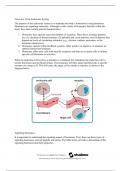
The purpose of the endocrine system is to maintain the body’s homeostasis using hormones. Hormones are signaling molecules. Although a wide variety of hormones function within the body, they share certain general characteristics: 1. Hormones have specific rates and rhythms of secretion. Three basic secretion patterns are: (1) circadian or diurnal patterns, (2) pulsatile and cyclic patterns, and (3) patterns that depend on levels of circulating substrates (e.g., calcium, sodium, potassium, or the hormones themselves). 2. Hormones operate within feedback systems, either positive or negative, to maintain an optimal internal environment. 3. Hormones affect only cells with specific receptors and then act on those cells to initiate specific cell functions or activities. When an endocrine cell receives a stimulus or command, this stimulates the endocrine cell to secrete hormones into the blood stream. The hormones will then target and bind onto a specific receptor on a target cell. This will cause the target cell to initiate a response as shown in the diagram below: Signaling Hormones It is important to understand the signaling aspect of hormones. First, there are three types of signaling hormones, steroid, peptide and amine. The table below provides a description of the signaling hormones and their properties.
Document information
- Uploaded on
- April 26, 2024
- Number of pages
- 69
- Written in
- 2023/2024
- Type
- Other
- Person
- Unknown