AICE Business Final Exam Review Questions With Correct Solutions, Already Passed!!
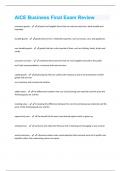
consumer goods - physical and tangible items that can only be used once. both durable and indurable durable goods - goods that last for a relatively long time, such as houses, cars, and appliances non-durable goods - goods that last a short period of time, such as clothing, foods, drinks and candy consumer services - emotional items/services that are non-tangible and sold to the public ex.) hotel accommodations, insurance and travel services. capital goods - physical goods that are used by the industry to aid in the production of other goods and services ex.) machines and commercial vehicles added value - the differences between the cost of purchasing raw materials and the price the finished goods are sold for creating value - increasing the difference between the cost of purchasing raw materials and the price of the finished goods are sold for opportunity cost - the benefit of the next most desired option which is given up entrepreneur - someone who takes the financial risk of starting and managing a new venture social enterprise - a business whose main social objective that reinvests most of its profits into benefits rather than maximizing returns to ownertriple bottom line - a business concept that posits firms should commit to measuring their social and environmental impact in addition to their financial performance business activity purpose - establish the needs of the potential customers, purchase resources, create a product or service that they demand factors of production - land, labor, capital and enterprise land - _______ itself, as well as the renewable and non-renewable resources of nature like minerals and animals labor - workers used to make up the workforce of the business capital - money, the goods itself, machinery, computers, factories, offices, buildings and vehicles enterprise - a project or undertaking, typically one that is difficult or requires effort. the driving force that makes up the business and takes on challenges creating value example - well designed shop display, employing kind assistants, attractive shop, nice packaging economic problem - there are insufficient goods to satisfy all of our wants and needs at any one time. innovation - An improvement of an existing technological product, system, or method of doing something. - must carve a niche in the market and be different than others in the market commitment and self-motivation - two qualities that are necessary when starting up businesses due to its difficulty. It is risky... but work ethic, commitment, and ambition to succeed are keymulti-skilled - Workers being trained in more than one skill, enabling them to do a range of jobs. - includes the making, promoting, selling and working out the finances of a product leadership - the ability to motivate individuals and groups to accomplish important goals self confience - a true entrepreneur would not let early setbacks and failures define them, and they would be able to rise back up and ultimately lead a successful project risk-taking - bearing the uncertainties that are part of the marketing process, like investing ones own savings into their own businesses as a means of starting it up. Characteristics of an Entrepreneur - innovation, commitment and self motivation, multi-skilled, leadership skills, self confidence and the ability to bounce back, and risk-taking Challenges faced by Entrepreneurs - identifying successful businesses opportunities, determining a location, competition, sourcing capital. building a customer base, competition - always an issue for new companies, unless their products are completely unique. If not, they must create value to satisfy their customers over opposers. financing issues - sourcing capital - lack of sufficient own finance - lack of awareness of financial support and grants available - lack of any trading record to present to banks as evidence of past success - poorly produced business plan that fails to convince potential investors clientele - a group of customers or patrons primary sector - The portion of the economy concerned with the direct extraction of materials from Earth's surface, generally through agriculture, although sometimes by mining, fishing, and dary sector - manufacture and process products made from natural resources (computers, clothes, jewelry) tertiary sector - provides services people need (hairdressing, car repair, daycare, restaurants) economic growth - any increase in goods or services from a start-up business will increase the GDP, employment creation - when new businesses open, more people are hired for jobs... so unemployment rate decreases exports - Goods and Services sold to other countries personal development - successfully leading a start-up business leaves the entrepreneur with a states of fulfillment, which can inspire other entrepreneurs social cohesion - serious social problems arise due to unemployment, and if a bunch of successful businesses start-up pop up, other people in the region may be influenced to have a similar mindset. charity - organization that is reliant on donations to help people socially responsible - working or operating in ways that are not harmful to society or the environment 3 - How many stages are involved in turning natural resources into finished products? industrialization - the growing importance of the secondary-sector manufacturing industries in developing countriesdeveloping country - A country that is at a relatively early stage in the process of economic development multinational company - an organization that does business in several countries deindustrialization - decline in the importance of secondary-sector activities and an increase in the tertiary sector - a result of rising incomes and higher living standards... leading to consumers spending stuff on services more than goods. public sector - comprises organizations accountable to and controlled by central or local government private sector - comprises businesses owned and controlled by individuals or groups of individuals mixed economy - economic resources are owned and controlled by both private and public sectors... though most business activity is done in the private sector
Written for
- Institution
- AICE Business
- Course
- AICE Business
Document information
- Uploaded on
- April 24, 2024
- Number of pages
- 46
- Written in
- 2023/2024
- Type
- Exam (elaborations)
- Contains
- Questions & answers
Subjects

Also available in package deal