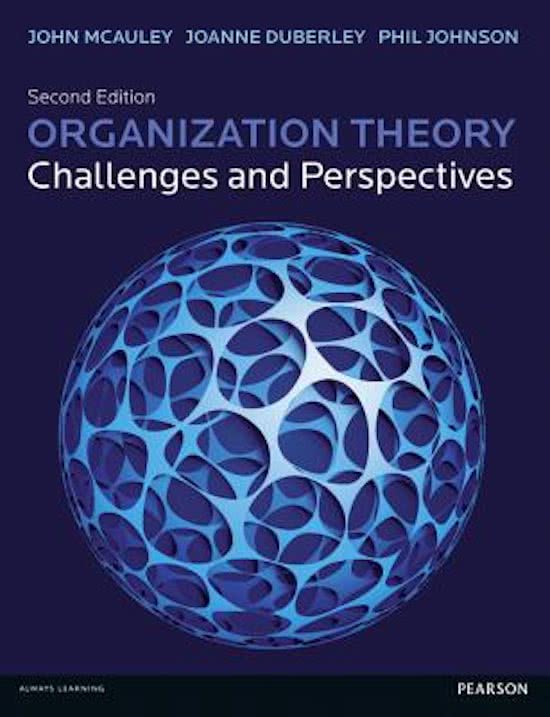
McAuley, J., J. Duberley, P. Johnson (2014). Organizaton Theory: Challenges and Perspecties. Pearson
Educaton ltd.
Lecture 1. What is organizaton theory?
McAuley et al. chapters 1 and 2 (pp. 1-48)
Adam Smith: The Wealth of Natons..
Lecture 2. Modernist perspecties 1: general principles
McAuley et al. chapter 3 up to page 68: “General Systems Theory”
Taylor: The principles of scientic management.
Hall: The Concept of Bureaucracy: An Empirical Assessment.
Film tpp Charlie Chaplin (1936). Modern Times. Starring: Charlie Chaplin and Paulete Goddard...
Lecture 3. Modernist perspecties 2: contngency theory and systems theory
McAuley et al. chapter 3, pp. 68-88: “General Systems Theory”
McAuley et al. chapter 6, pp. 186 up to 192: “Managerialism with a human face?”
Simon: The proverbs of administraton.
Donaldson & Jofe: it-The Key to Organizatonal Design.
Lecture 4. Neo-modernist approaches: human relatons and culture
McAuley et al. chapter 4
McGregor: The Human Side of Enterprise.
Lecture 5. Managerial control
McAuley et al. chapter 5
McAuley et al. chapter 6, pp. 192-215
Film tpp Greg Coolidge (2006). Employee of the month. Starring Jessica Simpson and Dane Cook.
Lecture 6. Organizatonal learning and innoiaton
Crossan et al: An organizatonal learning framework: rom intuiton to insttuton.
Lam: Innovatve Organizatons: Structure, Learning and Adaptaton.
Lecture 7. Organizaton in a post-modern world
McAuley et al. chapter 7
Thompson: Disconnected capitalismp or why employers can’t keep their side of the bargain.
Lecture 8. Postmodern organizatons
Hochschild: “Rent a mom” and other services: markets, meanings and emotons.
leming: The human capital hoax: Work, debt and insecurity in the era of Uberizaton.
Film tpp Jason Reitman (2009). Up in the Air. Starring George Clooney and Vera armiga.
Lecture 9. Refectie organizaton theory
McAuley et al. chapter 9
Lecture 10. Critcal theory and managerialism
McAuley et al. chapter 10
Adam: The problem of administratve evil in a culture of technical ratonality.
Index
, Chapter 1: introducing the structure of Organizaton theory: Challenges and Perspecties.............................3
Chapter 2: Organizaton theory: what is it, and why does it mater?...............................................................3
Chapter 3: Modernist organizaton theory...................................................................................................... 5
Chapter 4: Neo-modernist organizaton theory: putng people frst.............................................................11
Chapter 5 Neo-modernist organizaton theory: surfng the new waie?.........................................................17
Chapter 6 From classical beginnings to new-waie leadership and management: the eioluton of
management theory.................................................................................................................................... 22
Chapter 7 Post-modernist organizaton theory: new organizatonal forms for a new millennium?.................25
Chapter 9 Refectie organizaton theory: symbols, meanings and interpretatons........................................31
Chapter 10 Refeeiie organizaton theory: critcal theory, psychoanalysis and feminist organizaton theory..40
Crossan et al. Organizatonal learning.......................................................................................................... 50
Lam - Innoiatie organizatons: structure, learning and adaptaton..............................................................53
Flaming – The Human capital hoae: Work, debt and insecurity in the Era of Uberizaton...............................55
Educaton ltd.
Lecture 1. What is organizaton theory?
McAuley et al. chapters 1 and 2 (pp. 1-48)
Adam Smith: The Wealth of Natons..
Lecture 2. Modernist perspecties 1: general principles
McAuley et al. chapter 3 up to page 68: “General Systems Theory”
Taylor: The principles of scientic management.
Hall: The Concept of Bureaucracy: An Empirical Assessment.
Film tpp Charlie Chaplin (1936). Modern Times. Starring: Charlie Chaplin and Paulete Goddard...
Lecture 3. Modernist perspecties 2: contngency theory and systems theory
McAuley et al. chapter 3, pp. 68-88: “General Systems Theory”
McAuley et al. chapter 6, pp. 186 up to 192: “Managerialism with a human face?”
Simon: The proverbs of administraton.
Donaldson & Jofe: it-The Key to Organizatonal Design.
Lecture 4. Neo-modernist approaches: human relatons and culture
McAuley et al. chapter 4
McGregor: The Human Side of Enterprise.
Lecture 5. Managerial control
McAuley et al. chapter 5
McAuley et al. chapter 6, pp. 192-215
Film tpp Greg Coolidge (2006). Employee of the month. Starring Jessica Simpson and Dane Cook.
Lecture 6. Organizatonal learning and innoiaton
Crossan et al: An organizatonal learning framework: rom intuiton to insttuton.
Lam: Innovatve Organizatons: Structure, Learning and Adaptaton.
Lecture 7. Organizaton in a post-modern world
McAuley et al. chapter 7
Thompson: Disconnected capitalismp or why employers can’t keep their side of the bargain.
Lecture 8. Postmodern organizatons
Hochschild: “Rent a mom” and other services: markets, meanings and emotons.
leming: The human capital hoax: Work, debt and insecurity in the era of Uberizaton.
Film tpp Jason Reitman (2009). Up in the Air. Starring George Clooney and Vera armiga.
Lecture 9. Refectie organizaton theory
McAuley et al. chapter 9
Lecture 10. Critcal theory and managerialism
McAuley et al. chapter 10
Adam: The problem of administratve evil in a culture of technical ratonality.
Index
, Chapter 1: introducing the structure of Organizaton theory: Challenges and Perspecties.............................3
Chapter 2: Organizaton theory: what is it, and why does it mater?...............................................................3
Chapter 3: Modernist organizaton theory...................................................................................................... 5
Chapter 4: Neo-modernist organizaton theory: putng people frst.............................................................11
Chapter 5 Neo-modernist organizaton theory: surfng the new waie?.........................................................17
Chapter 6 From classical beginnings to new-waie leadership and management: the eioluton of
management theory.................................................................................................................................... 22
Chapter 7 Post-modernist organizaton theory: new organizatonal forms for a new millennium?.................25
Chapter 9 Refectie organizaton theory: symbols, meanings and interpretatons........................................31
Chapter 10 Refeeiie organizaton theory: critcal theory, psychoanalysis and feminist organizaton theory..40
Crossan et al. Organizatonal learning.......................................................................................................... 50
Lam - Innoiatie organizatons: structure, learning and adaptaton..............................................................53
Flaming – The Human capital hoae: Work, debt and insecurity in the Era of Uberizaton...............................55