History revision – Stability and prosperity 1925 – 29 (10)
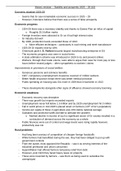
Economic situation 1925-29
- Seems that Gr saw remarkable economic success in 1925 – 29
- However, historians believe that there was a sense of false prosperity
Economic progress
- 1924-29 there was a monetary stability and thanks to Dawes Plan an influx of capital
o Roughly 25.5 billion marks
- Foreign investors were attracted to Gr as it had high interest rates
- Gr industry did well
- By 1928, production levels exceeded those of 1913
o More efficient techniques – particularly in coal mining and steel manufacture
- 1925-29 Gr exports rose by 40%
- Chemicals giant I. G. Farben became largest manufacturing enterprise in EU
- The economic progress was seen in social terms
- A state arbitration scheme was introduced in 1924 to try and prevent strikes
- Workers, through their trade unions, were able to argue their case for more pay or less
hours before neutral judges – often sympathetic to workers’ claims
Improvements in provisions of social welfare:
- Generous pensions and sickness benefits
- 1927, compulsory unemployment insurance covered 17 million workers
- Better health insurance meant there was better medical provision
- Public spending on housing was 33x more in 1929 than it had been in 1913
- These developments alongside other signs of affluence showed economy booming
Economic weakness
- Economic recovery was deceptive
- There was growth but imports exceeded exports
- Unemployment never fell below 1.3 million and by 1929 unemployment hit 3 million
- Fall in world prices in mid-1920’s placed strain on farmers (1/3 rd of Gr’s population)
- Income per capita of those in agriculture was 44% below national average
- Subsidies and protective tariffs did little to alleviate the problem
o Marked decline in income of such a significant sector of Gr society resulted in a
contraction of demand across the economy as a whole
- Public finances were out of control and wage levels were rising rapidly however,
productivity was not
Rural problems
- Had long been anxious of competition of cheaper foreign foodstuffs
- While farmers had benefitted during the war, they had been obliged to put up with
government controls
- From the outset, most opposed the Republic – saw it as serving interests of the
industrial proletariat and urban consumers
- Hyperinflation had offered farmers temporary relief from debt
- However, post 1923 they faced heavy taxes on property
- These were resented by farmers – saw them as being used to subsidise the
unemployed
Economic situation 1925-29
- Seems that Gr saw remarkable economic success in 1925 – 29
- However, historians believe that there was a sense of false prosperity
Economic progress
- 1924-29 there was a monetary stability and thanks to Dawes Plan an influx of capital
o Roughly 25.5 billion marks
- Foreign investors were attracted to Gr as it had high interest rates
- Gr industry did well
- By 1928, production levels exceeded those of 1913
o More efficient techniques – particularly in coal mining and steel manufacture
- 1925-29 Gr exports rose by 40%
- Chemicals giant I. G. Farben became largest manufacturing enterprise in EU
- The economic progress was seen in social terms
- A state arbitration scheme was introduced in 1924 to try and prevent strikes
- Workers, through their trade unions, were able to argue their case for more pay or less
hours before neutral judges – often sympathetic to workers’ claims
Improvements in provisions of social welfare:
- Generous pensions and sickness benefits
- 1927, compulsory unemployment insurance covered 17 million workers
- Better health insurance meant there was better medical provision
- Public spending on housing was 33x more in 1929 than it had been in 1913
- These developments alongside other signs of affluence showed economy booming
Economic weakness
- Economic recovery was deceptive
- There was growth but imports exceeded exports
- Unemployment never fell below 1.3 million and by 1929 unemployment hit 3 million
- Fall in world prices in mid-1920’s placed strain on farmers (1/3 rd of Gr’s population)
- Income per capita of those in agriculture was 44% below national average
- Subsidies and protective tariffs did little to alleviate the problem
o Marked decline in income of such a significant sector of Gr society resulted in a
contraction of demand across the economy as a whole
- Public finances were out of control and wage levels were rising rapidly however,
productivity was not
Rural problems
- Had long been anxious of competition of cheaper foreign foodstuffs
- While farmers had benefitted during the war, they had been obliged to put up with
government controls
- From the outset, most opposed the Republic – saw it as serving interests of the
industrial proletariat and urban consumers
- Hyperinflation had offered farmers temporary relief from debt
- However, post 1923 they faced heavy taxes on property
- These were resented by farmers – saw them as being used to subsidise the
unemployed