Mitosis
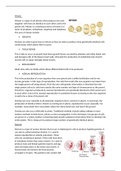
Mitosis is a type of cell division that produces two new
daughter cells that are identical to each other and to the
parent cell. Mitosis is a continuous series of events in a
series of prophase, metaphase, anaphase and telophase.
The uses of mitosis include:
GROWTH
Humans are able to grow due to mitosis as they are able to produce more genetically identical cells
continuously which allows them to grow.
TISSUE REPAIR
This is able to occur as wounds heal when growth factors secreted by platelets and white blood cells
and damages cells of the blood vessel walls, stimulate the production of endothelial and smooth
muscle cells to repair damages blood vessels.
REPLACEMENT
Adult stem cells can divide which allows diferentiated cells to be produced.
ASEXUAL REPRODUCTION
This is the production of a new organism from one parent and is unlike fertilisation and do not
involve gametes. In this type of reproduction, the cells that create this new organism are taken from
the single parent cell using mitosis. All of the new cells genetic information is inherited from the
single parent cell so its cells have exactly the same number and type of chromosomes as the parent.
Therefore, organisms produced by asexual reproduction are genetically identical to their parent and
to each other. Due to this, asexual reproduction is sometimes known as cloning as the new organism
is said to be a clone of its parent cell.
Cloning can occur naturally in all eukaryotic organisms but is common in plants. In mammals, the
production of identical twins is known as cloning but in plants, reproduction occurs asexually. Foor
example, some plants form new plants where the stems bend over and touch the ground.
Cloning can also occur artiicially in plants. Traditional methods include taking cutngs or more
modern methods include tissue culture or micro-propagation. In this technique, tiny groups of cells
are grown in a culture medium containing plant growth substances that induce them to develop into
entire plants. This is cheap yet it produces large numbers of genetically identical plants.
Meiosis
Meiosis is a type of nuclear division that occurs in diploid germ cells to produce haploid gametes. It
can also be called reduction division. It is used in
sexual reproduction in animals and plants. These
cells are containing in gonads. These cells have been
in interphase before they enter meiosis. It is used to
produce male and female gametes (sperm and egg
cells) and takes place in the testes and ovaries. A
human body cell contains 46 chromosomes
arranged in 23 pairs. The gametes only contain half
Mitosis is a type of cell division that produces two new
daughter cells that are identical to each other and to the
parent cell. Mitosis is a continuous series of events in a
series of prophase, metaphase, anaphase and telophase.
The uses of mitosis include:
GROWTH
Humans are able to grow due to mitosis as they are able to produce more genetically identical cells
continuously which allows them to grow.
TISSUE REPAIR
This is able to occur as wounds heal when growth factors secreted by platelets and white blood cells
and damages cells of the blood vessel walls, stimulate the production of endothelial and smooth
muscle cells to repair damages blood vessels.
REPLACEMENT
Adult stem cells can divide which allows diferentiated cells to be produced.
ASEXUAL REPRODUCTION
This is the production of a new organism from one parent and is unlike fertilisation and do not
involve gametes. In this type of reproduction, the cells that create this new organism are taken from
the single parent cell using mitosis. All of the new cells genetic information is inherited from the
single parent cell so its cells have exactly the same number and type of chromosomes as the parent.
Therefore, organisms produced by asexual reproduction are genetically identical to their parent and
to each other. Due to this, asexual reproduction is sometimes known as cloning as the new organism
is said to be a clone of its parent cell.
Cloning can occur naturally in all eukaryotic organisms but is common in plants. In mammals, the
production of identical twins is known as cloning but in plants, reproduction occurs asexually. Foor
example, some plants form new plants where the stems bend over and touch the ground.
Cloning can also occur artiicially in plants. Traditional methods include taking cutngs or more
modern methods include tissue culture or micro-propagation. In this technique, tiny groups of cells
are grown in a culture medium containing plant growth substances that induce them to develop into
entire plants. This is cheap yet it produces large numbers of genetically identical plants.
Meiosis
Meiosis is a type of nuclear division that occurs in diploid germ cells to produce haploid gametes. It
can also be called reduction division. It is used in
sexual reproduction in animals and plants. These
cells are containing in gonads. These cells have been
in interphase before they enter meiosis. It is used to
produce male and female gametes (sperm and egg
cells) and takes place in the testes and ovaries. A
human body cell contains 46 chromosomes
arranged in 23 pairs. The gametes only contain half