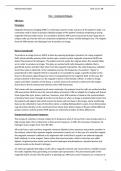
Psychology - Chapter 10: Human Development Latest Update Graded A+
Psychology - Chapter 10: Human Development Latest Update Graded A+ Developmental Psychology Study of how behavior changes over the life span. Post Hoc Fallacy False assumption that because one event occurred before another event, it must have caused that event. Cross-Sectional Design Research design that examines people of different ages at a single point in time. Cohort Effect Effect observed in a sample of participants that results from individuals in the sample growing up at the same time. Longitudinal Design Research design that examines development in the same group of people on multiple occasions over time. Gene-Environment Interaction Situation in which the effects of genes depend on the environment in which they are expressed. Nature via Nutrue Tendency of individuals with certain genetic predispositions to seek out and create environments that permit the expression of those predispositions. Gene Expression Activation or deactivation of genes by environmental experiences throughout development. Prental Prior to birth. Zygote Fertilized egg. Blastocyst Ball of identical cells early in pregnancy that haven't yet begun to take on any specific function in a body part. Embryo Second to eight week of prenatal development, during which limbs, facial features, and major organs of the body take form. Fetus Period of prenatal development from ninth week until birth after all major organs are established and physical maturation is the primary change. Teratogen An environmental factor that can exert a negative impact on prenatal development. Fetal Alcohol Syndrome Condition resulting from high levels of prenatal alcohol exposure, causing learning disabilities, physical growth retardation, facial malformations, and behavioral disorder. Motor Behavior Bodily motion that occur as result of self-initiated force that moves the bones and muscles. Adolescence The transition between childhood and adulthood commonly associated wit the teenage years. Puberty The achievement of sexual maturation resulting in the potential to reproduce. Primary Sex Characteristic A physical feature such as the reproductive organs and genitals that distinguish the sexes. Secondary Sex Characteristic A sex-differentiating characteristic that doesn't relate directly to reproduction, such as breast enlargement in women and deepening voices in men. Menarche Start of menstruation. Spermarche Boys' first ejaculation. Menopause The termination of menstruation, marking the end of a woman's reproductive potential. Cognitive Development Study of how children acquire the ability to learn, think, reason, communicate , and remember. Assimilateion Piagetian process of absorbing new experience into current knowledge structures. Accommodation Piagetian process of altering
Written for
- Institution
- Psychology - Chapter 10: Human Development
- Course
- Psychology - Chapter 10: Human Development
Document information
- Uploaded on
- April 18, 2024
- Number of pages
- 8
- Written in
- 2023/2024
- Type
- Exam (elaborations)
- Contains
- Questions & answers
Subjects
-
psychology chapter 10 human development latest

Also available in package deal