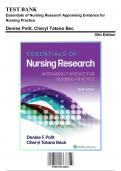
TEST BANK
Essentials of Nursing Research Appraising Evidence for
Nursing Practice
Denise Polit, Cheryl Tatano Bec
10th Edition
9781975141851
, Stuvia.com - The Marketplace to Buy and Sell your Study Material
Table Of Content
Chapter 1, Introducing Nursing Research for Evidence-Based Practice ....................................................................1
Chapter 2, Understanding Key Concepts and Steps in Quantitative and Qualitative Research ...............................19
Chapter 3, Reading and Critically Appraising Research Articles.............................................................................28
Chapter 4, Attending to Ethics in Research ..............................................................................................................49
Chapter 5, Identifying Research Problems, Research Questions, and Hypotheses ..................................................62
Chapter 6, Finding and Reviewing Research Evidence in the Literature .................................................................76
Chapter 7, Understanding Theoretical and Conceptual Frameworks .......................................................................91
Chapter 8, Appraising Quantitative Research Design ............................................................................................104
Chapter 9, Appraising Sampling and Data Collection in Quantitative Studies ......................................................130
Chapter 10, Appraising Qualitative Designs and Approaches................................................................................151
Chapter 11, Appraising Sampling and Data Collection in Qualitative Studies ......................................................167
Chapter 12, Understanding Mixed Methods Research, Quality Improvement, and Other Special Types of Research...183
Chapter 13, Understanding Statistical Analysis of Quantitative Data ....................................................................199
Chapter 14, Interpreting Quantitative Findings and Evaluating Clinical Significance ..........................................228
Chapter 15, Understanding the Analysis of Qualitative Data.................................................................................239
Chapter 16, Appraising Trustworthiness and Integrity in Qualitative Research ....................................................253
Chapter 17, Learning from Systematic Reviews ....................................................................................................266
Chapter 18, Putting Research Evidence into Practice: Evidence-Based Practice and Practice-Based Evidence ...280
Downloaded by: Nursingtest | Want to earn $1.236
Distribution of this document is illegal extra per year?
, Stuvia.com - The Marketplace to Buy and Sell your Study Material
Chapter 1, Introducing Nursing Research for Evidence-Based Practice
MULTIPLE CHOICE
1. Which group is best served by the development of a rigorous base of evidence for nursing
practice?
a. Nursing administrators
b. Practicing nurses
c. Nurses’ clients
d. Nurse researchers
ANS: C
Feedback: Nurse leaders have recognized the need to base specific nursing decisions on
trustworthy evidence indicating that the decisions are clinically appropriate, cost- effective,
and result in positive outcomes for their clients. Nursing groups benefit from nursing
studies, but it is nurses’ clients themselves who benefit most because research-based
evidence can improve their health and health-related quality of life.
PTS: 1 DIF: Moderate
REF: Page and Header: 2, The Importance of Research to Evidence-Based Nursing
OBJ: 01
NAT: Client Needs: Safe and Effective Care Environment: Management of Care
TOP: Chapter: 1 KEY: Integrated Process: Communication and Documentation
BLM: Cognitive Level: Apply NOT: Multiple Choice
2. Which is an example of a clinical nursing research question?
a. What percentage of nurses have a master’s or doctorate degree?
b. What factors contribute to clients’ risk of falling during a hospitalization?
c. In what ways do nursing students benefit from a course on evidence-based
practice?
d. What course of action do nursing students pursue when faced with a moral
dilemma?
ANS: B
Feedback: The answers to clinical nursing research questions have the potential to improve
the health and well-being of nurses’ clients. Clinical nursing research questions focus
directly on clients’ needs, experiences, and health behaviors, and answers to such questions
can inform nurses’ decisions or lead to strategies to improve nursing practice. Researchers
also study nursing education, but questions about nursing education, as exemplified in the
other questions, would not be considered clinical nursing research questions.
PTS: 1 DIF: Moderate
REF: Page and Header: 2, What Is Nursing Research? OBJ: 01
NAT: Client Needs: Safe and Effective Care Environment: Management of Care
TOP: Chapter: 1 KEY: Integrated Process: Nursing Process
BLM: Cognitive Level: Apply NOT: Multiple Choice
3. Which goal is the highest priority for research in the nursing profession?
a. To generate evidence to inform nurses’ decisions and actions
1|Page
Downloaded by: Nursingtest | Want to earn $1.236
Distribution of this document is illegal extra per year?
, Stuvia.com - The Marketplace to Buy and Sell your Study Material
b. To conduct research focused on the context of nursing practice
c. To document the role that nurses serve in society
d. To establish priorities for areas of study by nurse researchers
ANS: A
Feedback: Nurses are increasingly undertaking clinical research, and practicing nurses are
expected to base their practice on evidence from research. Evidence-based practice involves
the use of the best evidence in making patient care decisions and typically comes from
research conducted by nurses and other health care professionals. The other answers are
possible goals for the nursing profession, but none is as high a priority as developing
rigorous evidence for practice.
PTS: 1 DIF: Easy
REF: Page and Header: 2, The Importance of Research to Evidence-Based Nursing
OBJ: 01
NAT: Client Needs: Safe and Effective Care Environment: Management of Care
TOP: Chapter: 1 KEY: Integrated Process: Nursing Process
BLM: Cognitive Level: Understand NOT: Multiple Choice
4. In several countries, research in health care settings has come to play an important role in
the nursing profession with respect to:
a. providing opportunities to serve on important government policy-making boards.
b. credentialing and improving nurses’ status.
c. strengthening nurses’ bargaining power.
d. supporting better avenues for advanced degrees.
ANS: B
Feedback: In the United States and in other countries, research plays an important role in
nurses’ credentialing and status. In particular, research and efforts to promote
evidence-based practice are key elements of the Magnet recognition program. Changes to
nursing practice now occur regularly because of EBP efforts, and these efforts enhance the
status of the profession. The other answers are possible outcomes of increased research
activity among nurses, but none is as important as the role of research in enhancing the
visibility and credibility of the profession.
PTS: 1 DIF: Moderate
REF: Page and Header: 2, The Importance of Research to Evidence-Based Nursing
OBJ: 01
NAT: Client Needs: Safe and Effective Care Environment: Management of Care
TOP: Chapter: 1 KEY: Integrated Process: Nursing Process
BLM: Cognitive Level: Understand NOT: Multiple Choice
5. What is the role of consumers of nursing research?
a. Generating evidence by undertaking studies
b. Gathering information from clients that can be used in research
c. Coming up with ideas for studies
d. Reading research reports to find evidence that is relevant to nursing practice
ANS: D
2|Page
Downloaded by: Nursingtest | Want to earn $1.236
Distribution of this document is illegal extra per year?
Essentials of Nursing Research Appraising Evidence for
Nursing Practice
Denise Polit, Cheryl Tatano Bec
10th Edition
9781975141851
, Stuvia.com - The Marketplace to Buy and Sell your Study Material
Table Of Content
Chapter 1, Introducing Nursing Research for Evidence-Based Practice ....................................................................1
Chapter 2, Understanding Key Concepts and Steps in Quantitative and Qualitative Research ...............................19
Chapter 3, Reading and Critically Appraising Research Articles.............................................................................28
Chapter 4, Attending to Ethics in Research ..............................................................................................................49
Chapter 5, Identifying Research Problems, Research Questions, and Hypotheses ..................................................62
Chapter 6, Finding and Reviewing Research Evidence in the Literature .................................................................76
Chapter 7, Understanding Theoretical and Conceptual Frameworks .......................................................................91
Chapter 8, Appraising Quantitative Research Design ............................................................................................104
Chapter 9, Appraising Sampling and Data Collection in Quantitative Studies ......................................................130
Chapter 10, Appraising Qualitative Designs and Approaches................................................................................151
Chapter 11, Appraising Sampling and Data Collection in Qualitative Studies ......................................................167
Chapter 12, Understanding Mixed Methods Research, Quality Improvement, and Other Special Types of Research...183
Chapter 13, Understanding Statistical Analysis of Quantitative Data ....................................................................199
Chapter 14, Interpreting Quantitative Findings and Evaluating Clinical Significance ..........................................228
Chapter 15, Understanding the Analysis of Qualitative Data.................................................................................239
Chapter 16, Appraising Trustworthiness and Integrity in Qualitative Research ....................................................253
Chapter 17, Learning from Systematic Reviews ....................................................................................................266
Chapter 18, Putting Research Evidence into Practice: Evidence-Based Practice and Practice-Based Evidence ...280
Downloaded by: Nursingtest | Want to earn $1.236
Distribution of this document is illegal extra per year?
, Stuvia.com - The Marketplace to Buy and Sell your Study Material
Chapter 1, Introducing Nursing Research for Evidence-Based Practice
MULTIPLE CHOICE
1. Which group is best served by the development of a rigorous base of evidence for nursing
practice?
a. Nursing administrators
b. Practicing nurses
c. Nurses’ clients
d. Nurse researchers
ANS: C
Feedback: Nurse leaders have recognized the need to base specific nursing decisions on
trustworthy evidence indicating that the decisions are clinically appropriate, cost- effective,
and result in positive outcomes for their clients. Nursing groups benefit from nursing
studies, but it is nurses’ clients themselves who benefit most because research-based
evidence can improve their health and health-related quality of life.
PTS: 1 DIF: Moderate
REF: Page and Header: 2, The Importance of Research to Evidence-Based Nursing
OBJ: 01
NAT: Client Needs: Safe and Effective Care Environment: Management of Care
TOP: Chapter: 1 KEY: Integrated Process: Communication and Documentation
BLM: Cognitive Level: Apply NOT: Multiple Choice
2. Which is an example of a clinical nursing research question?
a. What percentage of nurses have a master’s or doctorate degree?
b. What factors contribute to clients’ risk of falling during a hospitalization?
c. In what ways do nursing students benefit from a course on evidence-based
practice?
d. What course of action do nursing students pursue when faced with a moral
dilemma?
ANS: B
Feedback: The answers to clinical nursing research questions have the potential to improve
the health and well-being of nurses’ clients. Clinical nursing research questions focus
directly on clients’ needs, experiences, and health behaviors, and answers to such questions
can inform nurses’ decisions or lead to strategies to improve nursing practice. Researchers
also study nursing education, but questions about nursing education, as exemplified in the
other questions, would not be considered clinical nursing research questions.
PTS: 1 DIF: Moderate
REF: Page and Header: 2, What Is Nursing Research? OBJ: 01
NAT: Client Needs: Safe and Effective Care Environment: Management of Care
TOP: Chapter: 1 KEY: Integrated Process: Nursing Process
BLM: Cognitive Level: Apply NOT: Multiple Choice
3. Which goal is the highest priority for research in the nursing profession?
a. To generate evidence to inform nurses’ decisions and actions
1|Page
Downloaded by: Nursingtest | Want to earn $1.236
Distribution of this document is illegal extra per year?
, Stuvia.com - The Marketplace to Buy and Sell your Study Material
b. To conduct research focused on the context of nursing practice
c. To document the role that nurses serve in society
d. To establish priorities for areas of study by nurse researchers
ANS: A
Feedback: Nurses are increasingly undertaking clinical research, and practicing nurses are
expected to base their practice on evidence from research. Evidence-based practice involves
the use of the best evidence in making patient care decisions and typically comes from
research conducted by nurses and other health care professionals. The other answers are
possible goals for the nursing profession, but none is as high a priority as developing
rigorous evidence for practice.
PTS: 1 DIF: Easy
REF: Page and Header: 2, The Importance of Research to Evidence-Based Nursing
OBJ: 01
NAT: Client Needs: Safe and Effective Care Environment: Management of Care
TOP: Chapter: 1 KEY: Integrated Process: Nursing Process
BLM: Cognitive Level: Understand NOT: Multiple Choice
4. In several countries, research in health care settings has come to play an important role in
the nursing profession with respect to:
a. providing opportunities to serve on important government policy-making boards.
b. credentialing and improving nurses’ status.
c. strengthening nurses’ bargaining power.
d. supporting better avenues for advanced degrees.
ANS: B
Feedback: In the United States and in other countries, research plays an important role in
nurses’ credentialing and status. In particular, research and efforts to promote
evidence-based practice are key elements of the Magnet recognition program. Changes to
nursing practice now occur regularly because of EBP efforts, and these efforts enhance the
status of the profession. The other answers are possible outcomes of increased research
activity among nurses, but none is as important as the role of research in enhancing the
visibility and credibility of the profession.
PTS: 1 DIF: Moderate
REF: Page and Header: 2, The Importance of Research to Evidence-Based Nursing
OBJ: 01
NAT: Client Needs: Safe and Effective Care Environment: Management of Care
TOP: Chapter: 1 KEY: Integrated Process: Nursing Process
BLM: Cognitive Level: Understand NOT: Multiple Choice
5. What is the role of consumers of nursing research?
a. Generating evidence by undertaking studies
b. Gathering information from clients that can be used in research
c. Coming up with ideas for studies
d. Reading research reports to find evidence that is relevant to nursing practice
ANS: D
2|Page
Downloaded by: Nursingtest | Want to earn $1.236
Distribution of this document is illegal extra per year?