

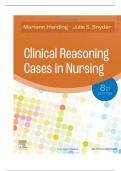
, This Is A Test Bank Of Test (Study Questions) To Help You
Prepare For the Tests
To Clarify, This Is A Test Bank, Not A Textbook You Have
Immediate
Access To Download Your Test Bank.
No Delays In Loading Is Fast And Instant Immediately After
Purchase! You Will
Receive A Full Bank Of Tests, In Other Words, All Chapters Will
Be There.
Test Banks Are Presented In PDF Format Therefore, No Special
Software
Is Required To Download Them
Chapter 1.Perfusion
MULTIPLE CHOICE
1. The nurse is explaining to a student nurse about impaired central perfusion. The nurse
knows the student understands this problem when the student states, Central perfusion
a. is monitored only by the physician.
b. involves the entire body.
c. is decreased with hypertension.
d. is toxic to the cardiac
system. ANS: B
Central perfusion does involve the entire body as all organs are supplied with oxygen and vital
nutrients. The physician does not control the bodys ability for perfusion. Central perfusion is not
decreased with hypertension. Central perfusion is not toxic to the cardiac system.
2. A patient was diagnosed with hypertension. The patient asks the nurse how this disease
could have happened to them. The nurses best response is Hypertension
a. happens to everyone sooner or later. Dont be concerned about it.
b. can happen from eating a poor diet, so change what you are eating.
c. can happen from arterial changes that impede the blood flow.
, d. happens when people do not exercise, so you should walk every
day. ANS: C
Hardening of the arteries from atherosclerosis can cause hypertension in the patient.
Hypertension does not happen to everyone. Changing the patients diet and exercising may be a
positive life change, but these answers do not explain to the patient how the disease could have
happened.
3. The patient asks the nurse to explain the sinoatrial node in the heart. The nurses best response
would be, The sinoatrial node
a. provides the heart with the stimulation to beat in a normal rhythm.
b. protects the heart from atherosclerotic changes.
c. provides the heart with oxygenated blood.
d. protects the heart from
infection. ANS: A
The sinoatrial node is the natural pacemaker of the heart, and it assists the heart to beat in a
normal rhythm. The sinoatrial node does not protect from atherosclerotic changes or infection,
and it does not directly provide the heart with oxygenated blood.
4. The patient is brought to the emergency department after a motor vehicle accident. The
patient is diagnosed with internal bleeding. The nurses primary concern is to monitor for
a. mental alertness.
b. perfusion.
, c. pain.
d. reaction to
medications. ANS: B
Perfusion is the correct answer, because with internal bleeding, the nurse should monitor vital
signs to be sure perfusion is happening. Mental alertness, pain, and medication reactions are
important but not the primary concern.
5. A patients serum electrolytes are being monitored. The nurse notices that the potassium
level is low. The nurse knows that the patient should be observed for
a. tissue ischemia.
b. brain malformations.
c. intestinal blockage.
d. cardiac dysthymia.
ANS: D
Cardiac dysthymia is a possibility when serum potassium is high or low. Tissue ischemia, brain
malformations, or intestinal blockage do not have a direct correlation to potassium irregularities.
6. A nurse is explaining to a student nurse about perfusion. The nurse knows the
student understands the concept of perfusion when the student states, Perfusion
a. is a normal function of the body, and I dont have to be concerned about it.
b. is monitored by the physician, and I just follow orders.
c. is monitored by vital signs and capillary refill.
d. varies as a person ages, so I would expect changes in the
body. ANS: C
The best method to monitor perfusion is to monitor vital signs and capillary refill. This allows
the nurse to know if perfusion is adequate to maintain vital organs. The nurse does have to be
concerned about perfusion. Perfusion is not only monitored by the physician but the nurse too.
Perfusion does not always change as the person ages.
7. The nurse is conducting a patient assessment. The patient tells the nurse that he has smoked
two packs of cigarettes per day for 27 years. The nurse may find which data upon
assessment?
a. Blood pressure above the normal range
b. Bounding pedal pulses
c. Night blindness
d. Reflux disease
ANS: A
Smokers have a constriction of the blood vessels due to the tar and nicotine in cigarettes. This
constriction may lead to hypertension. Bounding pulses, night blindness, and reflux disease
do not have a direct link to smoking.
Chapter 2.Gas Exchange
MULTIPLE CHOICE
,1. The nurse is assigned a group of patients. Which patient would the nurse identify as being
at increased risk for impaired gas exchange? A patient
a. with a blood glucose of 350 mg/dL
b. who has been on anticoagulants for 10 days
c. with a hemoglobin of 8.5 g/dL
d. with a heart rate of 100 beats/min and blood pressure of
100/60 ANS: C
The hemoglobin is low (anemia), therefore the ability of the blood to carry oxygen is decreased.
High blood glucose and/or anticoagulants do not alter the oxygen carrying capacity of the blood.
A heart rate of 100 beats/min and blood pressure of 100/60 are not indicative of oxygen carrying
capacity of the blood.
2. The nurse is reviewing the patients arterial blood gas results. The PaO2 is 96 mm Hg, pH is
7.20, PaCO2 is 55 mm Hg, and HCO3 is 25 mEq/L. What would the nurse expect to observe
on assessment of this patient?
a. Disorientation and tremors
b. Tachycardia and decreased blood pressure
c. Increased anxiety and irritability
d. Hyperventilation and lethargy
ANS: A
The patient is experiencing respiratory acidosis ( pH, and PaCO2 ) which may be manifested
by disorientation, tremors, possible seizures, and decreased level of consciousness. Tachycardia
and decreased blood pressure are not characteristic of a problem of respiratory acidosis.
Increased anxiety and hyperventilation will cause respiratory alkalosis, which is manifested
by an increase in pH and a decrease in PaCO2.
3. The nurse would identify which patient as having a problem of impaired gas
exchange secondary to a perfusion problem? A patient with
a. peripheral arterial disease of the lower extremities
b. chronic obstructive pulmonary disease (COPD)
c. chronic asthma
d. severe anemia secondary to
chemotherapy ANS: A
Perfusion relates to the ability of the blood to deliver oxygen to the cellular level and return the
carbon dioxide to the lung for removal. COPD and asthma are examples of a
ventilation problem. Severe anemia is an example of a transport problem of gas
exchange.
4. The nurse is assessing a patients differential white blood cell count. What implications
would this test have on evaluating the adequacy of a patients gas exchange?
a. An elevation of the total white cell count indicates generalized inflammation.
b. Eosinophil count will assist to identify the presence of a respiratory infection.
c. White cell count will differentiate types of respiratory bacteria.
d. Level of neutrophils provides guidelines to monitor a chronic infection.
,ANS: A
Elevation of total white cell count is indicative of inflammation that is often due to an infection.
Upper respiratory infections are common problems in altering a patients gas exchange.
Eosinophil cells are increased in an allergic response. Neutrophils are more indicative of an
acute inflammatory response. White cells do not assist to differentiate types of respiratory
bacteria.
Monocytes are an indicator of progress of a chronic infection.
5. The acid-base status of a patient is dependent on normal gas exchange. Which patient
would the nurse identify as having an increased risk for the development of respiratory
acidosis? A patient with
a. chronic lung disease with increased carbon dioxide retention
b. acute anxiety, hyperventilation, and decreased carbon dioxide retention
c. decreased cardiac output with increased serum lactic acid production
d. gastric drainage with increased removal of gastric
acid ANS: A
Respiratory acidosis is caused by an increase in retention of carbon dioxide, regardless of the
underlying disease. A decrease in carbon dioxide retention may lead to respiratory alkalosis. An
increase in production of lactic acid leads to metabolic acidosis. Removal of an acid (gastric
secretions) will lead to a metabolic alkalosis.
6. Which patient would the nurse identify as being at an increased risk for altered transport
of oxygen? A patient with
a. hemoglobin level of 8.0
b. bronchoconstriction and mucus
c. peripheral arterial disease
d. decreased thoracic expansion
ANS: A
Altered transportation of oxygen refers to patients with insufficient red blood cells to transport
the oxygen present. Bronchoconstriction and decreased thoracic expansion (spinal cord injury)
would result in impairment of ventilation. Peripheral vascular disease would result in
inadequate perfusion.
7. A 3-month-old infant is at increased risk for developing anemia. The nurse would
identify which principle contributing to this risk?
a. The infant is becoming more active.
b. There is an increase in intake of breast milk or formula.
c. The infant is unable to maintain an adequate iron intake.
d. A depletion of fetal hemoglobin
occurs. ANS: D
Fetal hemoglobin is present for about 5 months. The fetal hemoglobin begins deteriorating, and
around 2 to 3 months the infant is at increased risk of developing an anemia due to decreasing
levels of hemoglobin. Breast milk or formula is the primary food intake up to around 6 months.
Often iron supplemented formula is offered, and/or an iron supplement is given if the infant is
breastfed.
REF: 162 OBJ: NCLEX Client Needs Category: Health Promotion and Maintenance
,8. Which clinical management prevention concept would the nurse identify as representative
of secondary prevention?
a. Decreasing venous stasis and risk for pulmonary emboli
b. Implementation of strict hand washing routines
c. Maintaining current vaccination schedules
d. Prevention of pneumonia in patients with chronic lung
disease ANS: D
Prevention of and treatment of existing health problems to avoid further complications is an
example of secondary prevention. Primary prevention includes infection control (hand
washing), smoking cessation, immunizations, and prevention of postoperative complications.
MULTIPLE RESPONSE
1. The nurse would identify which body systems as directly involved in the process of
normal gas exchange? (Select all that apply.)
a. Neurologic system
b. Endocrine system
c. Pulmonary system
d. Immune system
e. Cardiovascular system
f. Hepatic system
ANS: A, C, E
The neurologic system controls respiratory drive; the respiratory system controls delivery of
oxygen to the lung capillaries; and the cardiac system is responsible for the perfusion of vital
organs. These systems are primarily responsible for the adequacy of gas exchange in the body.
The endocrine and hepatic systems are not directly involved with gas exchange. The immune
system primarily protects the body against infection.
2. The nurse is assessing a patient for the adequacy of ventilation. What assessment
findings would indicate the patient has good ventilation? (Select all that apply.)
a. Respiratory rate is 24 breaths/min.
b. Oxygen saturation level is 98%.
c. The right side of the thorax expands slightly more than the left.
d. Trachea is just to the left of the sternal notch.
e. Nail beds are pink with good capillary refill.
f. There is presence of quiet, effortless breath sounds at lung base
bilaterally. ANS: B, E, F
Oxygen saturation level should be between 95 and 100%; nail beds should be pink with capillary
refill of about 3 seconds; and breath sounds should be present at base of both lungs. Normal
respiratory rate is between 12 and 20 breaths/min. The trachea should be in midline with the
sternal notch. The thorax should expand equally on both sides.
Chapter 3.Mobility
,MULTIPLE CHOICE
1. A patient who has been in the hospital for several weeks is about to be discharged. The patient
is weak from the hospitalization and asks the nurse to explain why this is happening. The nurses
best response is You are weak because
a. your iron level is low. This is known as anemia.
b. of your immobility in the hospital. This is known as deconditioning.
c. of your poor appetite. This is known as malnutrition.
d. of your medications. This is known as drug induced weakness.
ANS: B
When a person is ill and immobile the body becomes weak. This is known
as deconditioning. Anemia, malnutrition, and medications may have an adverse effect on
the body, but this is not known as deconditioning.
2. A patient is talking with the nurse about hip fractures. The patient would like to know the
best approach to strengthen the bones. The nurses best response is which of the following?
a. Walk at least 5 miles every day for exercise.
b. Wear proper fitting shoes to prevent tripping.
c. Talk with your physician about a calcium supplement.
d. Stand up slowly so you dont feel
faint. ANS: C
Calcium strengthens the bones. A calcium supplement will help strengthen bones as they may be
affected by aging, illness, or trauma. Walking several miles will help strengthen the bones but a
calcium supplement is a good addition. Wearing proper shoes and standing slowly to prevent
dizziness is important but they will not prevent fractures.
3. Mobility for the patient changes throughout the life span; this is known as the process of
a. aging and illness.
b. illness and disease.
c. health and wellness.
d. growth and development.
ANS: D
Growth and development happens from infancy to death. Muscular changes are always
happening, and these changes affect the individual and his or her performance in life. Aging,
illness, health, and wellness do have an effect on a person, but they dont always affect
mobility.
4. The nurse is talking to the unlicensed assistive personnel about moving a patient in bed. The
nurse knows the unlicensed assistive personnel understands the concept of mobility and proper
moving techniques when he or she states, Patients must
a. have a trapeze over the bed to move properly.
b. move themselves in bed to prevent immobility.
c. always have a two-person assist to move in bed.
d. be moved correctly in bed to prevent
shearing. ANS: D
,Patients must be moved properly in bed to prevent shearing of the skin. Having a trapeze over
the bed is only functional is the patient can assist in the moving process. A two-person assist is
good, but the patient still needs to be moved properly. A patient may move himself or herself
if he or she is able, but shearing may still occur.
5. The nurse and a student nurse are discussing the effects of bed immobility on patients. The
nurse knows that the student nurse understands the concept of mobility when she states, Patients
with impaired bed mobility
a. have an increased risk for pressure ulcers.
b. like to have extra visitors.
c. need to have a mechanical soft diet.
d. are prone to
constipation. ANS: A
Patients who cannot move themselves in bed are more susceptible to pressure ulcers because
they cannot relieve the pressure they feel. Extra visitors or diet consistency do not have any
bearing on mobility. Constipation should not be a by-product of immobility if a bowel regimen is
instituted.
6. What percentage of hip fractures are the result of falls?
a. 50%
b. 80%
c. 90%
d. 100%
ANS: C
About 90% of falls end with a hip fracture.
COMPLETION
1. The lack of weight bearing leads to bone and from the skeletal
system.
ANS:
demineralization, calcium loss
calcium loss, demineralization
Weight bearing helps to strengthen the bone. Lack of weight bearing means that the bone
is losing minerals and calcium that strengthen it.
Chapter 4.Digestion
MULTIPLE CHOICE
1.A student nurse is caring for a patient who has dehydration as a result of diarrhea. Diarrhea is
a result of abnormally fast peristalsis in what organ?
a. Jejunum
, b. Stomach
c. Duodenum
d. Colon
ANS: D
The large intestine is the primary organ of bowel elimination. If peristalsis is abnormally fast in
the colon, there is less time for water to be absorbed and the stool will be watery. The stomach is
part of the upper GI system. The duodenum and jejunum are part of the small intestines.
2. The labor/deliverynurse is caring for a 33-year-old who is in labor with her first child. The
patient complained to the nurse about the hemorrhoids that she has experienced during the last
month of her pregnancy. She asks, what can I do to prevent future problems with
hemorrhoids? What is the nurses best response?
a. Hemorrhoids are caused by defecation of stools that are loose and watery.
b. You need to soften your stools by drinking plenty of fluids.
c. You should eat less carbohydrates.
d. There is nothing that you can do to prevent hemorrhoids.
ANS: B
Hemorrhoids are dilated, engorged veins in the lining of the rectum. Increased venous pressure
resulting from straining at defecation, pregnancy, and chronic illnesses, such as congestive heart
failure and chronic liver disease, are causative factors. A hemorrhoid forms either within the
anal canal (internal) or through the opening of the anus (external). Passage of hard stool causes
hemorrhoid tissue to stretch and bleed. Hemorrhoid tissue becomes inflamed and tender, and
patients complain of itching and burning. Because pain worsens during defecation, the patient
sometimes ignores the urge to defecate, resulting in constipation.
3. The nurse caringfor several patients on the surgical unit of the hospital. The nurse knows that
constipation can be a significant health hazard and encourages the postoperative patients to
drink fluids. Which one of the following patients is most at risk from complications related to
constipation?
a. A 35-year-old man with back surgery
Prepare For the Tests
To Clarify, This Is A Test Bank, Not A Textbook You Have
Immediate
Access To Download Your Test Bank.
No Delays In Loading Is Fast And Instant Immediately After
Purchase! You Will
Receive A Full Bank Of Tests, In Other Words, All Chapters Will
Be There.
Test Banks Are Presented In PDF Format Therefore, No Special
Software
Is Required To Download Them
Chapter 1.Perfusion
MULTIPLE CHOICE
1. The nurse is explaining to a student nurse about impaired central perfusion. The nurse
knows the student understands this problem when the student states, Central perfusion
a. is monitored only by the physician.
b. involves the entire body.
c. is decreased with hypertension.
d. is toxic to the cardiac
system. ANS: B
Central perfusion does involve the entire body as all organs are supplied with oxygen and vital
nutrients. The physician does not control the bodys ability for perfusion. Central perfusion is not
decreased with hypertension. Central perfusion is not toxic to the cardiac system.
2. A patient was diagnosed with hypertension. The patient asks the nurse how this disease
could have happened to them. The nurses best response is Hypertension
a. happens to everyone sooner or later. Dont be concerned about it.
b. can happen from eating a poor diet, so change what you are eating.
c. can happen from arterial changes that impede the blood flow.
, d. happens when people do not exercise, so you should walk every
day. ANS: C
Hardening of the arteries from atherosclerosis can cause hypertension in the patient.
Hypertension does not happen to everyone. Changing the patients diet and exercising may be a
positive life change, but these answers do not explain to the patient how the disease could have
happened.
3. The patient asks the nurse to explain the sinoatrial node in the heart. The nurses best response
would be, The sinoatrial node
a. provides the heart with the stimulation to beat in a normal rhythm.
b. protects the heart from atherosclerotic changes.
c. provides the heart with oxygenated blood.
d. protects the heart from
infection. ANS: A
The sinoatrial node is the natural pacemaker of the heart, and it assists the heart to beat in a
normal rhythm. The sinoatrial node does not protect from atherosclerotic changes or infection,
and it does not directly provide the heart with oxygenated blood.
4. The patient is brought to the emergency department after a motor vehicle accident. The
patient is diagnosed with internal bleeding. The nurses primary concern is to monitor for
a. mental alertness.
b. perfusion.
, c. pain.
d. reaction to
medications. ANS: B
Perfusion is the correct answer, because with internal bleeding, the nurse should monitor vital
signs to be sure perfusion is happening. Mental alertness, pain, and medication reactions are
important but not the primary concern.
5. A patients serum electrolytes are being monitored. The nurse notices that the potassium
level is low. The nurse knows that the patient should be observed for
a. tissue ischemia.
b. brain malformations.
c. intestinal blockage.
d. cardiac dysthymia.
ANS: D
Cardiac dysthymia is a possibility when serum potassium is high or low. Tissue ischemia, brain
malformations, or intestinal blockage do not have a direct correlation to potassium irregularities.
6. A nurse is explaining to a student nurse about perfusion. The nurse knows the
student understands the concept of perfusion when the student states, Perfusion
a. is a normal function of the body, and I dont have to be concerned about it.
b. is monitored by the physician, and I just follow orders.
c. is monitored by vital signs and capillary refill.
d. varies as a person ages, so I would expect changes in the
body. ANS: C
The best method to monitor perfusion is to monitor vital signs and capillary refill. This allows
the nurse to know if perfusion is adequate to maintain vital organs. The nurse does have to be
concerned about perfusion. Perfusion is not only monitored by the physician but the nurse too.
Perfusion does not always change as the person ages.
7. The nurse is conducting a patient assessment. The patient tells the nurse that he has smoked
two packs of cigarettes per day for 27 years. The nurse may find which data upon
assessment?
a. Blood pressure above the normal range
b. Bounding pedal pulses
c. Night blindness
d. Reflux disease
ANS: A
Smokers have a constriction of the blood vessels due to the tar and nicotine in cigarettes. This
constriction may lead to hypertension. Bounding pulses, night blindness, and reflux disease
do not have a direct link to smoking.
Chapter 2.Gas Exchange
MULTIPLE CHOICE
,1. The nurse is assigned a group of patients. Which patient would the nurse identify as being
at increased risk for impaired gas exchange? A patient
a. with a blood glucose of 350 mg/dL
b. who has been on anticoagulants for 10 days
c. with a hemoglobin of 8.5 g/dL
d. with a heart rate of 100 beats/min and blood pressure of
100/60 ANS: C
The hemoglobin is low (anemia), therefore the ability of the blood to carry oxygen is decreased.
High blood glucose and/or anticoagulants do not alter the oxygen carrying capacity of the blood.
A heart rate of 100 beats/min and blood pressure of 100/60 are not indicative of oxygen carrying
capacity of the blood.
2. The nurse is reviewing the patients arterial blood gas results. The PaO2 is 96 mm Hg, pH is
7.20, PaCO2 is 55 mm Hg, and HCO3 is 25 mEq/L. What would the nurse expect to observe
on assessment of this patient?
a. Disorientation and tremors
b. Tachycardia and decreased blood pressure
c. Increased anxiety and irritability
d. Hyperventilation and lethargy
ANS: A
The patient is experiencing respiratory acidosis ( pH, and PaCO2 ) which may be manifested
by disorientation, tremors, possible seizures, and decreased level of consciousness. Tachycardia
and decreased blood pressure are not characteristic of a problem of respiratory acidosis.
Increased anxiety and hyperventilation will cause respiratory alkalosis, which is manifested
by an increase in pH and a decrease in PaCO2.
3. The nurse would identify which patient as having a problem of impaired gas
exchange secondary to a perfusion problem? A patient with
a. peripheral arterial disease of the lower extremities
b. chronic obstructive pulmonary disease (COPD)
c. chronic asthma
d. severe anemia secondary to
chemotherapy ANS: A
Perfusion relates to the ability of the blood to deliver oxygen to the cellular level and return the
carbon dioxide to the lung for removal. COPD and asthma are examples of a
ventilation problem. Severe anemia is an example of a transport problem of gas
exchange.
4. The nurse is assessing a patients differential white blood cell count. What implications
would this test have on evaluating the adequacy of a patients gas exchange?
a. An elevation of the total white cell count indicates generalized inflammation.
b. Eosinophil count will assist to identify the presence of a respiratory infection.
c. White cell count will differentiate types of respiratory bacteria.
d. Level of neutrophils provides guidelines to monitor a chronic infection.
,ANS: A
Elevation of total white cell count is indicative of inflammation that is often due to an infection.
Upper respiratory infections are common problems in altering a patients gas exchange.
Eosinophil cells are increased in an allergic response. Neutrophils are more indicative of an
acute inflammatory response. White cells do not assist to differentiate types of respiratory
bacteria.
Monocytes are an indicator of progress of a chronic infection.
5. The acid-base status of a patient is dependent on normal gas exchange. Which patient
would the nurse identify as having an increased risk for the development of respiratory
acidosis? A patient with
a. chronic lung disease with increased carbon dioxide retention
b. acute anxiety, hyperventilation, and decreased carbon dioxide retention
c. decreased cardiac output with increased serum lactic acid production
d. gastric drainage with increased removal of gastric
acid ANS: A
Respiratory acidosis is caused by an increase in retention of carbon dioxide, regardless of the
underlying disease. A decrease in carbon dioxide retention may lead to respiratory alkalosis. An
increase in production of lactic acid leads to metabolic acidosis. Removal of an acid (gastric
secretions) will lead to a metabolic alkalosis.
6. Which patient would the nurse identify as being at an increased risk for altered transport
of oxygen? A patient with
a. hemoglobin level of 8.0
b. bronchoconstriction and mucus
c. peripheral arterial disease
d. decreased thoracic expansion
ANS: A
Altered transportation of oxygen refers to patients with insufficient red blood cells to transport
the oxygen present. Bronchoconstriction and decreased thoracic expansion (spinal cord injury)
would result in impairment of ventilation. Peripheral vascular disease would result in
inadequate perfusion.
7. A 3-month-old infant is at increased risk for developing anemia. The nurse would
identify which principle contributing to this risk?
a. The infant is becoming more active.
b. There is an increase in intake of breast milk or formula.
c. The infant is unable to maintain an adequate iron intake.
d. A depletion of fetal hemoglobin
occurs. ANS: D
Fetal hemoglobin is present for about 5 months. The fetal hemoglobin begins deteriorating, and
around 2 to 3 months the infant is at increased risk of developing an anemia due to decreasing
levels of hemoglobin. Breast milk or formula is the primary food intake up to around 6 months.
Often iron supplemented formula is offered, and/or an iron supplement is given if the infant is
breastfed.
REF: 162 OBJ: NCLEX Client Needs Category: Health Promotion and Maintenance
,8. Which clinical management prevention concept would the nurse identify as representative
of secondary prevention?
a. Decreasing venous stasis and risk for pulmonary emboli
b. Implementation of strict hand washing routines
c. Maintaining current vaccination schedules
d. Prevention of pneumonia in patients with chronic lung
disease ANS: D
Prevention of and treatment of existing health problems to avoid further complications is an
example of secondary prevention. Primary prevention includes infection control (hand
washing), smoking cessation, immunizations, and prevention of postoperative complications.
MULTIPLE RESPONSE
1. The nurse would identify which body systems as directly involved in the process of
normal gas exchange? (Select all that apply.)
a. Neurologic system
b. Endocrine system
c. Pulmonary system
d. Immune system
e. Cardiovascular system
f. Hepatic system
ANS: A, C, E
The neurologic system controls respiratory drive; the respiratory system controls delivery of
oxygen to the lung capillaries; and the cardiac system is responsible for the perfusion of vital
organs. These systems are primarily responsible for the adequacy of gas exchange in the body.
The endocrine and hepatic systems are not directly involved with gas exchange. The immune
system primarily protects the body against infection.
2. The nurse is assessing a patient for the adequacy of ventilation. What assessment
findings would indicate the patient has good ventilation? (Select all that apply.)
a. Respiratory rate is 24 breaths/min.
b. Oxygen saturation level is 98%.
c. The right side of the thorax expands slightly more than the left.
d. Trachea is just to the left of the sternal notch.
e. Nail beds are pink with good capillary refill.
f. There is presence of quiet, effortless breath sounds at lung base
bilaterally. ANS: B, E, F
Oxygen saturation level should be between 95 and 100%; nail beds should be pink with capillary
refill of about 3 seconds; and breath sounds should be present at base of both lungs. Normal
respiratory rate is between 12 and 20 breaths/min. The trachea should be in midline with the
sternal notch. The thorax should expand equally on both sides.
Chapter 3.Mobility
,MULTIPLE CHOICE
1. A patient who has been in the hospital for several weeks is about to be discharged. The patient
is weak from the hospitalization and asks the nurse to explain why this is happening. The nurses
best response is You are weak because
a. your iron level is low. This is known as anemia.
b. of your immobility in the hospital. This is known as deconditioning.
c. of your poor appetite. This is known as malnutrition.
d. of your medications. This is known as drug induced weakness.
ANS: B
When a person is ill and immobile the body becomes weak. This is known
as deconditioning. Anemia, malnutrition, and medications may have an adverse effect on
the body, but this is not known as deconditioning.
2. A patient is talking with the nurse about hip fractures. The patient would like to know the
best approach to strengthen the bones. The nurses best response is which of the following?
a. Walk at least 5 miles every day for exercise.
b. Wear proper fitting shoes to prevent tripping.
c. Talk with your physician about a calcium supplement.
d. Stand up slowly so you dont feel
faint. ANS: C
Calcium strengthens the bones. A calcium supplement will help strengthen bones as they may be
affected by aging, illness, or trauma. Walking several miles will help strengthen the bones but a
calcium supplement is a good addition. Wearing proper shoes and standing slowly to prevent
dizziness is important but they will not prevent fractures.
3. Mobility for the patient changes throughout the life span; this is known as the process of
a. aging and illness.
b. illness and disease.
c. health and wellness.
d. growth and development.
ANS: D
Growth and development happens from infancy to death. Muscular changes are always
happening, and these changes affect the individual and his or her performance in life. Aging,
illness, health, and wellness do have an effect on a person, but they dont always affect
mobility.
4. The nurse is talking to the unlicensed assistive personnel about moving a patient in bed. The
nurse knows the unlicensed assistive personnel understands the concept of mobility and proper
moving techniques when he or she states, Patients must
a. have a trapeze over the bed to move properly.
b. move themselves in bed to prevent immobility.
c. always have a two-person assist to move in bed.
d. be moved correctly in bed to prevent
shearing. ANS: D
,Patients must be moved properly in bed to prevent shearing of the skin. Having a trapeze over
the bed is only functional is the patient can assist in the moving process. A two-person assist is
good, but the patient still needs to be moved properly. A patient may move himself or herself
if he or she is able, but shearing may still occur.
5. The nurse and a student nurse are discussing the effects of bed immobility on patients. The
nurse knows that the student nurse understands the concept of mobility when she states, Patients
with impaired bed mobility
a. have an increased risk for pressure ulcers.
b. like to have extra visitors.
c. need to have a mechanical soft diet.
d. are prone to
constipation. ANS: A
Patients who cannot move themselves in bed are more susceptible to pressure ulcers because
they cannot relieve the pressure they feel. Extra visitors or diet consistency do not have any
bearing on mobility. Constipation should not be a by-product of immobility if a bowel regimen is
instituted.
6. What percentage of hip fractures are the result of falls?
a. 50%
b. 80%
c. 90%
d. 100%
ANS: C
About 90% of falls end with a hip fracture.
COMPLETION
1. The lack of weight bearing leads to bone and from the skeletal
system.
ANS:
demineralization, calcium loss
calcium loss, demineralization
Weight bearing helps to strengthen the bone. Lack of weight bearing means that the bone
is losing minerals and calcium that strengthen it.
Chapter 4.Digestion
MULTIPLE CHOICE
1.A student nurse is caring for a patient who has dehydration as a result of diarrhea. Diarrhea is
a result of abnormally fast peristalsis in what organ?
a. Jejunum
, b. Stomach
c. Duodenum
d. Colon
ANS: D
The large intestine is the primary organ of bowel elimination. If peristalsis is abnormally fast in
the colon, there is less time for water to be absorbed and the stool will be watery. The stomach is
part of the upper GI system. The duodenum and jejunum are part of the small intestines.
2. The labor/deliverynurse is caring for a 33-year-old who is in labor with her first child. The
patient complained to the nurse about the hemorrhoids that she has experienced during the last
month of her pregnancy. She asks, what can I do to prevent future problems with
hemorrhoids? What is the nurses best response?
a. Hemorrhoids are caused by defecation of stools that are loose and watery.
b. You need to soften your stools by drinking plenty of fluids.
c. You should eat less carbohydrates.
d. There is nothing that you can do to prevent hemorrhoids.
ANS: B
Hemorrhoids are dilated, engorged veins in the lining of the rectum. Increased venous pressure
resulting from straining at defecation, pregnancy, and chronic illnesses, such as congestive heart
failure and chronic liver disease, are causative factors. A hemorrhoid forms either within the
anal canal (internal) or through the opening of the anus (external). Passage of hard stool causes
hemorrhoid tissue to stretch and bleed. Hemorrhoid tissue becomes inflamed and tender, and
patients complain of itching and burning. Because pain worsens during defecation, the patient
sometimes ignores the urge to defecate, resulting in constipation.
3. The nurse caringfor several patients on the surgical unit of the hospital. The nurse knows that
constipation can be a significant health hazard and encourages the postoperative patients to
drink fluids. Which one of the following patients is most at risk from complications related to
constipation?
a. A 35-year-old man with back surgery


