PSYC 201 Child Psychology
Book name: How Children Develop rent: $14
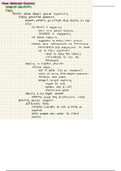
A. Objectives - January 17th, 2018
1. Why do we study child psychology?
1. Better understand
2. Child teaching and rearing
ii. *Peak: object permanence*
Day 2
c. Historical
1. Plato - long-term welfare of child depends on their upbringing.
1. Knowledge was born with (nature)
1. Children born knowing things, what a cat is etc
2. Aristotle
1. Knowledge is acquired through experience (nurture)
2. Discipline-- believed in the individual child
3. Rosseau
1. Believed children should be given maximum freedom and no
formal education until age 12 “age of reasoning” and until then
should be allowed to explore whatever their interests are
2. Believed children learned from their own spontaneous interactions
with the world (nurture)
4. Locke
1. Also believed children to be blank canvases, and parents must
provide good examples of honesty and such
2. Children shouldn’t be indulged especially at early age and instead
should be shown discipline (nurture)
iii. Topics
a. Nature and Nurture
1. Before it used to be “is it nature OR is it nurture”
1. Now, we are trying to see HOW nature and nurture interact
to shape developmental process?
2. Nature - biological endowment
3. Nurture - environments, both physical and social, that influence
our development
4. Example: adopted child, may have predisposition to develop
depression
1. However if they are adopted into a home that is stable,
secure, and healthy then likelihood of developing
depression may be decreased
2. But if they are adopted into a family that is troubled,
unstable, and unhealthy then likelihood of depression
increased
b. The active child
1. How do children shape their own development?
1. Are children passive beings waiting to be written upon
, 2. OR are children junior scientist actively exploring the
world
b. Continuity vs. Discontinuity
1. Is development just a matter of degree or are there qualitative
changes?
1. Continuous development: age-related
2. Discontinued development: age-related changes include
LARGE shifts -- qualitatively different (growth spurt
example)
b. Mechanisms of change
1. How does change occur? How do we go from being babies to who
we are today?
1. Darwin’s theory of evolution
2. Species originate and change through:
1. Variation: differences in thought and behavior
within and among individuals
2. Selection: more frequent survival and reproduction
of organisms that are well adapted to their
environment
b. Sociocultural context
i. How does sociocultural context influence development
1. Economic
2. Historical
3. Cultural -- TECHNOLOGY
4. Physical
5. Social
b. Individual differences
i. How do children become so different from each other?
1. Genes (born shy or have traits lead to being shy
2. How children are treated by others
3. Children’s subjective reactions to other people
4. Children’s choice of environment (or group to hang with)
b. Research in children’s welfare
i. How can research promote a child’s well-being
ii. Example: a research method known as preferential looking has
enabled the diagnosis of the effects of cataracts in infants as young
as to months of age.
1. Have them pick which pic they like blank OR patterns -
patterns would b the answer but if they don’t pick that then
they may have a vision problem
iii. Homework: pages 23-39 & an article
a. Visual cliff (have child crawl to them), bring text and article to class
iii. Exercise - relating them in child development and recent research
Jan 29
A. Scientific Objectives:
Book name: How Children Develop rent: $14
A. Objectives - January 17th, 2018
1. Why do we study child psychology?
1. Better understand
2. Child teaching and rearing
ii. *Peak: object permanence*
Day 2
c. Historical
1. Plato - long-term welfare of child depends on their upbringing.
1. Knowledge was born with (nature)
1. Children born knowing things, what a cat is etc
2. Aristotle
1. Knowledge is acquired through experience (nurture)
2. Discipline-- believed in the individual child
3. Rosseau
1. Believed children should be given maximum freedom and no
formal education until age 12 “age of reasoning” and until then
should be allowed to explore whatever their interests are
2. Believed children learned from their own spontaneous interactions
with the world (nurture)
4. Locke
1. Also believed children to be blank canvases, and parents must
provide good examples of honesty and such
2. Children shouldn’t be indulged especially at early age and instead
should be shown discipline (nurture)
iii. Topics
a. Nature and Nurture
1. Before it used to be “is it nature OR is it nurture”
1. Now, we are trying to see HOW nature and nurture interact
to shape developmental process?
2. Nature - biological endowment
3. Nurture - environments, both physical and social, that influence
our development
4. Example: adopted child, may have predisposition to develop
depression
1. However if they are adopted into a home that is stable,
secure, and healthy then likelihood of developing
depression may be decreased
2. But if they are adopted into a family that is troubled,
unstable, and unhealthy then likelihood of depression
increased
b. The active child
1. How do children shape their own development?
1. Are children passive beings waiting to be written upon
, 2. OR are children junior scientist actively exploring the
world
b. Continuity vs. Discontinuity
1. Is development just a matter of degree or are there qualitative
changes?
1. Continuous development: age-related
2. Discontinued development: age-related changes include
LARGE shifts -- qualitatively different (growth spurt
example)
b. Mechanisms of change
1. How does change occur? How do we go from being babies to who
we are today?
1. Darwin’s theory of evolution
2. Species originate and change through:
1. Variation: differences in thought and behavior
within and among individuals
2. Selection: more frequent survival and reproduction
of organisms that are well adapted to their
environment
b. Sociocultural context
i. How does sociocultural context influence development
1. Economic
2. Historical
3. Cultural -- TECHNOLOGY
4. Physical
5. Social
b. Individual differences
i. How do children become so different from each other?
1. Genes (born shy or have traits lead to being shy
2. How children are treated by others
3. Children’s subjective reactions to other people
4. Children’s choice of environment (or group to hang with)
b. Research in children’s welfare
i. How can research promote a child’s well-being
ii. Example: a research method known as preferential looking has
enabled the diagnosis of the effects of cataracts in infants as young
as to months of age.
1. Have them pick which pic they like blank OR patterns -
patterns would b the answer but if they don’t pick that then
they may have a vision problem
iii. Homework: pages 23-39 & an article
a. Visual cliff (have child crawl to them), bring text and article to class
iii. Exercise - relating them in child development and recent research
Jan 29
A. Scientific Objectives: