SSOP Questions and Answers with complete solution
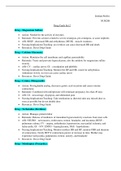
Procedural Compliance - Successful supervisors and operators understand this principle and ensure procedures are readily available, frequently reference, and strictly adhered to established procedures are defined as approved written instructions from higher authority. Level of Knowledge - Well-trained and disciplined operators follow procedures thoughtfully, vice blindly and understand the expected system response when taking an action. Questioning Attitude - - Take ownership of your watchstation, regardless of rate or rank. - You need to approach you watch with an attitude where you expect to find a problem. Forceful Backup - - Communication up and down the chain of command is important, regardless of rank - Additionally, forceful backup is stopping an unsafe act you just happen to be walking by when it would be just as easy to ignore it and keep going. Formality - The routine use of "Point, Read, Pause, Operate" Integrity - - A working definition of integrity is "doing the right thing even when nobody is watching." - The Navy expects you to "do the right thing" every time. Incident Reporting - - The intention of incident reporting process is to share lessons learned with the fleet. - The first step when something goes wrong is to gather the involved operators and key supervisors, using procedures and facts to reconstruct the incident, expose the root causes and develop short- and long-term corrective actions. Operational Risk Management - - What could go wrong here? (Hazard Identification) - What can I do about it? (Implementing Controls)Watchstanding Organization - - Two distinct watchstanding chains-of-command: Operational and Administrative o Operational Chain-of-command has the immediate responsibility for safe operation of the ship ▪ Example: a technician reports an equipment casualty to the CSOOW who reports it to the TAO via the SCS o Administrative chain-of-command is the CPO, Division LCPO, Division Officer and Department Head. Placing an Alarm or Warning in Cutout - except for PMS or an approved procedure, can only be authorized by the CO Log Keeping Principles - - Engineering and Bridge logs are legal binding documents - Properly taken log must be: ▪ Historical, chronological and current. ▪ Formal and objective Casualty Control principles - ask for help. Request any required supervision and casualty response teams Emergency Communications - formal repeat backs are especially critical during casualty reporting. Cleanliness, Preservation, and Stowage - - Any material that is not properly stowed becomes a missile hazard in a combat environment or in the event of a terrorist attack. - Only the HAZMAT or flammable material allowed in your workspaces is that which is necessary for operations and/or maintenance. Hazardous Materials (HAZMAT) - The work center supervisor should have a deck of MSDS cards at the work center, accessible by all maintenance personnel Eight O'clock reports and Night Orders - provide supervisory personnel with a list of equipment and systems that are out of commission or have limits that restrict their operation.Heat Stress - Notify supervisors when space thermometers reach 100F if you are standing less than five-hour watches, and 90F if you are standing five-hour watches or greater.
Written for
- Institution
- SSOP
- Course
- SSOP
Document information
- Uploaded on
- April 14, 2024
- Number of pages
- 3
- Written in
- 2023/2024
- Type
- Exam (elaborations)
- Contains
- Questions & answers
Subjects

Also available in package deal