

FLG 211 Copyright Micaela de Jager
Unit 5 – Efferent division: Autonomic and Somatic
UNIT 5.1 & 5.2 – THE A UTONOMIC & SOMATIC MOTOR CONTROL
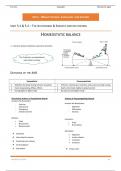
HOMEOSTATIC BALANCE
Dynamic balance between autonomic branches
The 2 divisions counterbalance
each other’s activity
DIVISIONS OF THE ANS
Sympathetic Parasympathetic
• Mobilizes the body during extreme situations • Performs maintenance activities and conserves body energy
• Exerts long-lasting, diffuse effects • Exerts short-lived, highly localized control
• During flight-or-fight mode • During rest-and-digest mode
Stimulatory Actions of Sympathetic Branch Actions of Parasympathetic Branch
Involves the E activities:
- Exercise Involves the D activities:
- Excitement - Digestion
- Emergency - Defecation
- Embarrassment - Diuresis
Dilation:
Constricts:
• Pupil
• Pupil
• Bronchioles
• Bronchioles
• Blood vessels
Stimulates:
❖ Salivation ≫ Digestion
❖ Heart beat & volume ≫ Insulin release
≫ Urination
❖ Catecholamine release
≫ Erections
❖ Fat breakdown
❖ Ejaculation ❖ Slows heart
MICAELA DE JAGER 69
, FLG 211 Copyright Micaela de Jager
BLOOD PRESSURE
SHORT-TERM REGULATION OF RISING BLOOD PRESSURE
1. ↑ Blood pressure
2. Results in the stretching of baroreceptors → increased impulses to the brain
3. ↑Parasympathetic activity
4. ↓ Sympathetic activity
5. Slowing of heart rate
6. Increased arterial diameter = Reduction of blood pressure
SHORT-TERM REGULATION OF FALLING BLOOD PRESSURE
1. ↓Blood pressure
2. Baroreceptors inhibited → decreased impulses to the brain
3. ↓Parasympathetic activity
4. ↑Sympathetic activity
5. Heart → increased heart rate and increased contractility
Vessels → increased vasoconstriction
Adrenal glands → release epinephrine & norepinephrine
(enhance heart rate, contractility, and vasoconstriction)
6. Decreased arterial diameter = Increase in blood pressure
AUTONOMIC CONTROL CENTRES
• Hypothalamus
➢ Water balance
➢ Temperature
➢ Hunger
• Pons
➢ Respiration
➢ Cardiac
➢ Vasoconstriction
• Medulla
➢ Respiration
MICAELA DE JAGER 70
Unit 5 – Efferent division: Autonomic and Somatic
UNIT 5.1 & 5.2 – THE A UTONOMIC & SOMATIC MOTOR CONTROL
HOMEOSTATIC BALANCE
Dynamic balance between autonomic branches
The 2 divisions counterbalance
each other’s activity
DIVISIONS OF THE ANS
Sympathetic Parasympathetic
• Mobilizes the body during extreme situations • Performs maintenance activities and conserves body energy
• Exerts long-lasting, diffuse effects • Exerts short-lived, highly localized control
• During flight-or-fight mode • During rest-and-digest mode
Stimulatory Actions of Sympathetic Branch Actions of Parasympathetic Branch
Involves the E activities:
- Exercise Involves the D activities:
- Excitement - Digestion
- Emergency - Defecation
- Embarrassment - Diuresis
Dilation:
Constricts:
• Pupil
• Pupil
• Bronchioles
• Bronchioles
• Blood vessels
Stimulates:
❖ Salivation ≫ Digestion
❖ Heart beat & volume ≫ Insulin release
≫ Urination
❖ Catecholamine release
≫ Erections
❖ Fat breakdown
❖ Ejaculation ❖ Slows heart
MICAELA DE JAGER 69
, FLG 211 Copyright Micaela de Jager
BLOOD PRESSURE
SHORT-TERM REGULATION OF RISING BLOOD PRESSURE
1. ↑ Blood pressure
2. Results in the stretching of baroreceptors → increased impulses to the brain
3. ↑Parasympathetic activity
4. ↓ Sympathetic activity
5. Slowing of heart rate
6. Increased arterial diameter = Reduction of blood pressure
SHORT-TERM REGULATION OF FALLING BLOOD PRESSURE
1. ↓Blood pressure
2. Baroreceptors inhibited → decreased impulses to the brain
3. ↓Parasympathetic activity
4. ↑Sympathetic activity
5. Heart → increased heart rate and increased contractility
Vessels → increased vasoconstriction
Adrenal glands → release epinephrine & norepinephrine
(enhance heart rate, contractility, and vasoconstriction)
6. Decreased arterial diameter = Increase in blood pressure
AUTONOMIC CONTROL CENTRES
• Hypothalamus
➢ Water balance
➢ Temperature
➢ Hunger
• Pons
➢ Respiration
➢ Cardiac
➢ Vasoconstriction
• Medulla
➢ Respiration
MICAELA DE JAGER 70


