Week 10 Lecture
Language and culture doing business across countries
Possible differences between cultures:
- Informal agreements vs. formal contracts
- Showing emotons or not
- Written vs. face to face communicaton
- Eye contact or not
- Punctuality
- Negotatons: winning a battle or win-win
Interacton on the work floor is influenced by:
- How we conduct work
- Our behaviour and style
- Our use of language
- How we solve challenges, problems, conflicts
- How we negotate
- How we go about creatng relatonships
- Language profciency
Where cultures differ:
- Language
- Religion
- Values
- Attitudes
- Customs
- Norms
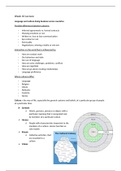
Culture = the way of life, especially the general customs and beliefs, of a partcular group of people
at a partcular tme.
Symbols
o Words, gestures, pictures or objects with a
partcular 羥eaning that is recognieed onle
be 羥e羥bers of a partcular culture
Heroes
o People with characteristcs i羥portant to the
羥e羥bers of a culture. Heroes functon as
role 羥odels
Rituals
o Collectve actvites, that
are essental to a
culture
Values
, o Broad tendencies for preference for certain state of afairs to others (good-bad, right-
wrong)
Layers of culture
- National level
o Associated with the naton
- Regional level
o Associated with ethnic, linguistc or religious differences within the naton
- Gender level
o Associated with gender differences
- Generation level
o Associated with the differences between generatons
- Social class level
o Associated with level of educatonal occupaton
- Corporate level
o Associated with the partcular culture of an organizaton
How do we measure culture? (Hofstede, 4 dimensions)
1. Power distance = a cultural dimension that measures the degree to which less powerful
members of organizatons and insttutons accept the fact that power is not distributed
equally.
2. Uncertainty avoidance = the extent to which people feel threatened by ambiguous situatons
and have created insttutons and beliefs for minimizing or avoiding those uncertaintes
3. Individualism = the tendency of people to look afer themselves and their immediate family
only
4. Masculinity = the degree to which the dominant values of a society are success, money and
material things
How do we measure culture? (Trompenaar, 7 dimensions)
1. Universalism vs. particularism
a. Universalism = the uniform applicaton of rules and procedures, regardless of
situaton, context or individuals involved.
b. Partcularism = judging a situaton and adjustng rules and procedures according to
the specifc situaton or individuals involved.
2. Individualism vs. collectivism
a. Collectvism = the tendency of people to belong to groups who look afer each other
in exchange for loyalty.
3. Neutral vs. emotional
a. Neutral = a preference for unemotonal, objectve analysis of a situaton or a decision
and for limited displays of emotons and feelings in the workplace.
b. Emotonal = an acceptance of emoton and subjectvity as the bases for some
decision making and a preference for explicit displays of emotons and feelings in the
workplace.
4. Specific vs. diffuse
a. Specifc = a tendency to limit workplace relatonships and obligatons, including
relatve status and hierarchical positon, to the workplace.
, b. Diffuse = a tendency for workplace relatonships and obligatons, including relatve
status and hierarchical positon, to extend into social situatons and actvites outside
of work
5. Achievement vs. ascription
a. Achievement = where status is earned rather than a right: recruitment and
promoton opportunites tend to be more dependent on performance, as in
meritocracy.
b. Ascripton = where status is more of a right than earned; recruitment and promoton
opportunites tend to be more dependent on seniority, ethnicity, gender, religion or
birth.
6. Sequential vs. synchronic (tme)
a. Sequental = cultures that view tme in a sequental or linear fashion; order comes
from separatng actvites and commitments
b. Synchronic = cultures that view events in parallel over tme; order comes from
coordinatng multple actvites and commitments.
7. ?
How do we measure culture?
The GLOBE project – nine di羥ensions of culture
1. Assertveness
2. Future orientaton
3. Gender differentaton
4. Uncertainty avoidance
5. Power distance
6. Insttutonal collectvism
7. In-group/family collectvism
8. Performance orientaton
9. Humane orientaton
The World Values Survee
- Social values, attitudes & stereotypes
- Societal well-being
- Social capital, trust and organizatonal membership
- Economic values
- Corrupton
- Migraton
- Post-material index
- Science & technology
- Religious values
- Security
- Ethical values & norms
- Politcal interest and politcal partcipaton
- Politcal culture and politcal regimes
- Demography
Language and culture doing business across countries
Possible differences between cultures:
- Informal agreements vs. formal contracts
- Showing emotons or not
- Written vs. face to face communicaton
- Eye contact or not
- Punctuality
- Negotatons: winning a battle or win-win
Interacton on the work floor is influenced by:
- How we conduct work
- Our behaviour and style
- Our use of language
- How we solve challenges, problems, conflicts
- How we negotate
- How we go about creatng relatonships
- Language profciency
Where cultures differ:
- Language
- Religion
- Values
- Attitudes
- Customs
- Norms
Culture = the way of life, especially the general customs and beliefs, of a partcular group of people
at a partcular tme.
Symbols
o Words, gestures, pictures or objects with a
partcular 羥eaning that is recognieed onle
be 羥e羥bers of a partcular culture
Heroes
o People with characteristcs i羥portant to the
羥e羥bers of a culture. Heroes functon as
role 羥odels
Rituals
o Collectve actvites, that
are essental to a
culture
Values
, o Broad tendencies for preference for certain state of afairs to others (good-bad, right-
wrong)
Layers of culture
- National level
o Associated with the naton
- Regional level
o Associated with ethnic, linguistc or religious differences within the naton
- Gender level
o Associated with gender differences
- Generation level
o Associated with the differences between generatons
- Social class level
o Associated with level of educatonal occupaton
- Corporate level
o Associated with the partcular culture of an organizaton
How do we measure culture? (Hofstede, 4 dimensions)
1. Power distance = a cultural dimension that measures the degree to which less powerful
members of organizatons and insttutons accept the fact that power is not distributed
equally.
2. Uncertainty avoidance = the extent to which people feel threatened by ambiguous situatons
and have created insttutons and beliefs for minimizing or avoiding those uncertaintes
3. Individualism = the tendency of people to look afer themselves and their immediate family
only
4. Masculinity = the degree to which the dominant values of a society are success, money and
material things
How do we measure culture? (Trompenaar, 7 dimensions)
1. Universalism vs. particularism
a. Universalism = the uniform applicaton of rules and procedures, regardless of
situaton, context or individuals involved.
b. Partcularism = judging a situaton and adjustng rules and procedures according to
the specifc situaton or individuals involved.
2. Individualism vs. collectivism
a. Collectvism = the tendency of people to belong to groups who look afer each other
in exchange for loyalty.
3. Neutral vs. emotional
a. Neutral = a preference for unemotonal, objectve analysis of a situaton or a decision
and for limited displays of emotons and feelings in the workplace.
b. Emotonal = an acceptance of emoton and subjectvity as the bases for some
decision making and a preference for explicit displays of emotons and feelings in the
workplace.
4. Specific vs. diffuse
a. Specifc = a tendency to limit workplace relatonships and obligatons, including
relatve status and hierarchical positon, to the workplace.
, b. Diffuse = a tendency for workplace relatonships and obligatons, including relatve
status and hierarchical positon, to extend into social situatons and actvites outside
of work
5. Achievement vs. ascription
a. Achievement = where status is earned rather than a right: recruitment and
promoton opportunites tend to be more dependent on performance, as in
meritocracy.
b. Ascripton = where status is more of a right than earned; recruitment and promoton
opportunites tend to be more dependent on seniority, ethnicity, gender, religion or
birth.
6. Sequential vs. synchronic (tme)
a. Sequental = cultures that view tme in a sequental or linear fashion; order comes
from separatng actvites and commitments
b. Synchronic = cultures that view events in parallel over tme; order comes from
coordinatng multple actvites and commitments.
7. ?
How do we measure culture?
The GLOBE project – nine di羥ensions of culture
1. Assertveness
2. Future orientaton
3. Gender differentaton
4. Uncertainty avoidance
5. Power distance
6. Insttutonal collectvism
7. In-group/family collectvism
8. Performance orientaton
9. Humane orientaton
The World Values Survee
- Social values, attitudes & stereotypes
- Societal well-being
- Social capital, trust and organizatonal membership
- Economic values
- Corrupton
- Migraton
- Post-material index
- Science & technology
- Religious values
- Security
- Ethical values & norms
- Politcal interest and politcal partcipaton
- Politcal culture and politcal regimes
- Demography