Jenny Essay - writing
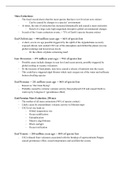
Jenny, aged 7, is in the consolidation stage of her literacy development, and would be in key stage 1
at this time. The texts are both samples of her creative writing and so is a simplistic form of a
narrative, however the chronological structure also suggests it is more like a recount of a series of
imagined events and Jenny is at the middle stage of Katherine Peeta's ideas of imagined
development - linking chronological events with connective and action verbs.
In terms of orthography, Jenny is developing well in her handwriting and structuring of her writing.
She has a clear print, which is developed to be legible at this age so it can become cursive later on,
and she has begun to use a title, text B had the heading "The Easter Chick". In some cases, Jenny has
made the ascenders too long, such as in "hen", where the ascender from the "h" stretches over two
lines. The text in both B and C is orientated towards the bottom right, and it is possible that this is
because Jenny was writing with a template under the plain paper, and the template has slipped. Her
writing does however stay at the same height and lines are generally straight. At this age it would be
comon to find that children use finger spaces between their words, something which Jenny does not
do. Perhaps, this is because her teacher has not taught her to do this, or because her teacher is
encouraging her to judge the space for herself. The spaces are large enough to make the text legible,
however some words are too close, especially were a word has been inserted later, for example
"inavery". Jenny knows that words need gaps between them, but s not yet able to judge the correct
space.
Grammatically, Jenny is beginning to grasp the rules of punctuation and capitalisation, and her
story's consist of mostly grammatically correct sentences. In text B, Jenny begins by using
punctuation correctly, and the teacher marks this by giving it a double tick. She is able to use a full
stop at the end of each sentence, however, as the text progresses there are most virtuous errors
where full stops are missed or are placed in the middle of a sentence, "the. boys mummy said". In
text C, which Jenny is likely to have written later, she is no longer placing full stops in the middle of
sentences, though does use fewer periods than are needed. In this text, she is able to use an
exclamation mark correctly, for the exclamation "but the teasure had gone!" This punctuation mark
is usually introduced at a later stage, however Jenny may have picked it up from a book that she has
read, which often make use of exclamation marks. In text C Jenny knows that she must use capitals
for people's names, "Lauren" and "Connor", a rule which is more easily grasped due to the fact that
children will always see their names or their friends' names with capital letters. She has also
understood that the beginning of a new sentence needs a capital letter, and she has done this in
both texts. In text B, Jenny capitalises "Boy", and though this is an error, she has perhaps over
generalised the capitalisation rule to nouns which label people. In text B Jenny makes some virtuous
errors with possessive pronouns and apostrophes, both of which are complex grammar rules, but
the first of which should come more naturally as it heard in speech. In text B the chick is called
"Laura", and is referred to with the third person pronoun "she", however, Jenny uses the wrong
possessive pronoun "his" as she does not understand that she must use "her" when referring to a
female's possessions. She also does not use an apostrophe with "boys mummy", however this is a
rule which is understood at a much later stage and understandable at aged 7, and Jenny misses the
"'s" from "boy bed time", showing that at times she can apply it to a certain stage, but it is not clear
to her yet. Jenny writes in the past tense, which is the most common way for children to tell a story,
as the books they read will all be written in the past tense. Jenny understands irregular past
Jenny, aged 7, is in the consolidation stage of her literacy development, and would be in key stage 1
at this time. The texts are both samples of her creative writing and so is a simplistic form of a
narrative, however the chronological structure also suggests it is more like a recount of a series of
imagined events and Jenny is at the middle stage of Katherine Peeta's ideas of imagined
development - linking chronological events with connective and action verbs.
In terms of orthography, Jenny is developing well in her handwriting and structuring of her writing.
She has a clear print, which is developed to be legible at this age so it can become cursive later on,
and she has begun to use a title, text B had the heading "The Easter Chick". In some cases, Jenny has
made the ascenders too long, such as in "hen", where the ascender from the "h" stretches over two
lines. The text in both B and C is orientated towards the bottom right, and it is possible that this is
because Jenny was writing with a template under the plain paper, and the template has slipped. Her
writing does however stay at the same height and lines are generally straight. At this age it would be
comon to find that children use finger spaces between their words, something which Jenny does not
do. Perhaps, this is because her teacher has not taught her to do this, or because her teacher is
encouraging her to judge the space for herself. The spaces are large enough to make the text legible,
however some words are too close, especially were a word has been inserted later, for example
"inavery". Jenny knows that words need gaps between them, but s not yet able to judge the correct
space.
Grammatically, Jenny is beginning to grasp the rules of punctuation and capitalisation, and her
story's consist of mostly grammatically correct sentences. In text B, Jenny begins by using
punctuation correctly, and the teacher marks this by giving it a double tick. She is able to use a full
stop at the end of each sentence, however, as the text progresses there are most virtuous errors
where full stops are missed or are placed in the middle of a sentence, "the. boys mummy said". In
text C, which Jenny is likely to have written later, she is no longer placing full stops in the middle of
sentences, though does use fewer periods than are needed. In this text, she is able to use an
exclamation mark correctly, for the exclamation "but the teasure had gone!" This punctuation mark
is usually introduced at a later stage, however Jenny may have picked it up from a book that she has
read, which often make use of exclamation marks. In text C Jenny knows that she must use capitals
for people's names, "Lauren" and "Connor", a rule which is more easily grasped due to the fact that
children will always see their names or their friends' names with capital letters. She has also
understood that the beginning of a new sentence needs a capital letter, and she has done this in
both texts. In text B, Jenny capitalises "Boy", and though this is an error, she has perhaps over
generalised the capitalisation rule to nouns which label people. In text B Jenny makes some virtuous
errors with possessive pronouns and apostrophes, both of which are complex grammar rules, but
the first of which should come more naturally as it heard in speech. In text B the chick is called
"Laura", and is referred to with the third person pronoun "she", however, Jenny uses the wrong
possessive pronoun "his" as she does not understand that she must use "her" when referring to a
female's possessions. She also does not use an apostrophe with "boys mummy", however this is a
rule which is understood at a much later stage and understandable at aged 7, and Jenny misses the
"'s" from "boy bed time", showing that at times she can apply it to a certain stage, but it is not clear
to her yet. Jenny writes in the past tense, which is the most common way for children to tell a story,
as the books they read will all be written in the past tense. Jenny understands irregular past