

Learning
Psychological
Biological Cognitive Psychodynamic Humanistic
Approaches
Social Learning
Behaviourist
Theory
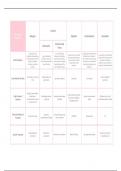
A perspective that A way of explaining A perspective that describes the
Focused on how our mental An approach to understanding
emphasises the importance A way of explaining behaviour that includes different forces (dynamics),
processes affect behaviour, behaviour that emphasises the
of physical processes in the behaviour in terms of both direct and indirect most of which are unconscious,
Brief Description body such as genetic what is observable and in reinforcement, combining
use of inference to study
that operate on the mind and
importance of subjective
unobservable mental experience and each person’s
inheritance and neural terms of learning learning theory with the direct human behaviour and
processes capacity for self-determination
function role of cognitive factors experience
Twin studies, scans, drug Animal studies, lab Study of subjective
Usual Methods of Study Lab studies (children) Lab studies Case studies
trials experiments experience
Biological abnormalities,
Irrational thinking, negative
Major Causes of imbalances of Conditioning (classical Vicarious reinforcement, Fixation in psychosexual Childhood roots, lack of
triad, ABC, maladaptive
Disorders neurotransmitters, genes or operant) modelling stages unconditional positive regard
thought processes
or brain structure
Preferred Methods of Systematic Reward mechanisms eg.
Psychoactive drugs CBT/REBT Psychoanalysis CCT
Treatment desensitisation, flooding token economies
Normal biological Extinction of Becoming a more fully
Goals of Treatment Extinction of associations Rational thinking Neurotypical functioning
functioning associations functioning person
Psychological
Biological Cognitive Psychodynamic Humanistic
Approaches
Social Learning
Behaviourist
Theory
A perspective that A way of explaining A perspective that describes the
Focused on how our mental An approach to understanding
emphasises the importance A way of explaining behaviour that includes different forces (dynamics),
processes affect behaviour, behaviour that emphasises the
of physical processes in the behaviour in terms of both direct and indirect most of which are unconscious,
Brief Description body such as genetic what is observable and in reinforcement, combining
use of inference to study
that operate on the mind and
importance of subjective
unobservable mental experience and each person’s
inheritance and neural terms of learning learning theory with the direct human behaviour and
processes capacity for self-determination
function role of cognitive factors experience
Twin studies, scans, drug Animal studies, lab Study of subjective
Usual Methods of Study Lab studies (children) Lab studies Case studies
trials experiments experience
Biological abnormalities,
Irrational thinking, negative
Major Causes of imbalances of Conditioning (classical Vicarious reinforcement, Fixation in psychosexual Childhood roots, lack of
triad, ABC, maladaptive
Disorders neurotransmitters, genes or operant) modelling stages unconditional positive regard
thought processes
or brain structure
Preferred Methods of Systematic Reward mechanisms eg.
Psychoactive drugs CBT/REBT Psychoanalysis CCT
Treatment desensitisation, flooding token economies
Normal biological Extinction of Becoming a more fully
Goals of Treatment Extinction of associations Rational thinking Neurotypical functioning
functioning associations functioning person


