CCS EXAM PREP QUESTIONS AND ANSWERS
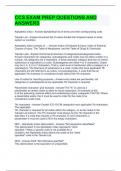
CCS EXAM PREP QUESTIONS AND ANSWERS When do you use multiple codes to describe a single condition? - Answer--etiology/manifestation convention -"use additional code" note is found in tabular list; this code is secondary - "code first" notes - "code, if applicable, any causal condition first" - code may be assigned as a principle diagnosis when the causal condition is unknown or n/a. If a causal condition is known, then code for that condition should be listed first How do you sequence acute/chronic conditions? - Answer-If the same condition is described as both acute (subacute) and chronic, and separate subentries exist in the Alphabetic Index at the same indentation level, code both and sequence the acute (subacute) code first. what is a combination code? - Answer-single code used to classify - two diagnoses, or - a diagnosis w/ an associated secondary process (manifestation) - a diagnosis w/ an associated complication how are combination codes identified? - Answer-by referring to subterm entries in the Alphabetic Index and by reading the inclusion and exclusion notes in the Tabular List. When do you use combination codes? - Answer-Assign only the combination code when that code fully identifies the diagnostic conditions involved or when the Alphabetic Index so directs. Multiple coding should not be used when the classification provides a combination code that clearly identifies all of the elements documented in the diagnosis. When the combination code lacks necessary specificity in describing the manifestation or complication, an additional code should be used as a secondary code. How do you sequence sequela codes? - Answer-condition/nature of the sequela first, then sequela code second. what is the exception to standard sequela sequencing? - Answer-where the code for the sequela is followed by a manifestation code identified in the Tabular List and title, or the sequela code has been expanded (at the fourth, fifth or sixth character levels) to include the manifestation(s). The code for the acute phase of an illness or injury that led to the sequela is never used w/ a code for the late effect
Written for
Document information
- Uploaded on
- April 5, 2024
- Number of pages
- 15
- Written in
- 2023/2024
- Type
- Exam (elaborations)
- Contains
- Questions & answers
Subjects
-
ccs exam prep questions and answers
-
default codes answer a code listed next to a mai
-
how are these codes justified answer the assign
-
what dose a dash at the end of an alphabetic i

Also available in package deal