Aantekeningen From Theory to Intervention hoorcolleges 2020
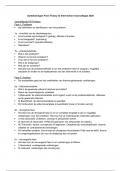
Verschillende PATH-fasen
Fase 1: Probleem
Het definiëren en identificeren van het probleem.
1a – checklist van de sleutelaspecten
Is het sociaal psychologisch? (gedrag, attitude of emotie)
Is het toegepast? (oplossing)
Is het concreet? (operationalisatie)
Oplosbaar?
1b – probleemdefinitie
Wat is het probleem?
Waarom is het een probleem?
Voor wie is het een probleem?
Wie is de doelgroep?
Wat zijn de oorzaken?
Het doel van de probleemdefinitie is om het probleem beter te snappen, mogelijke
oorzaken te vinden en de haalbaarheid van een interventie in te schatten.
Fase 2: Analyse
De analysefase gaat om het ontwikkelen van theorie-gebaseerde verklaringen.
2a – Uitkomstvariabele
Wat is de gewenste uitkomst (desired end state)?
Neem een psychologische variabele.
I) Relevantie: de uitkomstvariabele komt logisch voort uit de probleemdefinitie, reflecteer
op de gewenste uitkomst.
II) Specificiteit: de uitkomstvariabele is specifiek.
III) Continuïteit: de uitkomstvariabele is kwantitatief (meer of minder van [x]).
2b – divergente fase
Het doel van de divergente fase is om zo compleet mogelijk te zijn in mogelijke
verklaringen voor het probleem. Hiervoor kun je onderstaande methoden gebruiken:
I) Vrije associatie: probleem, concept of perspectief nemen.
II) Interview of observatie: SYMLOG gebruiken om antwoorden te coderen.
III) Theorieën: topical, conceptueel of algemeen. Obstakels zijn oversimplificatie, externe
validiteit en contrasterende bevindingen.
IV) behoeften analyse: hoe ervaart de doelgroep het probleem? Kijk naar de skills, kennis
en omgevingsfactoren die voor de doelgroep een rol spelen.
2c – convergente fase
Het doel van de convergente fase is om verklaringen te filteren.
I) Redundant: overlappende verklaringen.
II) Irrelevant: verklaringen die onnodig zijn.
Verschillende PATH-fasen
Fase 1: Probleem
Het definiëren en identificeren van het probleem.
1a – checklist van de sleutelaspecten
Is het sociaal psychologisch? (gedrag, attitude of emotie)
Is het toegepast? (oplossing)
Is het concreet? (operationalisatie)
Oplosbaar?
1b – probleemdefinitie
Wat is het probleem?
Waarom is het een probleem?
Voor wie is het een probleem?
Wie is de doelgroep?
Wat zijn de oorzaken?
Het doel van de probleemdefinitie is om het probleem beter te snappen, mogelijke
oorzaken te vinden en de haalbaarheid van een interventie in te schatten.
Fase 2: Analyse
De analysefase gaat om het ontwikkelen van theorie-gebaseerde verklaringen.
2a – Uitkomstvariabele
Wat is de gewenste uitkomst (desired end state)?
Neem een psychologische variabele.
I) Relevantie: de uitkomstvariabele komt logisch voort uit de probleemdefinitie, reflecteer
op de gewenste uitkomst.
II) Specificiteit: de uitkomstvariabele is specifiek.
III) Continuïteit: de uitkomstvariabele is kwantitatief (meer of minder van [x]).
2b – divergente fase
Het doel van de divergente fase is om zo compleet mogelijk te zijn in mogelijke
verklaringen voor het probleem. Hiervoor kun je onderstaande methoden gebruiken:
I) Vrije associatie: probleem, concept of perspectief nemen.
II) Interview of observatie: SYMLOG gebruiken om antwoorden te coderen.
III) Theorieën: topical, conceptueel of algemeen. Obstakels zijn oversimplificatie, externe
validiteit en contrasterende bevindingen.
IV) behoeften analyse: hoe ervaart de doelgroep het probleem? Kijk naar de skills, kennis
en omgevingsfactoren die voor de doelgroep een rol spelen.
2c – convergente fase
Het doel van de convergente fase is om verklaringen te filteren.
I) Redundant: overlappende verklaringen.
II) Irrelevant: verklaringen die onnodig zijn.