

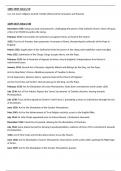
1485-1509: Henry VII
n/a: not much religious turmoil. Mostly influenced by humanism and Erasmus
1509-1547: Henry VIII
December 1530: Clergy accused of praemunire, challenging the power of the Catholic Church. Henry VIII pays
a fine of £119,000 to pardon the clergy.
February 1531: Convocation of Canterbury recognizes Henry as Head of the Church.
1532: First Act of Annates: bans payments of annates to Rome, threatening the authority of the Pope in
England.
March 1532: Supplication of the Ordinaries limits the power of the clergy and establishes royal oversight.
May 1532: Submission of the Clergy: Clergy accepts Henry, not the Pope.
February 1533: Act in Restraint of Appeals to Rome: Asserts England’s independence from Rome in
matrimonial cases.
January 1534: Second Act of Annates: Appoints Abbots and Bishops by the King, not the Pope.
Acts to Stop Peter’s Pence: Abolishes payments of Taxation to Rome.
Act of Supremacy: Declares Henry 'supreme Head of the Church of England.'
Act for First Fruits and Tenths: Clerical taxes go to the King, not the Pope.
February 1536: Act for Dissolution of Lesser Monasteries: Shuts down monasteries worth under £200.
July 1536: Act of Ten Articles: Rejects the 'Seven Sacraments' of Catholic doctrine, moving towards
Protestantism.
July 1538: Truce of Nice signed by Charles V and Francis I, prompting a return to Catholicism through the Act
of Six Articles.
June 1539: Act for the Dissolution of the Greater Monasteries.
May 1543: Act for the Advancement of True Religion restricts access to the English Bible.
July 1544: Sir John Cheke appointed tutor to Prince Edward, a Protestant Humanist.
December 1545: Chantries Act passed, allowing for the dissolution of Chantries.
July 1546: Anne Askew burned for denying transubstantiation, evidence of Henry VIII’s commitment towards
Protestantism.
1534: Act of First Fruits and Tenths allows Henry to tax the Church.
June 1536: Act for Dissolution of Lesser Monasteries closes those worth under £200, sparking the Pilgrimage
of Grace.
June 1539: Act for the Dissolution of the Greater Monasteries passed.
n/a: not much religious turmoil. Mostly influenced by humanism and Erasmus
1509-1547: Henry VIII
December 1530: Clergy accused of praemunire, challenging the power of the Catholic Church. Henry VIII pays
a fine of £119,000 to pardon the clergy.
February 1531: Convocation of Canterbury recognizes Henry as Head of the Church.
1532: First Act of Annates: bans payments of annates to Rome, threatening the authority of the Pope in
England.
March 1532: Supplication of the Ordinaries limits the power of the clergy and establishes royal oversight.
May 1532: Submission of the Clergy: Clergy accepts Henry, not the Pope.
February 1533: Act in Restraint of Appeals to Rome: Asserts England’s independence from Rome in
matrimonial cases.
January 1534: Second Act of Annates: Appoints Abbots and Bishops by the King, not the Pope.
Acts to Stop Peter’s Pence: Abolishes payments of Taxation to Rome.
Act of Supremacy: Declares Henry 'supreme Head of the Church of England.'
Act for First Fruits and Tenths: Clerical taxes go to the King, not the Pope.
February 1536: Act for Dissolution of Lesser Monasteries: Shuts down monasteries worth under £200.
July 1536: Act of Ten Articles: Rejects the 'Seven Sacraments' of Catholic doctrine, moving towards
Protestantism.
July 1538: Truce of Nice signed by Charles V and Francis I, prompting a return to Catholicism through the Act
of Six Articles.
June 1539: Act for the Dissolution of the Greater Monasteries.
May 1543: Act for the Advancement of True Religion restricts access to the English Bible.
July 1544: Sir John Cheke appointed tutor to Prince Edward, a Protestant Humanist.
December 1545: Chantries Act passed, allowing for the dissolution of Chantries.
July 1546: Anne Askew burned for denying transubstantiation, evidence of Henry VIII’s commitment towards
Protestantism.
1534: Act of First Fruits and Tenths allows Henry to tax the Church.
June 1536: Act for Dissolution of Lesser Monasteries closes those worth under £200, sparking the Pilgrimage
of Grace.
June 1539: Act for the Dissolution of the Greater Monasteries passed.


