A. CARBOHYDRATES, FATS & PROTEINS
• Carbohydrates (sugars) always contain the elements C, H and O.
• Fats always contain the elements C, H and O.
• Proteins always contain the elements C, H, O and N (they also contain nitrogen)
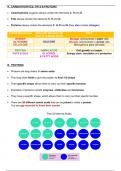
LARGE MOLECULE SMALLER MOLECULES ROLE
THAT IT IS MADE FROM
STARCH Storage carbohydrate in plant cells
GLYCOGEN GLUCOSE Storage carbohydrate in animal cells
CELLULOSE Strengthens plant cell walls
PROTEIN AMINO ACIDS Cell growth and repair
FATS & OILS GLYCEROL Energy store, insulation and protection
& FATTY ACIDS
B. PROTEINS
• Proteins are long chains of amino acids.
• This long chain folds to give the protein its final 3-D shape.
• Their specific shape allows them to carry out their specific function.
• Examples of proteins include enzymes, antibodies and hormones.
• They have a specific shape, which allows them to carry out their specific function.
• There are 20 different amino acids that can be joined to make a protein.
You are not expected to know their names!
• Carbohydrates (sugars) always contain the elements C, H and O.
• Fats always contain the elements C, H and O.
• Proteins always contain the elements C, H, O and N (they also contain nitrogen)
LARGE MOLECULE SMALLER MOLECULES ROLE
THAT IT IS MADE FROM
STARCH Storage carbohydrate in plant cells
GLYCOGEN GLUCOSE Storage carbohydrate in animal cells
CELLULOSE Strengthens plant cell walls
PROTEIN AMINO ACIDS Cell growth and repair
FATS & OILS GLYCEROL Energy store, insulation and protection
& FATTY ACIDS
B. PROTEINS
• Proteins are long chains of amino acids.
• This long chain folds to give the protein its final 3-D shape.
• Their specific shape allows them to carry out their specific function.
• Examples of proteins include enzymes, antibodies and hormones.
• They have a specific shape, which allows them to carry out their specific function.
• There are 20 different amino acids that can be joined to make a protein.
You are not expected to know their names!