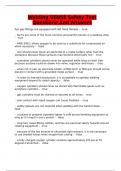
Medical Surgical ATI Final Review
ATI MED SURG TERMS FINAL REVIEW Medical Surgical ATI Final Review Terms in this set (197) Preoperative 1. Question: The term used for before surgery? Answer: Preoperative. Nurse's Responsibility: Educator, advocate, and health promotion. Intraoperative 2. Question: What is the term used during surgery? Answer: Intraoperative. Nurse's Responsibility: Safety and advocacy. Postoperative 3. Question: What is the term used after surgery? Answer: Postoperative. Nurse's Responsibility: Ongoing evaluation and stabilization of clients, prevention of post-op complications. Purpose of Surgery: Diagnostic: Exploratory laparotomy. Curative: Fibroid tumors-hysterectomy. Restorative: Hip replacement. Palliative: Suprapubic catheter. Cosmetic Surgery: Scar revision. Consent Process: Question: Who is responsible for obtaining a signed consent before sedation is given and surgery is performed? Answer: The surgeon. Nurse's Role: Witness client signature. Preparation Before Surgery: NPO Status: Typically after midnight for 6-8 hours. Bowel or Intestinal Preparation: To prevent injury to the colon and reduce the number of intestinal bacteria. Postoperative Teaching: Breathing exercises. Incentive spirometry. Coughing and splinting. Leg procedures and exercises. Antiembolism stockings and elastic wraps. Early ambulation and range of motion exercises. Anxiety Prevention Before Surgery: Preoperative teaching. Encouraging communication. Promoting rest. Using distraction. Teaching family and significant others. High-Risk Patients After Anesthesia: Those with liver and kidney disease. Anesthesia: General Anesthesia. Local or Regional Anesthesia. Complications of General Anesthesia: Malignant hyperthermia. Overdose. Complications of specific anesthetic agents. Unrecognized hypoventilation. Complications of intubation. Local or Regional Anesthesia: Complications include anaphylaxis, incorrect delivery technique, systemic absorption, and overdosage. Symptoms may include CNS stimulation, cardiac depression, metallic taste, and nausea. Recovery and Conscious Sedation: Recovery time varies. Conscious sedation involves IV delivery of drugs while maintaining a patent airway. Perioperative Positioning and Assessment: Proper body position. Risk for pressure ulcer formation. Prevention of obstruction of circulation, respiration, and nerve conduction. Recovery Room (PACU): Ongoing evaluation and stabilization of clients to anticipate, prevent, and treat complications after surgery. Postoperative Care: Assessment of motor and sensory functions. Monitoring for complications such as urinary retention, GI problems, and ineffective wound healing. Immunity and Inflammation: Hypersensitivity reactions (Type I to Type V). Autoimmunity and its interventions. Osteoarthritis: Clinical manifestations and treatment.
Written for
- Institution
- Medical surgical
- Course
- Medical surgical
Document information
- Uploaded on
- March 25, 2024
- Number of pages
- 4
- Written in
- 2023/2024
- Type
- Exam (elaborations)
- Contains
- Unknown
Subjects
- medical surgical
- medical surgical ati
- ati med surg terms
-
medical surgical ati final review