Learning Experience Design Foundations 1 All Answers Correct
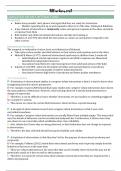
Learning Experience Design Foundations 1 All Answers Correct ADDIE model Analysis Design Development Implementation Evaluation Analyze (ADDIE) Gathering information about the audience, technology, budget, restrictions, previous course material, and criteria. Design (ADDIE) Outlining the structure of the course, education strategy, format, and how you will evaluate. Develop (ADDIE) Building the course, testing it, getting feedback. Implementation (ADDIE) Deliver the course. Evaluation (ADDIE) Continuous process that focuses on the effectiveness/results of training, not individual scores. Analyze the data the course produced. Preparation (SAM) Gather information on issues Iterative Design (SAM) Project planning, prototypes, evaluation. Iterative Development (SAM) Create a design proof, do alpha, beta, and gold Identify Desired Results (UbD) Determine priorities and desired outcomes Determine Assessment Evidence (UbD) Determine how learners will demonstrate competence. Plan Learning Experiences (UbD) Plan experiences that will facilitate desired learning. Empathize (Design Thinking) Research your users' needs through interacting with them Define (Design Thinking) State your users' needs and problem statement. Ideate (Design Thinking) Brainstorm and create ideas. Prototype (Design Thinking) Start to create solutions, first draft Test (Design Thinking ) Trying your solutions out, making adjustments Behaviorist Approach Based on change in behavior and external rewards and consequences. Cognitive Approach Relies on knowledge, memory, thinking, and problem solving. Organizing information into conceptual models. Retention and recall. Constructivism Approach Knowledge constructed as learners build on knowledge they already have. Includes self-reflection and involved learners. Connectivist approach Learners do not construct knowledge, but get it from a variety of sources. Technology, social media, blogs, etc. Promotes learning that happens outside of the individual. Connecting, duh. Create (Bloom's Taxonomy) Generation of new ideas. Evaluate (Bloom) Establishing judgements about what they are learning and its value. Analyze (Bloom) Comparing and contrasting information they have. Apply (Bloom) Using the information in new ways to create new ideas or solutions. Understand (Bloom) Comprehend information that is presented verbally or written and can explain it. Remember (Bloom) Ability to recall information. Foundational Knowledge (Fink) Understanding and remembering ideas. (multiple choice tests) Application (Fink) Developing skills, critical thinking, and managing projects Integration (Fink) Connecting ideas, people, and realms of life Human Dimension (Fink) Learning about yourself and others Caring (Fink) Developing new feelings, interests, and values. Caring about life. Learning how to Learn (Fink) Becoming a better student, being self-directed, improving learning strategies Gain Attention (Gagne) Get the students' attention Inform Learner of Objectives (Gagne) Set expectations for learning objectives Prior Learning (Gagne) Relate content to something they already know Present Content (Gagne) Duh Provide Guidance (Gagne) Present resources and help students know how to learn Practice (Gagne) Students implement what they learn Provide Feedback (Gagne) Help the learners understand gaps in their learning Assess Performance (gagnes) evaluate the outcomes, using clearly defined criteria and reports and document results Enhance Retention (Gagne) Apply learning to real-world situations Activation (Merrill) Learners activate current and past knowledge. Demonstration (Merrill) Learners observing a demonstration of skills. Application (Merrill) Learners applying new skills Integration (Merrill) Learners integrate new skills into their daily life. Problem-Centered (Merrill) Learners engage in problem solving relating to real-world tasks. Multiple Means of Engagement (Universal Design) Choice and autonomy for how they engage in
Written for
- Institution
- Learning Experience Design Foundations 1 A
- Course
- Learning Experience Design Foundations 1 A
Document information
- Uploaded on
- March 24, 2024
- Number of pages
- 4
- Written in
- 2023/2024
- Type
- Exam (elaborations)
- Contains
- Questions & answers
Subjects
-
learning experience design foundations 1 all answe

Also available in package deal